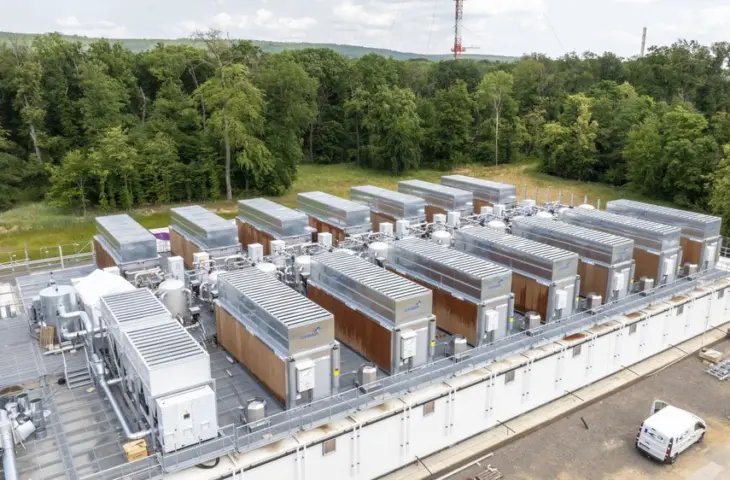
The European data center market is entering a new phase, with strong growth driven by artificial intelligence and cloud, but simultaneously facing limitations regarding energy, grid capacity, and permits.
The European data center market is expanding rapidly and taking on an increasingly strategic role within the digital economy. This is according to the State of European Data Centers report by the European Data Centre Association (EUDCA).
Growth is being driven by further digitization, the rapid emergence of artificial intelligence, and the need for digital sovereignty. In addition to classic core markets such as Frankfurt, London, Amsterdam, Paris, and Dublin (FLAP-D), EUDCA’s analysis shows that growth is shifting to Southern Europe, the Nordics, Central and Eastern Europe, and various Tier-2 cities.
According to the report, the market faces a structural tipping point in 2025 and 2026. Demand for data centers continues to increase, driven by AI, cloud adoption, and sovereign cloud initiatives. At the same time, the biggest obstacle to further expansion is not capital, but the availability of energy and grid connections. Moreover, data centers are evolving from mere real estate to strategic infrastructure for economic resilience and security.
Impact AI
Colocation data centers are growing rapidly as companies modernize their IT and switch to hybrid cloud as a model. Large-scale campuses, tailored to cloud and AI platforms, are creating new capacity in particular. Between 2026 and 2031, the sector expects up to 176 billion euros in cumulative investments in Europe.
The focus is shifting from traditional cloud growth to AI-driven expansion, it says. This implies that new data centers are being equipped to handle a higher density of IT components. Customized infrastructure for AI equates to liquid cooling and more complex electrical architecture. Consequently, new sites require more capital.
Hyperscalers are also further expanding their own data centers outside the classic hubs. Regions with renewable energy, favorable climates, and international connectivity are gaining importance. As a result, the market is shifting from a hub-centric model to a more distributed, energy-driven location choice.
Power shortage
The EUDCA also warns that the total available power capacity is not growing sufficiently to meet demand. In this way, the expected (and necessary) growth cannot be realized within Europe. The sector organization views the growth of data centers as an economically positive thing, because of employment and contributions to GDP.
read also
Belgian data centers are growing, but concerns remain about grid connectivity
However, the limited impact of power in various European countries threatens to put a brake on more than just data centers. Traditional industry also needs energy and is struggling with shortages and high costs.