Belgium-based Secrato is launching a platform to centrally manage compliance with various regulations, including NIS2 and GDPR, as well as ISO compliance.
Secrato, a company from Sint-Niklaas, is bringing a Governance, Risk, and Compliance (GRC) platform to market that is fully developed and hosted in the EU. The Secrato platform is designed to help European companies more efficiently comply with increasing regulatory pressure caused by directives such as GDPR, DORA, and NIS2. With automated processes and real-time insights, Secrato aims to drastically reduce the compliance workload.
Centralized environment
The GRC platform offers companies the ability to manage compliance frameworks, risk registers, and audit requests from a single environment. In this way, Secrato aims to replace manual processes and spreadsheets. Automated evidence collection is intended to make audits faster and more efficient.
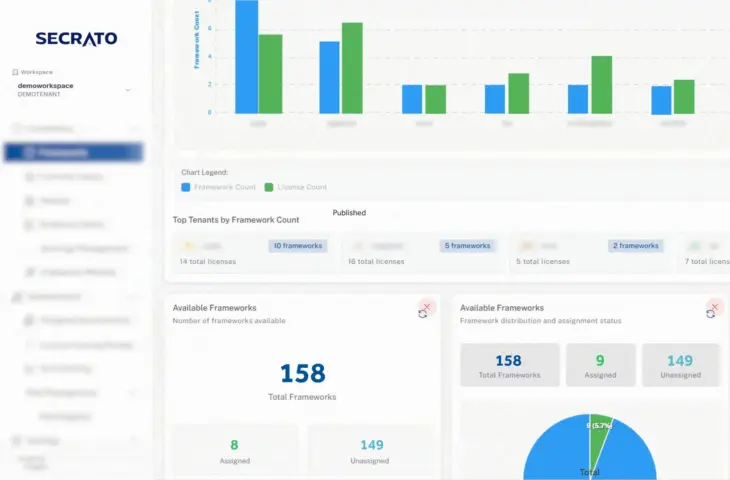
For management, there is a real-time dashboard that provides an overview of compliance status, risk trends, and audit readiness. The platform supports more than twenty frameworks.
Efficiency gains
Secrato promises significant benefits for organizations using the platform. For example, companies could save up to 500 hours per year through streamlined audit preparation and evidence collection. By mapping environments once and reusing evidence, Secrato claims companies can perform up to 70 percent fewer duplicate checks.
Productivity is expected to rise by 85 percent by eliminating manual tasks. Financially, according to Secrato’s calculations, organizations can save up to more than 250,000 euros per year thanks to more efficient control processes and lower consultancy costs.
With the platform, Secrato is addressing a need arising from the growing list of regulations, each with its own requirements and control mechanisms. In addition to GDPR, DORA, NIS2, and the Cyber Resilience Act, there are industry standards such as ISO 27001. A surplus of personnel to manage all this is rare. The GRC platform is designed to provide efficiency.
Secrato points out that the platform was developed in Belgium, tailored to the European market. Data sovereignty is high on the priority list, and the cloud platform is hosted in the Antwerp site of Datacenter United.