A report by Kyndryl states that Belgian companies are beginning to see results from AI projects, but at the same time continue to experience bottlenecks.
elgical companies are seeing their first returns on AI projects, but continue to struggle with structural limitations in technology, workforce skills and team collaboration. That’s according to the latest Readiness Report from IT services provider Kyndryl, based on a survey of 3,700 business leaders worldwide, including in Belgium.
AI arrives at cruising speed
The report shows that 61 percent of Belgian organizations feel more pressure to demonstrate the return on their AI investments than last year. Yet half of those initiatives rarely get past the experimentation phase. According to 50 percent, the reason is due to technical limitations within their existing IT environment.
read also
“Don’t Let AI Die a Silent Death in yet another Experiment”
In addition, 45 percent struggle with the pace of technological developments. One in three organizations cite the complexity of their IT environment as an obstacle to further scaling. Collaboration between business and IT also poses a challenge: A quarter of companies fail to strategically align both teams.
Compliance is on hold
AI is forcing organizations to transform their workforce structures. 85 percent expect significant impact of AI on jobs and functions within the year. At the same time, 44 percent are concerned about staff retraining. Lack of cognitive (39 percent) and technical (35 percent) skills is an additional barrier.
Cybersecurity also remains high on the agenda. Nearly all Belgian organizations surveyed reported a cyber incident in the past year. Yet less than 40 percent have taken robust measures. Just over a third are investing in infrastructure upgrades to mitigate risks.
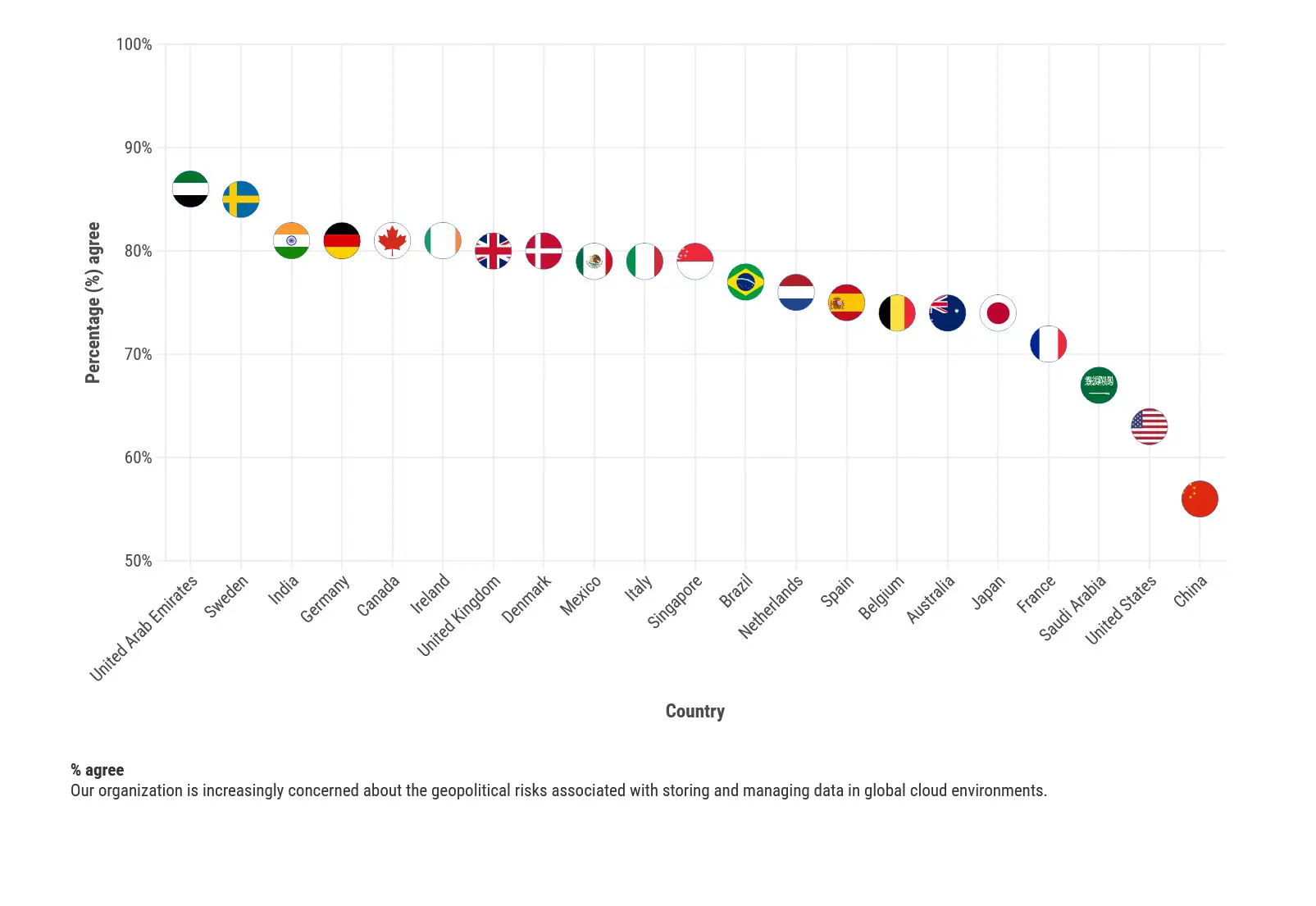
Complexity is further increased by changing laws and regulations. 28 percent cite compliance as a brake on technological innovation. Increasing concerns around data sovereignty and geopolitics are forcing companies to adjust their cloud strategy. Three in four companies fear the geopolitical risks of the public cloud. Thus, 39 percent are investing in “data repatriation,” and 43 percent are choosing private cloud solutions more often.