
ServiceNow wants to put AI to work: that’s not a groundbreaking proposition, but the way they do it, and the platform they use, resonates strongly in Belgium. The fact that ServiceNow makes AI quickly and concretely deployable, in places where employees feel the difference, adds power to the story.
We call it the Benelux and the Nordics, ServiceNow prefers to speak of EMEA North. Whatever name you give the region, it’s undeniable that it’s one of the most digitally advanced areas. That’s what Marielle Lindgren, GVP for EMEA North at ServiceNow, says at the company’s World Forum in Amsterdam. “Not only Denmark and Norway but also Belgium and the Netherlands are at the absolute top when it comes to digital transformation,” Lindgren tells the audience on stage. “More than 80 percent of people there have digital skills.”
This has consequences, not least for AI. Companies in the Benelux and the Nordics embrace AI faster than enterprises anywhere else in the world, according to ServiceNow’s own research. ServiceNow wants to capitalize intensely on this. Lindgren shares the company’s current slogan clearly, distinctly and with a sense of flair: “ServiceNow puts AI to work – dramatic pause – for people.”
Doing what we studied for
What that means concretely is well articulated by Chief Strategy Officer Hala Zeine. “AI will unlock people’s productivity and power,” she believes. “The technology gives people the chance again to do what they studied for. An accountant didn’t enter the profession to remove typos from invoices or track down missing receipts, but to analyze finances and help a company move forward.
AI gives people the chance again to do what they studied for.
Hala Zeine, Chief Strategy Officer ServiceNow
After a years-long career within the IT world, Zeine accepted the position of Chief Strategy Officer at ServiceNow for two reasons: she believes in the incredible potential of AI, and she’s convinced that ServiceNow has the best cards in hand to unlock that potential. As strategic manager, she is among others co-responsible for ServiceNow’s recent acquisition of Veza.
Change as a constant
“Change is inevitable within the business world, that’s a constant,” she states. “ServiceNow’s platform has an architecture that takes this into account. It assumes that an enterprise will always have multiple systems and that these can change, but that the data must always be accessible.”
read also
ServiceNow launches Zurich for secure and scalable AI integration
Zeine contrasts this architecture with applications where database and application are tightly interwoven, which according to her is detrimental to flexibility. “By decoupling data, logic, policy and workflow, it’s simple to swap out a component.”
“If a human within a process needs to approve a certain task, you can easily adjust that within ServiceNow so that an AI agent can also give that approval,” she continues. “The way ServiceNow has grown allows for that flexibility.”
AI increases the appeal
“With the rise of AI, ServiceNow’s appeal has grown,” Zeine therefore believes. In Belgium, the approach certainly resonates. “More than 70 percent of Bel20 organizations are ServiceNow customers,” knows Steven Moerman, Country Manager BeLux.
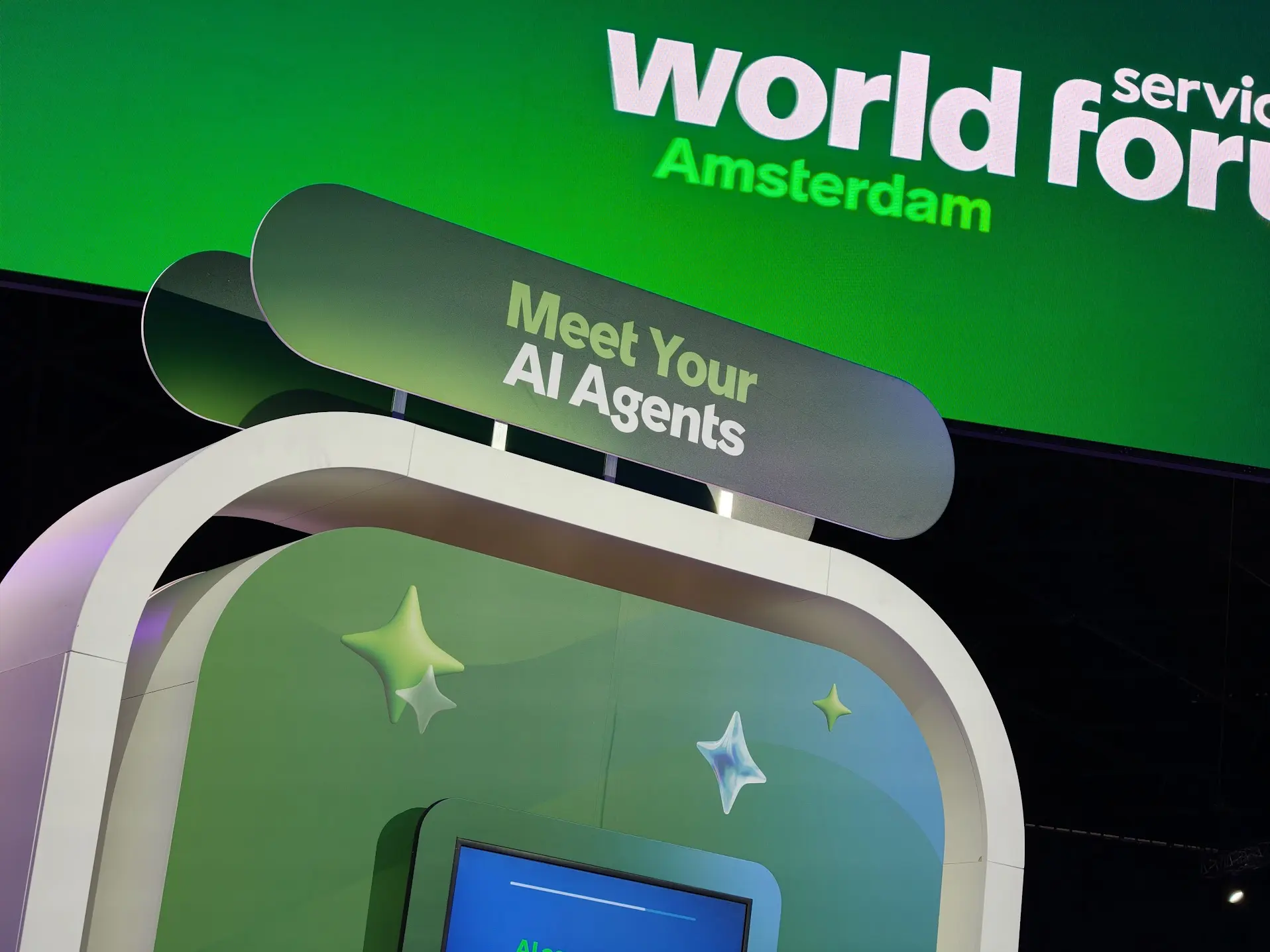
However, it’s not only large customers who embrace ServiceNow. “Belgium has a lot of SMEs. Mid-sized companies are therefore a core focus for our organization,” according to Moerman. “They are an important growth pillar.”
This is evident from the statistics: although Moerman doesn’t want to share details for the local market, he does indicate that growth in Belgium is in double digits and certainly doesn’t fall short of the global average of 25 to 30 percent.
From ITSM to total platform with CRM
ServiceNow also grows with its customers. Moerman: “Organizations that started with our IT Service Management (ITSM) solution are expanding. They increasingly embrace our unified platform for enterprise automation and see the benefits of it.”
More than 70 percent of Bel20 organizations are ServiceNow customers.
Steven Moerman, Country Manager BeLux ServiceNow
He refers to ServiceNow’s capabilities to serve the entire enterprise. The company was born in ITSM, but supports HR, Finance, Field Service, Supply Chain, app development and more. Since early 2025, ServiceNow has even come out as a bona fide CRM player.
Jeff De Graef, Director CRM Solution for EMEA North explains how this happened: “CRM consists of three important components: marketing, sales and support. Eight years ago, ServiceNow already started with service management and we kept expanding that portfolio, also towards the sales side, order management and leads. We did this at the request of our customers.”
Eventually, ServiceNow built a full-fledged CRM component this way. With such an end-to-end offering, ServiceNow felt ready to position itself as a CRM player in the market.
In combination with the other components of the platform, this creates opportunities. De Graef: “The customer experience touches the entire organization, not just the customer side itself. For us, that’s a crucial shift: workflows don’t run vertically, but transversally, across processes and people.”
From support request to upsell
During the keynote, we see what this means, naturally in the context of AI. Amy Lokey, Executive Vice President and Chief Experience Officer, first surprises the attendees at the World Forum with a personal story about her adopted horse, with which she learned the importance of perseverance and processing setbacks. This would be important in today’s AI context. Then she gets to the point with concrete examples of what’s possible thanks to that transversal connection of components on the ServiceNow platform.
“AI needs one platform,” Lokey outlines the situation. “Because AI is only as powerful as that platform. AI must be built into it, not bolted on.” Time for an example.
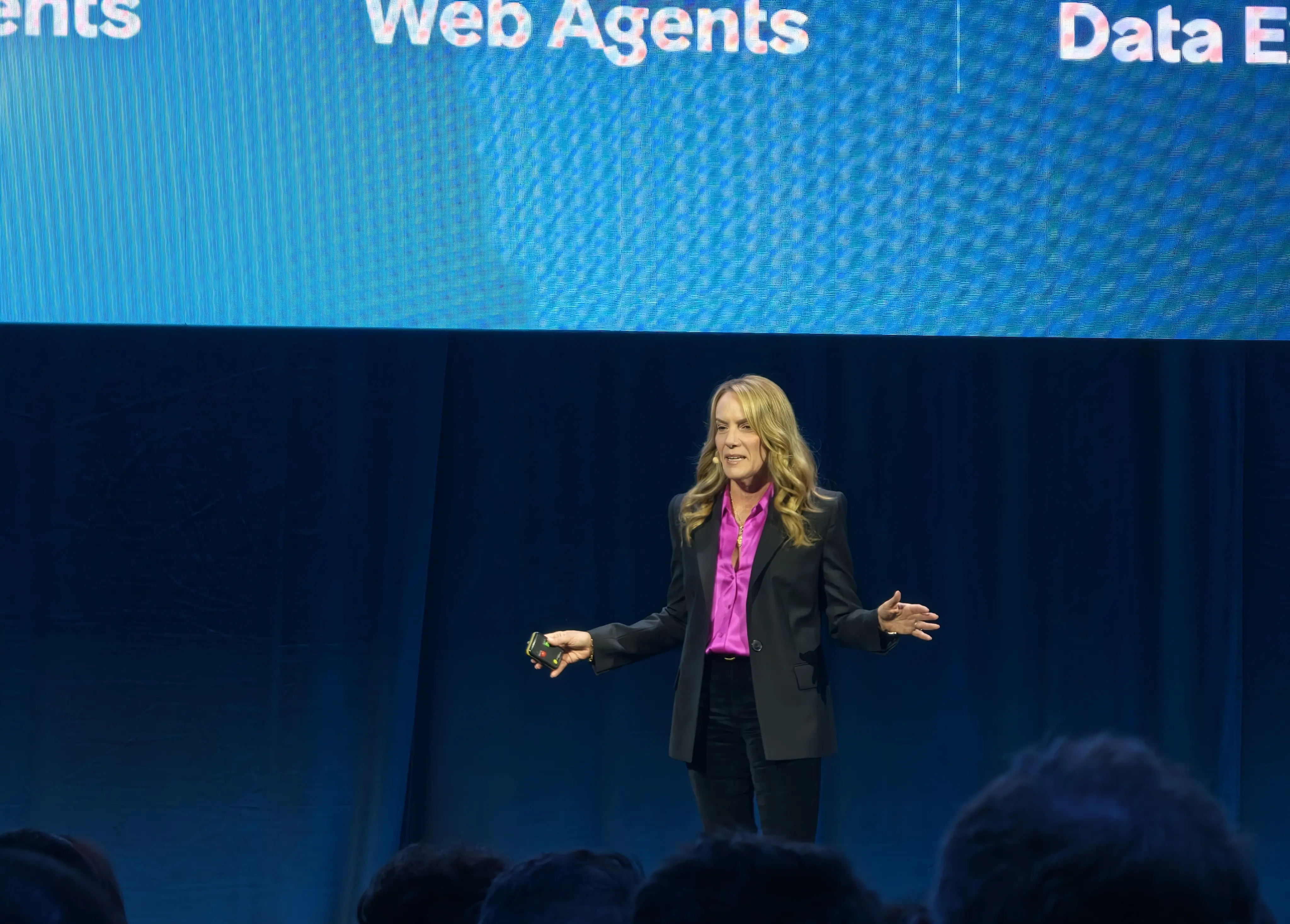
We see a fictional demo of a customer who subscribes to a cloud service from a company in a consumption model, but suddenly doesn’t have enough credits left in his subscription to continue the work. The customer contacts a chatbot, behind which several connected agents operate.
The agent can access the customer records, recognizes the customer, and also sees the situation with the credits. The AI agent credits some extra credits on its own initiative so that the customer is helped out of trouble. With that, the acute support case is closed. Subsequently, the agent notifies a human salesperson that a customer needs a more suitable subscription.
The salesperson sees the earlier interaction in his CRM tool, as well as a brief summary of it. The AI agent has immediately compiled two new packages tailored to the customer, from which the salesperson can choose in his upsell proposal.
Across systems
In the demo, an ‘AI Experience’, as ServiceNow calls it, works reasoned together across all systems. What started as a customer service case has consequences for CRM and quote management. “An AI agent is not a chatbot for us,” Lokey clarifies, “but an experience with behind it a team of AI agents that collaborate in real time.”
“ServiceNow brings everything together,” Moerman clarifies. “That end-to-end workflow orchestration distinguishes us.”
Déjà-vu
Yet we have a small feeling of déjà-vu: a platform with different components, central data, collected according to zero copy principles in a single source of truth, AI over it that’s simple and quick to implement within the platform your company works with, where have we heard that before? At ServiceNow’s World Forum, we see not only how that company focuses on its own strengths, but also how the platform has grown to increasingly resemble that of Salesforce, especially since that company took the step towards ITSM.
ServiceNow has evolved from an ITSM specialist into a platform player that supports all aspects of the enterprise, and Salesforce has undergone that transformation with CRM as a starting point. This way, both parties have ended up in each other’s waters.
read also
ServiceNow Puts AI Agents to Work
The differences between the two are legion and require a whole separate analysis, but at a very high level, similar promises return: one platform for your business, connectable with additional data sources, and ready to inject AI where it has impact. Both claim to be the obvious platform for this, because of their underlying architecture.
Genuine interest
In Amsterdam, almost 2,500 people from EMEA North listen to ServiceNow’s story. At a smaller-scale purely Belgian event in Brussels, about 400 people walked around. That says nothing about the ratio between the two (because the setup of the events is very different), but everything about the broad interest that exists in the market for a platform approach where AI fits.
Moerman certainly confirms that broad interest. “Belgium is in the global top three for AI adoption,” he knows. “One of our customers’ CIOs put it perfectly: whoever doesn’t bring AI into their workflows today will spend the next five years catching up with the competition.”