

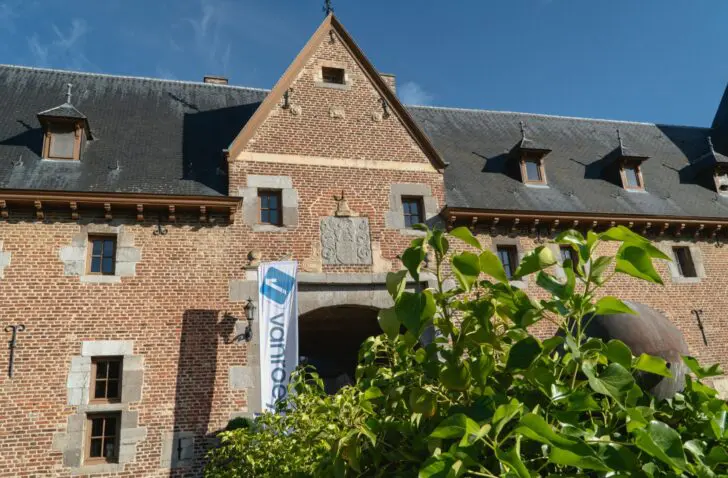
Cybersecurity and castles have more in common than you think. It’s just that what used to offer protection no longer works today.
A castle is built to keep everything of value behind thick walls and a moat. Whoever gets inside has won. It is no coincidence that VanRoey is organizing its Cybersecurity Day at the Castle of Ordingen in Sint-Truiden. That same castle logic has been embedded in IT security for decades: build a wall around your network and keep the attackers out.
Today, that image is no longer accurate. Your data is in the cloud, your people work from home or on the train, and your applications run everywhere except behind those walls. The castle stands empty—and yet many organizations continue to guard those very empty walls. That is, in a single image, the common thread throughout a day full of pentest stories, zero trust, endpoint security, and a keynote about the human brain.
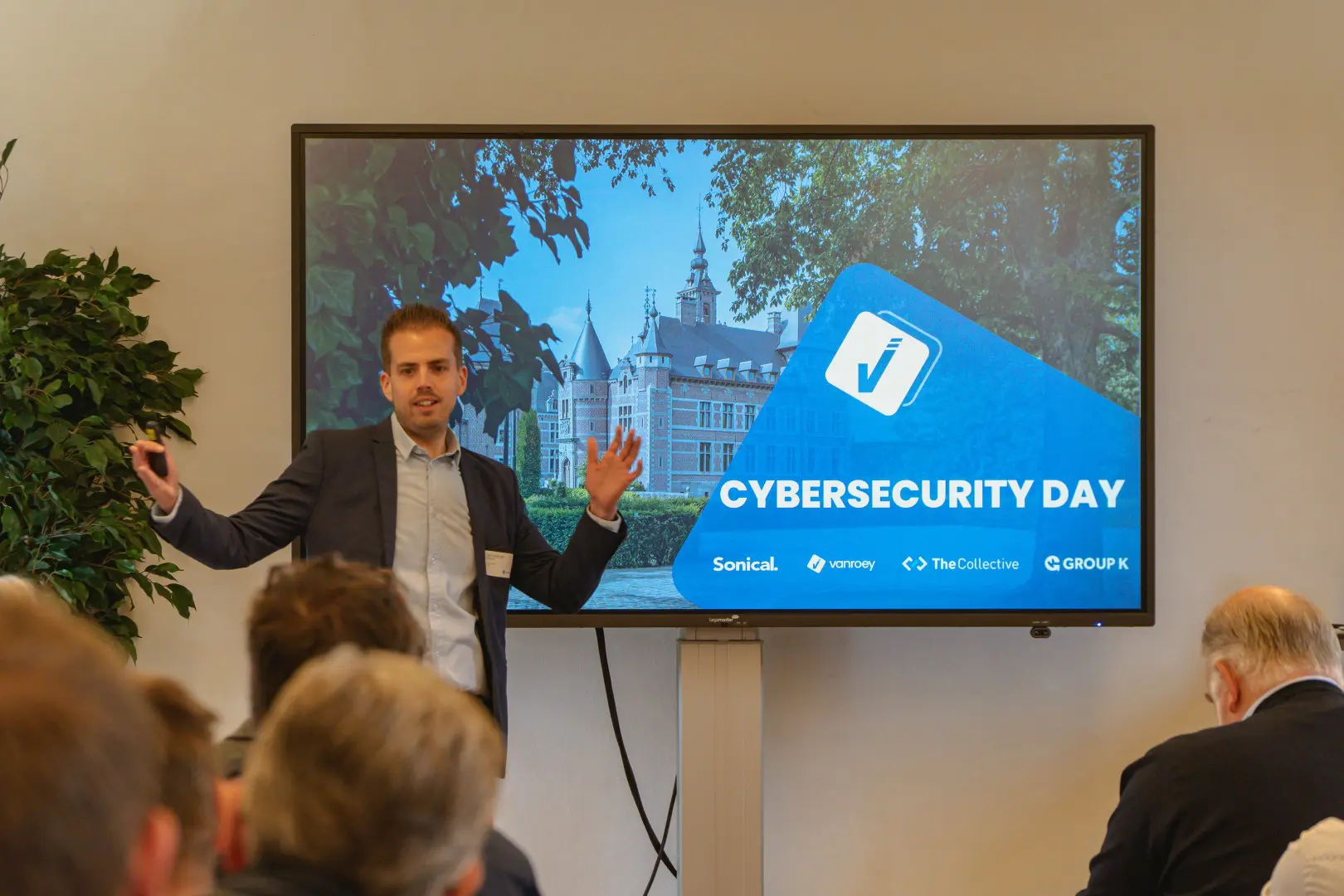
Marketing manager Tom Hufkens puts the comparison on the table immediately and asks every speaker to incorporate it. “A castle wall protects everything of value, and cybersecurity obviously does too. However, the challenge today is that your organization no longer operates solely within safe castle walls.”
Heightened threat landscape
Sales and marketing manager Frédéric Michils first outlines the broader context. AI, digitalization, and a heightened threat landscape are forcing companies to take security seriously.
“You can deny that AI exists, but then you’re really falling behind. Or you embrace it and ensure you can work more efficiently,” says Michils. According to him, the role of the classic jack-of-all-trades is over. “In the past, some companies had one IT person who knew a little bit about everything. Finding someone today who truly knows everything—that just doesn’t exist anymore.”
Next, the floor is given to Youssef Bey from Cresco, which performs pentests and ethical hacking as a neutral partner. This exposes the gaps that VanRoey can then address. “VanRoey isn’t going to grade its own homework,” he jokes about that independent role.
Pentesting
Bey summarizes the idea behind a pentest with a relatable analogy: people who keep pressing a soda machine in the hope that a can will eventually fall out. “That is actually exactly what you do with pentesting: you manipulate a system in various ways until something comes out,” he says. The goal is to hack before you are actually hacked.
Bey takes the audience through a series of stories that sound like a movie, but aren’t. At a Belgian city, his team was inside the admin panel of all traffic lights within the hour. “We could have set them all to green or red. Obviously, we didn’t do that,” he says.
An amusement park, a Dutch museum with a database of millions of euros worth of art pieces, luggage lockers in stations, a pharma company via its CRM: each time they managed to get in. The most recent anecdote is also the most sobering. “Just last week, we got into an internal network via an aquarium thermometer.”
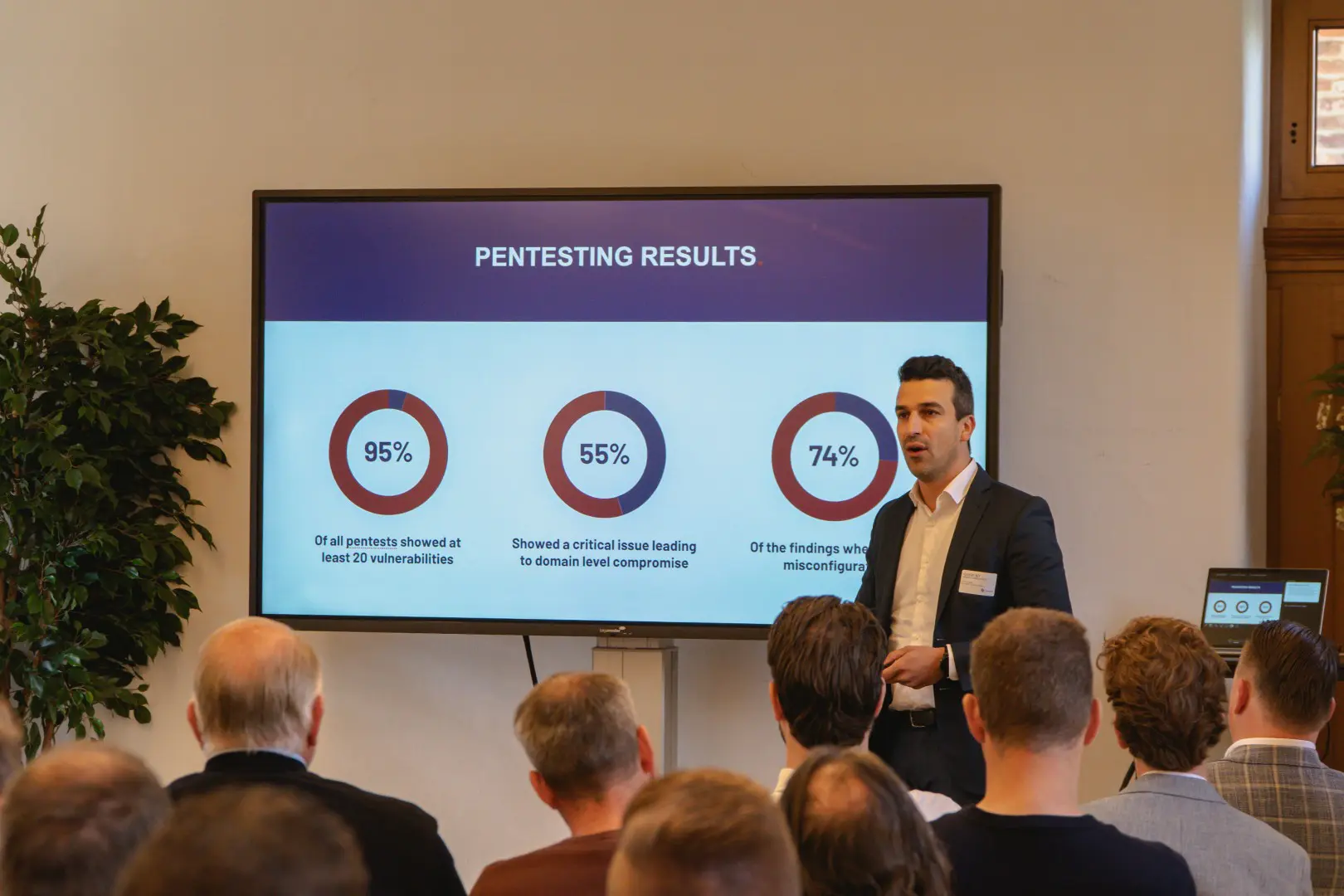
In other words, a pentest is a snapshot, and something always comes out—even for those with the best IT partner. We bundle the hard figures behind that story in a separate news piece.
Securing an empty castle?
Zero trust is the answer to that empty castle, according to Jente Vandijck, Solution Architect at VanRoey. Data is moving to SaaS applications and people are working everywhere; those who continue to secure things the old way are protecting something that is no longer there. “If we keep securing things in the classic way, we are actually securing an empty castle.”
According to him, the solution revolves around three core principles:
- Verify explicitly: constantly re-authenticate and authorize.
- Least privilege: just-in-time and just-enough access, where a user only gets the rights they need at that specific moment.
- Assume breach: assume you’ve already been hacked and therefore constantly minimize your attack surface.
While Vandijck looks at identities, Pelle Aardewerk shifts the focus to the device in your hands. The Endpoint Security Lead VP EMEA at HP claims that more than two-thirds of security incidents today start at the endpoint.
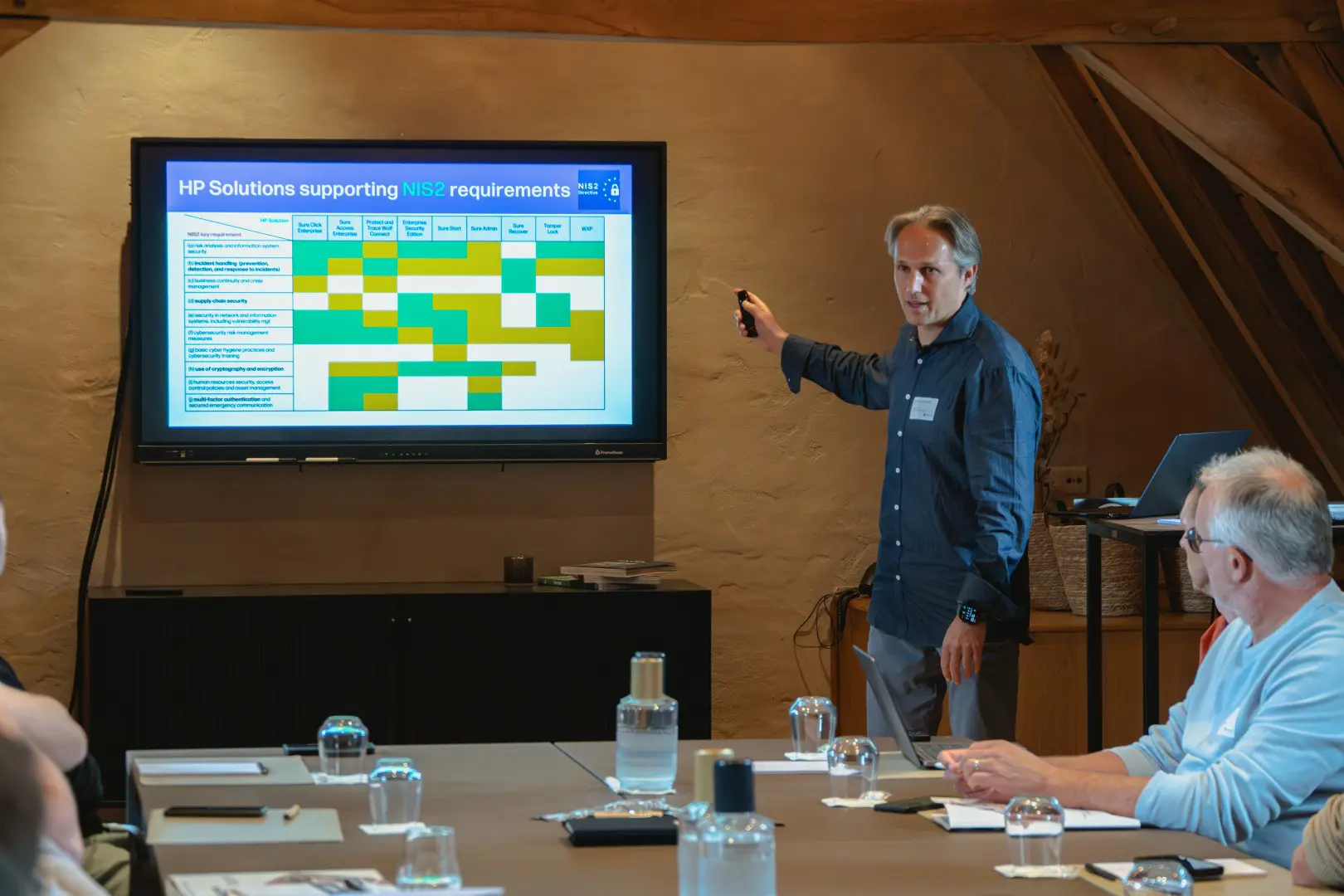
Aardewerk places this in the European context of NIS2, DORA, and the Cyber Resilience Act, which also force suppliers toward security by design. Complete security remains an illusion: “100% security does not exist and never will.” The core of his argument is therefore a change in mindset, from detection after the fact to prevention beforehand.
“A hacker only needs one or two minutes,” he warns. “I recently clicked on a phishing link myself. With AI, everything is so sophisticated that it just happens.”
The hacker aims for your brain
From hardware and software to the human element. Veerle Peeters, founder of CybHERstrong, connects all the sessions with this. “If I were a hacker today, I wouldn’t hack your firewall, I would hack your brain. And I would use AI to do it,” she opens.
Peeters, a sociologist and criminologist by training, immediately dispels a persistent statement. “I always get a bit of the creeps when I hear that humans are the weakest link,” she says. According to her, it’s not a matter of stupidity: “Just because we know something doesn’t mean we’re going to do it.”
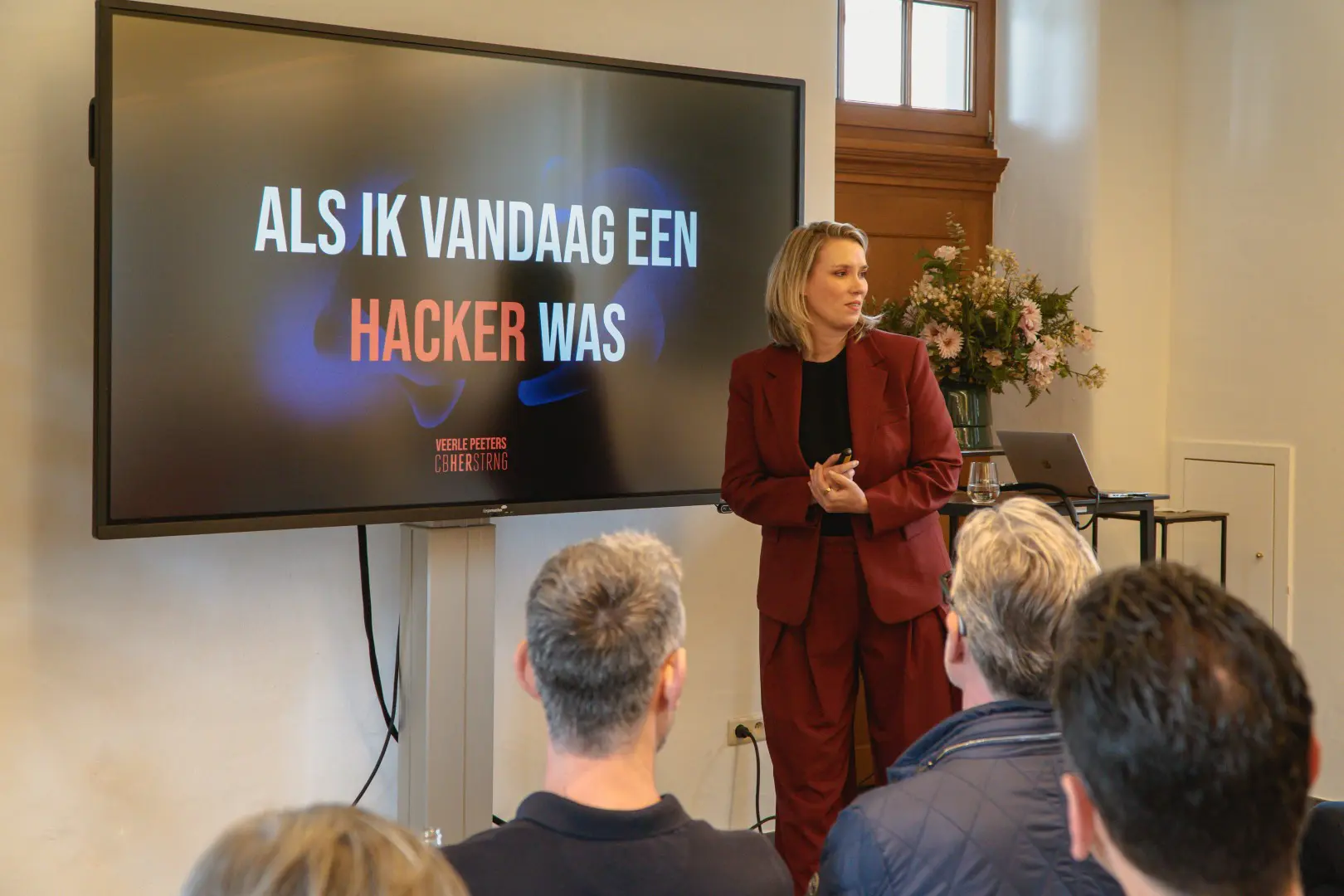
According to Peeters, security doesn’t start with processes, but with a leadership decision. If vision is lacking, you get confusion; if importance is lacking, resistance follows; without a plan, chaos arises; without resources, frustration; and without the right competencies, people become afraid.
The message is that security must be anchored in the culture and not just stuck on top like a sticker.
The gate is open
What begins with a castle metaphor ends with the observation that the walls are still there, but the gate is being opened from the inside. The technical sessions show that the perimeter has dissolved into identities, devices, and cloud, and that regulations like NIS2, DORA, and the Cyber Resilience Act are forcing companies to take responsibility deep into their supply chains.
Cresco’s pentest stories make it painfully concrete how quickly things go wrong, and behind every successful attack is a human who, under pressure of speed, authority, and trust, opens the door.
Tom Hufkens closes the day with that same common thread. The message is not “buy more technology,” but “organize security around your people.” Or, in the terms that perfectly summarize the Castle of Ordingen: securing an empty castle makes no sense.