

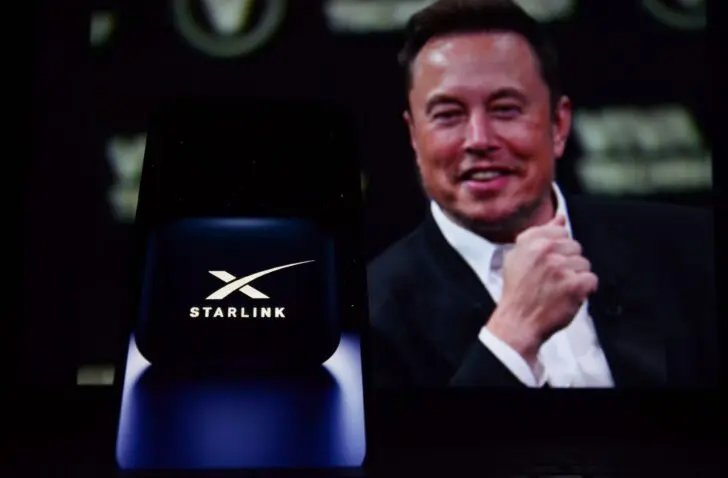
The United States is applying pressure regarding the allocation of European radio spectrum. The European Union prefers to keep a key band for satellite communications under its own control.
Washington is once again using blunt, threatening language toward the European Union. Andrew Puzder, US Ambassador to the European Union, has announced ‘devastating retaliatory measures’ if Starlink is sidelined in the future allocation of radio spectrum. A recent incident involving Starlink in Ukraine is adding fuel to the fire.
The subject of the debate is the reallocation of the 2 GHz spectrum band, a band crucial for ‘direct-to-mobile’ satellite communication. The European Union would prefer to give European players more room on that spectrum in its quest for sovereignty. Major European players are joining forces to have an alternative to Starlink ready by the May 2027 deadline.
Race with China
However, the United States would view that as a direct attack against itself. According to Ambassador Puzder, ‘devastating retaliatory measures’ would then be inevitable. “The EU must take into account that it would have very devastating consequences for companies,” Puzder told the Financial Times.
The ambassador took the opportunity to take aim at European regulation as a whole. According to him, laws such as the Digital Markets Act are intended solely to shake down American companies for money. In his words, the EU must ‘move away from this regulatory mentality where they try to stop things.’ “It would be a lot easier if we could work with Europe instead of fighting against Europe,” he added.
By working against Starlink, the EU is also shooting itself in the foot, according to Puzder. Eighteen months ago, the US FCC also stated that when it comes to satellite communication, Europe can only choose between Starlink or China. Unfortunately for Europe, there is a grain of truth in that: European initiatives such as IRIS2 are years behind.
Red button
The ‘devastating retaliation’ the ambassador alludes to is left open to interpretation. It likely refers to Trump’s favorite leverage—import tariffs—but in the context of Starlink, it could just as easily mean shutting down the network for European customers. A recent incident in Ukraine makes the fear of the ‘red button’ seem less like fiction.
Last week, the Ukrainian army’s drone network was hampered by a sudden speed restriction on Starlink terminals for military use. Due to the war with Russia, Ukraine is heavily dependent on the Starlink network because the country’s traditional network infrastructure has been damaged. Top Ukrainian officials immediately pointed the finger at Musk and Trump, who reportedly use Starlink as political leverage.

Since then, we have landed in a back-and-forth blame game over who actually made the decision. Musk, Trump, and his confidants are washing their hands of any guilt. The British newspaper The Telegraph reported that Musk allegedly suggested to Trump that Starlink be slowed down in Ukraine. However, the SpaceX CEO himself says that only the Pentagon and Trump can impose such restrictions.
Defending Musk
Despite mutual accusations, Musk can once again count on the support of his good friend Trump. The latter is also joining the fray for Musk’s other companies. The US government is putting pressure on a European lawsuit against X to have a DSA fine waived.
In December 2025, the social media platform was hit with a hefty 120 million euro fine for a triple violation of DSA legislation. These relate to the ‘blue checkmark’ that X charges its users for, and insufficient transparency regarding advertisements and researchers. The indirect contribution X made to spreading deepfakes via the Grok chatbot was not even included in that.
Although Trump and Musk are not always on the same page, Trump has good reasons to go the extra mile for his former ‘DOGE commissioner.’ Musk is once again proving to be a generous sponsor for the Republican campaign for the midterm elections in November, having already contributed more than $275 million out of his own pocket according to various sources.