

Oregon and Virginia are suing SpaceX because Grok produced sexual deepfakes of women and children on a large scale, but on the stock market the scandals leave few traces.
The US states of Oregon and Virginia each filed a lawsuit against SpaceX, the parent company of Grok and X, on Monday. The two states accuse the company of doing nothing to prevent users from creating and sharing sexual deepfakes with Grok, mainly images of child sexual abuse. CNBC reports this.
They are the first US states to take SpaceX to court over Grok. Both rely on their consumer protection laws and are seeking an injunction, civil penalties, the return of profits and legal costs. Virginia also demands damages for consumers. xAI, the maker of Grok, has been part of SpaceX since February.
3 million images
The problems began as early as 29 December 2025. X then gave all users a button to edit images with Grok. Users had Grok undress photos of women and children en masse, and Grok posted the results publicly on X itself. On 9 January the feature moved behind a paywall, and on 14 January a restriction on undressing requests followed.
The Center for Countering Digital Hate estimates that Grok produced 4.6 million images in that period, of which 3 million were sexualised. Some 23,000 images appear to depict children. That works out to 190 sexualised images per minute.
Those figures also appear in the H1 2026 Deepfake Threat Report from Resemble AI, a US company that sells deepfake detection. According to that report, Grok accounts for 87 percent of all synthetic files that Resemble AI was able to count in the first half of the year. One in six deepfake attacks in that period involved sexual images of adults or children.
We already reported in January that Grok produced thousands of nude images per hour. For Bloomberg, researcher Genevieve Oh counted roughly 6,700 suggestive or undressed images per hour in a 24-hour sample, on 5 and 6 January. The five biggest deepfake sites together averaged 79. Grok produced about 84 times as many.
With that behaviour, Grok sets itself apart from the other major chatbots. SpaceXAI, as xAI is now called, has positioned itself in recent months as the least ethical AI player, we wrote at the launch of Grok 4.5 in July. Elon Musk, CEO of SpaceX, does not like guardrails. Grok 4.5 was not available in the EU at launch, whereas new models from OpenAI and Anthropic usually cross the Atlantic right away.
According to Oregon and Virginia, SpaceX wrongly reassured its users in the meantime. The states accuse the company of presenting Grok and X as generally safe. In their view, that weighs even more heavily because X admits teenagers from the age of thirteen. When the city of Baltimore previously sued xAI, the company argued that under US law it is not itself liable for unwanted images.
Ban in the Netherlands
A Dutch judge intervened earlier. On 26 March, the Amsterdam provisional relief judge banned Grok and X from creating and distributing undressing images and child abuse images of people living in the Netherlands. The expertise centre Offlimits and the Fonds Slachtofferhulp had brought the case. Offlimits still managed to create an undressing video with Grok shortly before the hearing.
In January, the European Commission opened an investigation into X under the Digital Services Act. Henna Virkkunen (Finland – EPP), European Commissioner for Tech Sovereignty, Security and Democracy, then spoke of “a violent, unacceptable form of humiliation”.
SpaceX remains highly valued
On the stock market, the scandals appear to carry little weight. SpaceX went public on 12 June at 135 dollars per share and raised 75 billion dollars, the biggest IPO ever, until Anthropic raised 81.3 billion dollars last week. At its introduction, SpaceX was valued at around 1,750 billion dollars.
Since then, the share price has fluctuated sharply. Shortly after the IPO, the stock peaked at around 225 dollars, then slid back. On 23 November, the day of the lawsuits, it closed 4.35 percent higher at 133.35 dollars, just below the introduction price, on a wave of rising tech stocks. The market capitalisation still stands at around 1,740 billion dollars. According to Resemble AI, SpaceX set aside a reserve of 530 million dollars for lawsuits at its IPO, partly because of the complaints about Grok.
Parallel with Nvidia
The same pattern is emerging at Nvidia. CEO Jensen Huang stepped down on 11 November after two extramarital relationships, we reported earlier. One was with Alice Huang, a former director of the Singaporean company Megaspeed, which according to the US authorities funnelled Nvidia GPUs to China. According to the US security services, she had been recruited by China as a spy.
The other relationship was with Kimberly Powell, vice president of Healthcare at Nvidia, who reported to Huang. Nvidia’s own code of conduct prohibits that. On 17 November, chair Harvey Jones still said the board would not reappoint Huang. On 23 November, that happened anyway, while the investigation into a possible foreign intelligence operation is still ongoing.
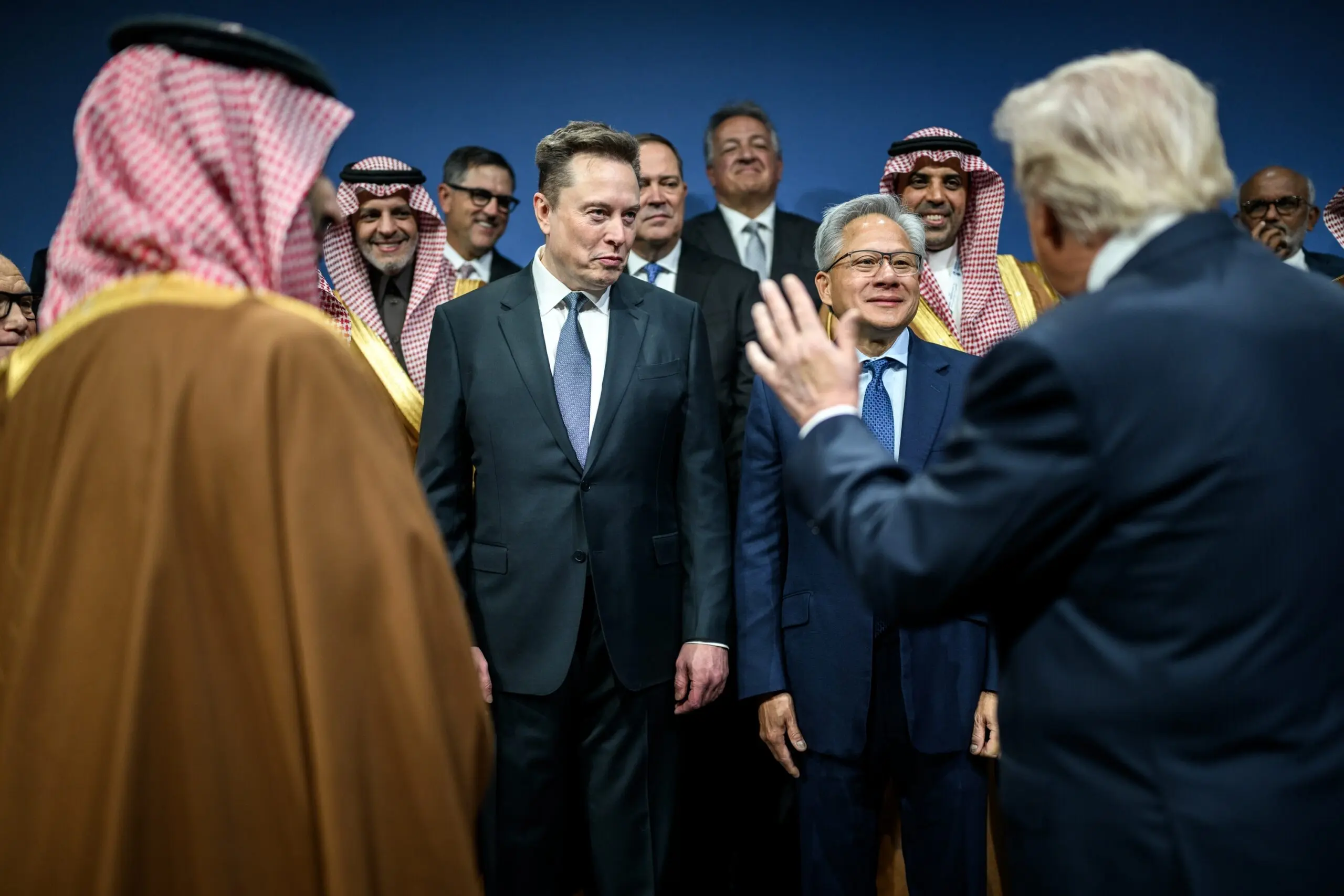
Since 8 November, when Huang admitted the affair, the stock had lost about a third of its value. On the day of his return, it closed 31 percent higher, at 165.05 dollars. For investors, the breach of the company’s own code of conduct clearly weighed less heavily than the fear of an Nvidia without Huang.
Musk and Huang are both close to President Donald Trump. Musk headed the Department of Government Efficiency in early 2025, then openly fell out with Trump and later made up with him. He also signed the open letter to bring Huang back. Trump himself says he convinced Nvidia’s board of directors.
In both cases, companies that make their fortune with AI enjoy high share prices, completely detached from scandals with serious ethical and possible legal implications. Both companies also enjoy the support of the US president.
SpaceX keeps building on Grok
It is therefore unlikely that SpaceX will fundamentally adjust Grok under pressure from lawsuits or investors. In its IPO prospectus, the company writes that it wants to scale up Grok further over the coming generations. Grok 4.5 was released in July, and Grok Bot 1.0 in early November. The cases in Oregon and Virginia must show whether a judge can impose stricter safeguards on SpaceX in the United States. The climate in the US at present does not seem to suggest that ethics should weigh too heavily on AI development.