
SAP is fully embracing AI at its TechEd conference, but simultaneously raises an important question: “How can a company differentiate itself in a world where everyone is talking about AI?”
SAP sets up at the Messe in Berlin for its TechEd conference. Everyone is talking about AI, yet attendees sound tired of empty promises. “People are fed up with hearing keynotes that still glorify the AI hype,” it is said on the main stage. At the same time, they are also tired of hearing that the hype is over. AI has become part of every process: the question is no longer whether companies will start using it, but how. According to SAP, “from now on, it’s serious.”
Developers are Being Empowered
It becomes clear early on that fear for jobs is misplaced according to SAP. “Developers aren’t disappearing; they’re being empowered,” states SAP board member Muhammad Alam. In the future, developers will design intelligent workflows and guide AI agents. The role shifts from writing code to building smart business processes.
Humans remain in the loop, period.
Philipp Herzig, Chief Technology Officer SAP
The loud applause after the TechEd opening keynote reveals relief: people will obviously remain necessary, but the boring and repetitive work shifts to AI. The fact that many technology companies, including Microsoft, IBM, and Salesforce, are in practice laying off thousands of profiles and pointing to efficiency gains from AI for this, is not addressed.
Away with Silos
Along with applause, there’s also a shared frustration: many companies are setting up isolated AI teams without data and application strategies. According to Alam, problems arise when data, application, and AI teams work separately: “This builds silos instead of solutions.” This doesn’t benefit any department. Everyone can only work efficiently together when technology, data, and processes align.
With Business Data Cloud (BDC), companies can share data without creating copies. This process is called “sharing without copying” or zero copy and sounds technical, but in practice, according to SAP, it should lead to fewer errors, less delay, and fewer Excel files. Other data specialists like Snowflake are also embracing this principle. What does Excel have to do with this? Generative models are powerful with text, but business decisions reside in Excel files and tables.
SAP therefore introduces a new foundational AI model: RPT-1 (pronounced as Rapid One). This is an AI model that understands business data and predicts future behavior. Instead of predicting the next word (as with LLMs), it predicts things like payment delays or customer churn. SAP states that where other AI models like ChatGPT mainly predict unstructured data, RPT-1 does so with relational and structured data from business applications including ERP.
read also
SAP and Snowflake Launch Integrated AI Data Platform Solution
From Weeks to Minutes
In a live demo, an employee asks AI which sales ideas have the highest chance of success this year. The model analyzes dozens of factors and returns priorities.
“The effort to build strong predictions now goes from weeks to days,” states a developer on stage. The ultimate goal is to get it down to minutes. SAP claims that RPT-1 is 50 times faster and requires 100,000 fewer GPU flops. Additionally, it’s 50,000 times more energy-efficient.
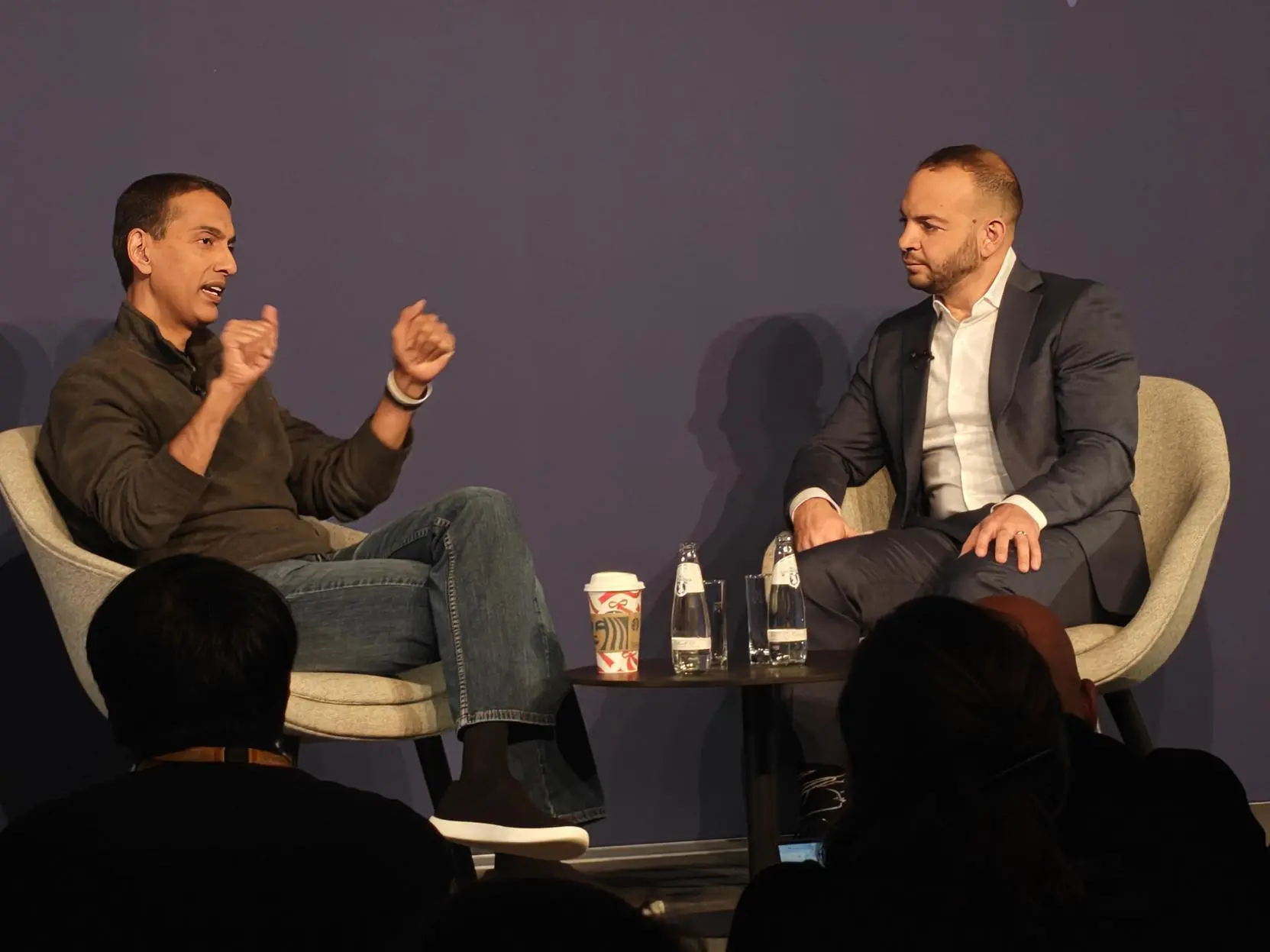
The term ‘autonomy’ is frequently mentioned at TechEd. When someone asks during a panel discussion how companies prevent hallucinations, Philipp Herzig, Chief Technology Officer, responds: “Humans remain in the loop, period.” Only when AI has proven itself over an extended period can decisions be further automated. Until then, AI is and remains a copilot.
AI in Every Business Layer
SAP pushes AI directly into the applications that employees use daily. “Every user experience, from the shop floor to the boardroom, becomes AI-driven.” Employees don’t need to switch between platforms or think up prompts. AI appears exactly where they already work as suggestions or recommendations.

An unexpected highlight at TechEd is the demo where the SAP Joule copilot can give commands to robots based on business context. Michael Ameling, President of SAP Business Technology Platform, explains how digitalization and robotics go hand in hand: “We’re bringing data and processes together, and now we want to go further and introduce robots.” The applause is loud as a small robot walks onto the stage with a ‘box from a factory’ in its hands.
Models with Memory
Longer-lasting interactions require a lot of context because AI needs to remember previous conversations and decisions. SAP explains that context windows therefore fill up quickly and proposes AI agents with long-term memory in HANA Cloud.
AI agents can thus summarize, compress, and preserve context, so they know what happened earlier when handling new tasks. This makes answers more consistent and prevents the need to repeatedly send the same information.
“Good AI starts with a clean and connected data layer. Many companies still spend too much time maintaining legacy systems, causing innovation to stall.” According to SAP, the real gain isn’t just in new models, but in cleaning up the data layer itself. When data is already part of the application like with BDC, every AI agent keeps working in the same context. This keeps decisions consistent, from the sales floor to headquarters.
AI is Maturing
The hype around AI is gradually making way for mature applications: AI is shifting from a chat window to all business layers. AI isn’t becoming an extra tool but a colleague. And therein lies the big breakthrough, according to SAP, and probably hundreds of other companies.