

Digital sovereignty is on the agenda for many European companies, though it is not always clear what the concept entails. Ramzy El Masry dissects it at the ISACA Europe conference in Munich, from Snowden to the boardroom.
Hyperscalers promise sovereign clouds, enterprises want to become sovereign, and even the European Commission is building its cloud tenders around it. However, almost no one knows exactly what sovereignty means in the context of the digital world. This is illustrated by Ramzy El Masry, cybersecurity professional and board member of the Dutch ISACA chapter, when he asks at the ISACA Europe conference who knows the legal definition. Barely one hand goes up.
Four building blocks
Digital sovereignty naturally refers to classical sovereignty. This rests on four building blocks: a territory, a population, an authority that exercises control over it, and recognition by other states. According to the Westphalian principle, no authority other than the state’s own sovereign exists within its borders. For Germany, Belgium, or the Netherlands, this is easy to define. There are borders, there is a government, and other countries recognize the state.
A piece of America in the Netherlands
El Masry uses the Netherlands, where he lives, as an example of how those building blocks blur online. “The territory of the Netherlands might as well be a piece of the US,” he says. “If all your information systems are located there, your data, systems, and infrastructure are not actually in the Netherlands.”
Sovereignty in the physical world and in the cyber world cannot be compared one-to-one.
Ramzy El Masry, ISACA Netherlands
The population cannot be clearly defined either, as a SaaS service or travel booking site serves Europeans and non-Europeans alike. There is no consensus on who governs the internet and which law applies where. “Sovereignty in the physical world and in the cyber world cannot be compared one-to-one,” says El Masry.
A strategic risk
The demand for sovereignty is sometimes driven today by ideological objections to the US, or by the desire to have everything ‘made in Europe.’ El Masry has nothing against the latter. “I would like to see much more made in Europe,” he says. “But you have to view digital sovereignty as a balancing act.” He also doesn’t see hyperscalers as the villains of the story. “They are companies operating within a jurisdiction that must follow the law.”
The topic seems sensitive regardless. El Masry mentions about five times that he is speaking in a personal capacity (and thus not on behalf of ISACA or the company where he works). He also emphasizes that his dissection of sovereignty takes an apolitical approach based on facts. The fact that the US is mentioned regularly is simply inevitable, even when ideological motivations are filtered out of the narrative.
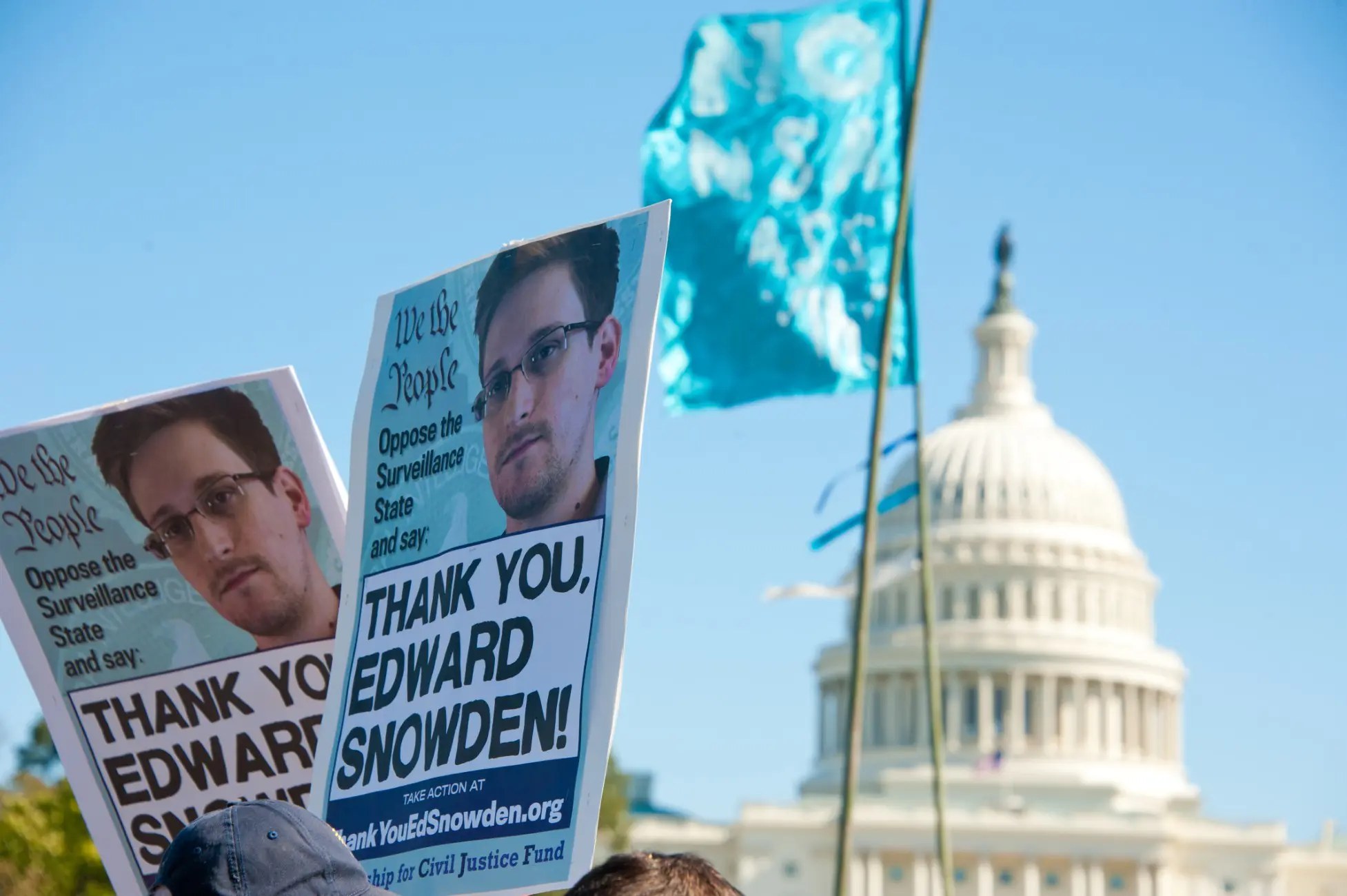
The discussion about the risk surrounding sovereignty dates back to June 2013, when Edward Snowden revealed that the American NSA was intercepting emails, documents, and payments on a large scale and sharing that information with Five Eyes partners (the foreign intelligence services the CIA collaborates with).
For those skeptical of these revelations, El Masry points to an official video of a 2015 panel in which then-CIA Director John Brennan states that the collection capacity of intelligence services has grown ‘significantly and exponentially since 9/11.’ “So we are not talking about a conspiracy theory,” El Masry asserts.
Amsterdam Trade Bank experienced firsthand that a lack of control has concrete consequences. Following sanctions against its Russian parent company Alfa-Bank, Microsoft stopped its services in April 2022 and refused access to data, after which the bank ground to a halt and went bankrupt. According to El Masry, Westphalian sovereignty died there, as a decision from outside the Netherlands paralyzed a Dutch bank.
Since then, several other relevant examples have emerged. The excommunication of members of the International Criminal Court from American digital and financial services is still fresh in the memory. Meanwhile, American threats of new sanctions that would impact Dutch digital capabilities are even driving a migration to open source within the Dutch government.
“I therefore see digital sovereignty as a strategic risk, and such risks must be addressed by a company’s board,” he clarifies. “This isn’t about feelings, nationalism, or emotions.”
Digital sovereignty in three layers
To manage that risk, you need to know what it entails. A standardized definition does not yet exist, so El Masry relies on the 2024 scientific paper ‘Digital sovereignty: Rhetoric and reality.’
In that paper, digital sovereignty revolves around control across three layers: the physical layer (resources, infrastructure, and devices), the code layer (standards, rules, and design), and the information layer (content and data). El Masry translates these layers into six domains: technology, operations, cybersecurity, law and regulation, data, and AI.
What if the infrastructure falls under sanctions? What if you get your data back in a format you can’t use?
Ramzy El Masry, ISACA Netherlands
Data sovereignty, which many vendors focus on, is only one part of that. Amsterdam Trade Bank lost its data, and before that, access to its infrastructure. “What if the infrastructure falls under sanctions? What if you get your data back in a format you can’t use?” El Masry asks the audience.
According to him, the sovereign offerings from hyperscalers primarily address that data question. “You remain dependent on a foreign vendor that can, in one way or another, shut everything down.” This isn’t just El Masry’s view; Microsoft has since confirmed this itself.
From SEAL-0 to SEAL-4
The European Commission identifies similar domains and works with gradations. This is evident from the Cloud Sovereignty Framework of October 2025. The guideline for public cloud service tenders assesses eight objectives in a weighted scorecard, ranging from strategy and jurisdiction to the supply chain and environmental sustainability.
Based on the framework, the EU identifies five levels. At SEAL-0, service and technology are entirely under the control of parties outside the EU. At SEAL-1, European legislation formally applies, but with limited enforceability.
El Masry points to the GDPR. “It applies to every EU citizen, but if the data is outside the EU, how much can you really enforce?” Data sovereignty only comes into play from SEAL-2. Above that are digital resilience and, at SEAL-4, full sovereignty without critical dependencies outside the EU. The word ‘critical’ in that highest level is important: it implies that some dependency is still permissible.
Sovereignty begins with people
Chris Dimitriadis, Chief Global Strategy Officer at ISACA, chooses a different starting point in a conversation with ITdaily. “For us, sovereignty means that Europe needs its own highly skilled and well-trained professionals,” he says. “It’s about closing the skills gap and attracting new talent in Europe.” With those people, he believes Europe can finally truly answer the other questions surrounding sovereignty.
For us, sovereignty means that Europe needs its own highly skilled and well-trained professionals.
Chris Dimitriadis, Chief Global Strategy Officer ISACA
According to Dimitriadis, this training must remain international, like the kind ISACA offers globally from the US. “If you only train Europeans the European way, without knowledge from other jurisdictions, I don’t think that’s the right path.”
He believes globalization also has its strengths. “Information technology essentially knows no borders. You cannot innovate if you only want to work with Belgian companies,” he states. “Digital ecosystems are diverse, and you need that diversity to choose the right players.”
A decision for the board
If an organization can and wants to house everything in Europe, El Masry says that’s fine. “If it’s possible, happy days. If it’s not, you have to manage the risk.”
In practice, it is rarely that simple. At a previous employer, El Masry presented the CEO with the fact that the risks were nearly impossible to eliminate. “Ramzy, we are a Microsoft company through and through,” the big boss replied. “That isn’t changing. If we lose customers because of it, I’ll accept that.”
The choice therefore lies with the board. The CISO or IT risk manager provides the risk analysis, covering everything from technology and the supply chain to customers and investors. The board primarily needs a price tag. El Masry uses the example of a SaaS company wanting to move from Azure to the European provider Stackit. “If that costs a million euros and the board wants to pay it, fine. If it’s 200 million, then maybe not.”
Know where you stand
For this assessment, El Masry proposes a maturity model with five levels per domain, linked to the EU’s SEAL levels. For the technology stack, data, AI & algorithms, cybersecurity, regulation, and operations respectively, it is important to assess exactly how dependent the organization is. Are non-European providers responsible for everything? Is the reality somewhere in between? Or do all capabilities rely on locally developed technology?
This allows you to determine where a company stands today. This is important, as El Masry noted at the beginning, since sovereignty entails real risks independent of ideology. It is therefore responsible and necessary to map out those risks. After that, it is up to the board to decide how heavily the risks of limited sovereignty weigh and how far it wants to go to mitigate them.