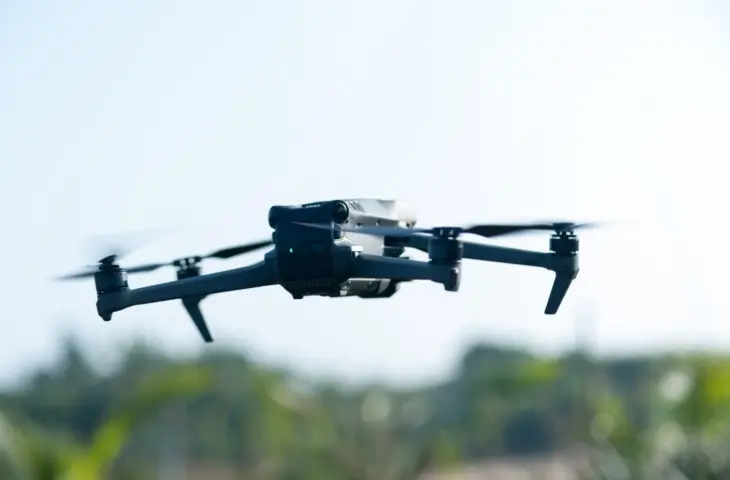
The European Commission intends to use technological tools to more quickly detect drones in the airspace. 5G and AI will be deployed as tracking tools.
At the end of 2025, several drone reports over European airports caused major disruptions to air traffic. The European Commission is now proposing an action plan to better protect the airspace against drones. In addition to stricter registration requirements, the plan includes the use of 5G and AI technology to detect drones faster.
According to the European Commission, current network infrastructure can be used to track drones. For drones connected to the network, SIM card data, data transmissions, and other activities can reveal their location. Additionally, the Commission wants to develop an AI system that alerts authorities to suspicious objects in the airspace. This would be developed in collaboration with national authorities, telecom providers, and technology companies.
Sensing with 5G
Drones that are not connected to the mobile network are harder to detect, but the Commission does not want them to escape either. This is where ISAC can help: Integrated Sensing and Communication. ISAC allows 5G antennas to be temporarily converted into radar sensors to identify flying objects. This way, a virtual ‘map’ can be developed showing which objects are in the airspace at any given time.
The European Commission primarily wants to roll out this technique over critical infrastructure. Telecom providers are already testing it on a small scale, but large-scale implementation requires changes in legislation. The Digital Networks Act, presented by the Commission last month, would already lay the initial groundwork for this.
To strengthen security against drones and other flying intruders, it is essential that the network infrastructure in Europe is further expanded. 5G Standalone networks are crucial to fully utilize these capabilities. The rollout had a slow start in Europe, but it is high time that 5G delivers on its promise.
read also