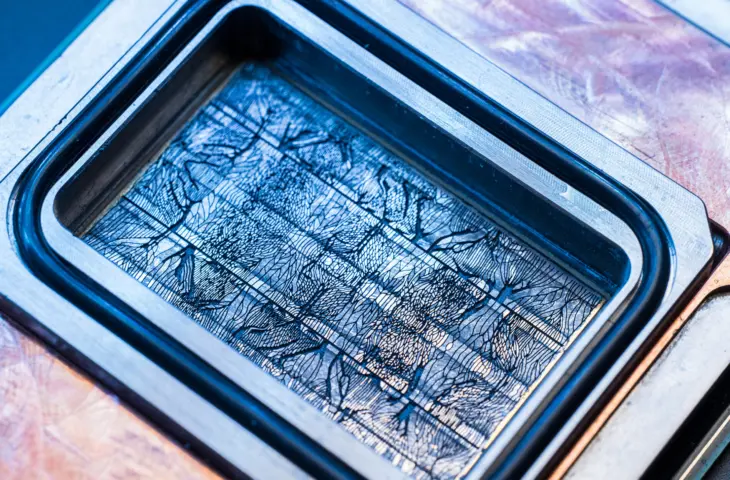
Microsoft has successfully tested a microfluidic cooling system that cools AI chips in servers more efficiently than existing technologies.
Microsoft claims to have made a breakthrough with microfluidics, a technology for cooling AI chips. This cooling system allows special coolant to flow through microchannels etched on the back of AI chips. According to the company, this cooling method is up to three times more efficient than current methods. Microsoft conducted a successful test using AI. The new approach, according to the company, can improve the energy efficiency and performance of data centers.
Heat is a Barrier to AI Development
The current generation of AI chips generates a lot of heat, which limits their performance. Traditional cooling methods such as cold plates are reaching their limits, especially as chips become more powerful. Therefore, Microsoft is testing a new technology: microfluidics. In this system, coolant flows directly through small channels etched into the silicon itself, removing heat directly at the source.
During internal tests, the microfluidic system proved to be up to three times more efficient than cold plates, depending on the workload. The peak temperature of chips also dropped by an average of 65 percent. The system was tested, among other things, with a simulated Microsoft Teams meeting on a server running core services.
AI also helped identify heat zones on the chip, allowing the coolant to be targeted effectively. This approach could also optimize power consumption, an important metric for the efficiency of data centers.
Stacking Chips
Microfluidics not only enables more efficient cooling but could also support new chip designs, such as 3D architectures. By stacking chips, communication between chip components can be faster. Until now, heat has been a limiting factor for such designs. By allowing coolant to flow directly between stacked chips, this problem can be circumvented.
Natural Channel Structures
Microsoft collaborated with the Swiss startup Corintis for the development and tested channel structures inspired by natural forms such as leaves or butterfly wings. The channels are as fine as a human hair and require a leak-proof packaging of the chip.
The company sees microfluidics as an important step towards more efficient and compact data centers. Direct cooling can increase server density without requiring additional physical space. Microsoft is exploring how the system can be integrated on a larger scale into future chips and production processes, continuing to collaborate with partners in the chip and server industry.