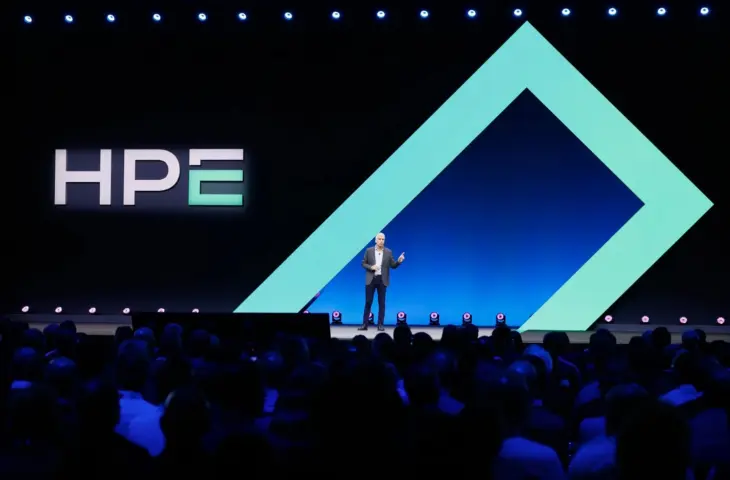
During HPE Discover Barcelona 2025, HPE shows how it is reshaping its portfolio around AI-native networking, hybrid cloud, and data-sovereign infrastructure, with the Juniper integration as a strategic lever.
HPE emphasizes during the European edition of Discover that it is redesigning its portfolio around one principle: AI is not an application, but an infrastructure layer. Through the integration with Juniper Networks and the introduction of AI-native networks, private cloud infrastructure, and data-sovereign AI solutions, HPE claims a unique position in a consolidating market.
The company no longer speaks about IT modernization, but about the birth of a new architectural model. Regarding the integration speed, complexity, and execution, we remain somewhat unsatisfied.
Network as strategic driver of AI
Traditionally, the network is an invisible layer beneath applications, but during Discover 2025, HPE makes clear that network is business logic. HPE CEO Antonio Neri: “We need a new generation of networks that form the foundation for cloud, data, and AI. Without that network, you cannot build modern IT.”
The acquisition of Juniper was initially seen as risky by some analysts, but Neri dismisses that concern. “We are already fully engaged in the integration. The fact that we already support dual hardware today shows how quickly the teams are coming together.”
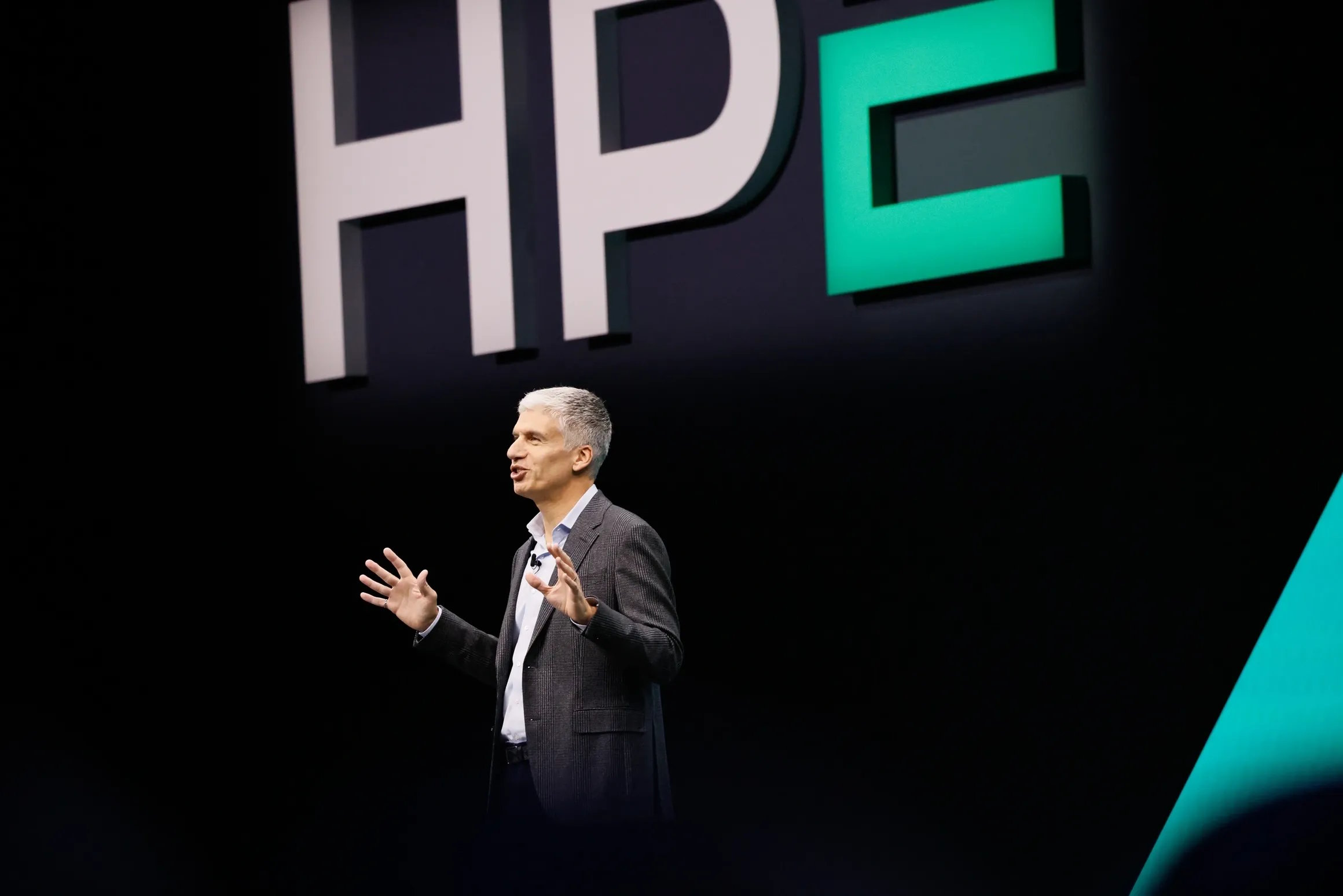
Rami Rahim, former CEO of Juniper Networks before the acquisition and today responsible for the combined network division with Aruba within HPE, goes one step further: “The network has never been so central. We have a unique opportunity to break the status quo.”
AI training, inference, and edge workloads require real-time transport of enormous data volumes. This makes the network a bottleneck — or an accelerator. HPE wants the latter. The new liquid-cooled QMX 5250 switch (with Broadcom Tomahawk 6 chip) is not a small update, but an attempt to redefine ethernet: “Production-level liquid cooling is incredibly difficult, but we have been doing this for decades in supercomputing,” says Rahim.
The result is a switch with 1.6 Tbps per port, built for AI data centers where GPUs consume ever more data.
Aruba Central and Juniper Mist
The biggest surprise of the event is not the hardware, but the speed with which HPE is converging two seemingly competing network platforms. Where the market often associates mergers with lock-in and migration stress, HPE turns that theme around with Aruba Central and Juniper Mist.
“The two platforms will coexist and eventually become one through cross-pollination of functions. Customers won’t even notice the difference,” says Neri.

Rahim adds: “These changes don’t happen over years, not even months. We’re talking about weeks until the first functionalities go live.”
This speed is possible because HPE uses agent-based AI on both platforms. It works with small, targeted models that interpret alarm signals, adjust configurations, and prevent failures. Neri calls this the agentic enterprise: “We now live in the era of the agentic enterprise. Not one large model, but hundreds of specialized AI agents that execute processes together. This way, the network becomes not a cost, but an autonomous digital employee.”
Hybrid cloud no longer a compromise
The heart of that AI foundation beats in GreenLake, which evolves from a consumption platform to a full-fledged cloud operating layer. In Barcelona, Neri no longer positions hybrid cloud as a compromise between on-prem and public cloud, but as the standard model for AI. “AI is the ultimate hybrid world,” he says. “You must be able to run workloads where it makes the most sense, from edge to data center.”
AI is the ultimate hybrid world.
Antonio Neri, CEO HPE
The cloud architecture of the previous decade falls short, according to him, because it offers customers too little choice and resilience. HPE links GreenLake Intelligence to this: a layer of agentic AI that views networking, compute, and storage as one system and automatically suggests or implements optimizations.
At the same time, HPE bridges to European reality with air-gapped private clouds and completely disconnected environments. Think of cloud-native environments for research institutions, defense, and the public sector. “Our air-gapped private cloud options deliver sovereign operations without giving up cloud agility,” emphasizes Neri.
Hybrid cloud at HPE becomes less an infrastructure decision and more the control layer where governance, costs, data, and AI converge.

Virtualization costs as ammunition in a strategic war
A notable front line in this battle is not AI, but virtualization. The disappearance of traditional licensing models and skyrocketing prices frustrate CIOs. HPE seizes on that frustration with Morpheus.
“With Morpheus VM Essentials, you can reduce your licensing costs by up to 90 percent,” declares Neri. “Single-vendor runtimes are becoming harder to pay for and defend, especially now that AI puts additional infrastructure pressure.”
HPE Morpheus is positioned as a cloud-agnostic orchestration layer that brings VMs, containers, and multiple hypervisors under one policy. It includes features like zero-trust software networks, microsegmentation, stretch clusters, and automated failover for minimal downtime.
Single-vendor runtimes are becoming harder to pay for and defend, especially now that AI puts additional infrastructure pressure.
Antonio Neri, CEO HPE
Morpheus VM Essentials supports both VMware and HPE’s own KVM-based hypervisor and features like live migration and high availability.
The real gain, according to Neri, lies in the combination of consolidation (fewer physical servers), more granular license management, and phasing out expensive legacy silos. “Such a trajectory can take years and bring significant migration and change costs.”
HPE rightly presents the current market pressure around virtualization as a critical moment for IT leaders, but it’s not a magic reset button. However, those who want to capitalize on the promise of cheaper, more flexible virtualization must critically examine the dependencies. He emphasizes this in the Q&A with the press as well. Think of things like application compatibility and operational maturity. If you migrate blindly, the cost mainly shifts rather than truly decreasing.
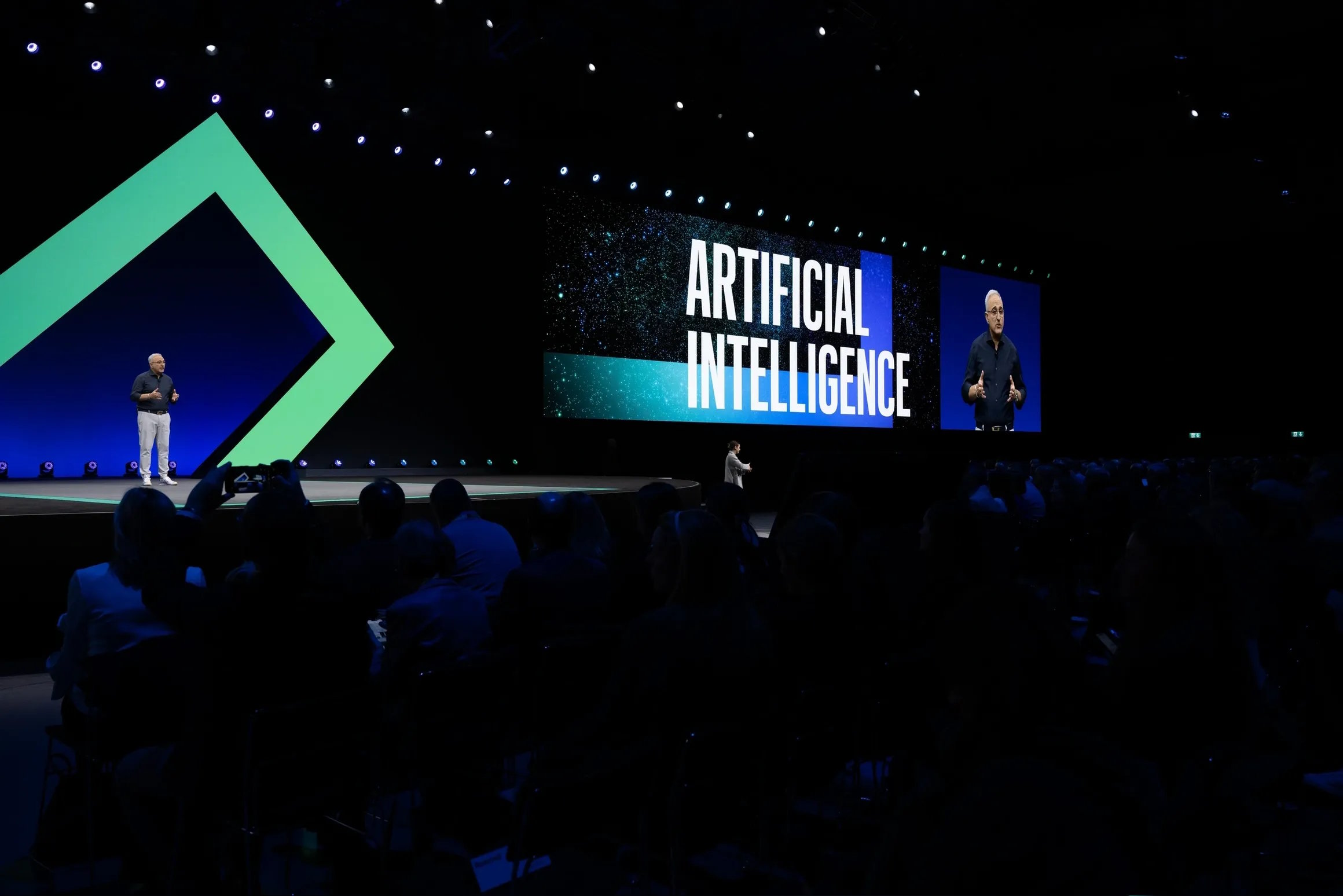
At the helm of the AI era
After Barcelona 2025, it’s clear where HPE wants to go: from infrastructure supplier to architect of an AI-native business landscape. Networks become an intelligent brain, cloud becomes a control layer, and AI gets baked into every piece of operation.
But precisely because the ambitions are so high, the company must be careful. The integration of Juniper with HPE (and Aruba) must be both fast and painless. One misstep in migration trajectories or platform convergence, and the promised self-driving networks become mainly a new layer of complexity for customers.
The network becomes the place where AI lives, learns, and works. This is just the beginning.
Rami Rahim, President and General Manager HPE Networking
Rahim still optimistically summarizes the vision: “The network becomes the place where AI lives, learns, and works. This is just the beginning.” Opposite to this stands Neri’s unvarnished ambition: “Our vision is to become market leader. It’s that simple.”
The focus on data sovereignty is logical today. HPE cleverly plays into European regulations and distrust toward hyperscalers. At the same time, the company must account for a political and legal minefield where rules change faster than contracts can be adjusted. Success depends on how flexible GreenLake and the sovereign cloud options actually prove to be once legislation is further tightened.