


The Motorola Razr Fold is a very good foldable smartphone which, just like its main competition, still fails to make it truly clear what its actual purpose is.
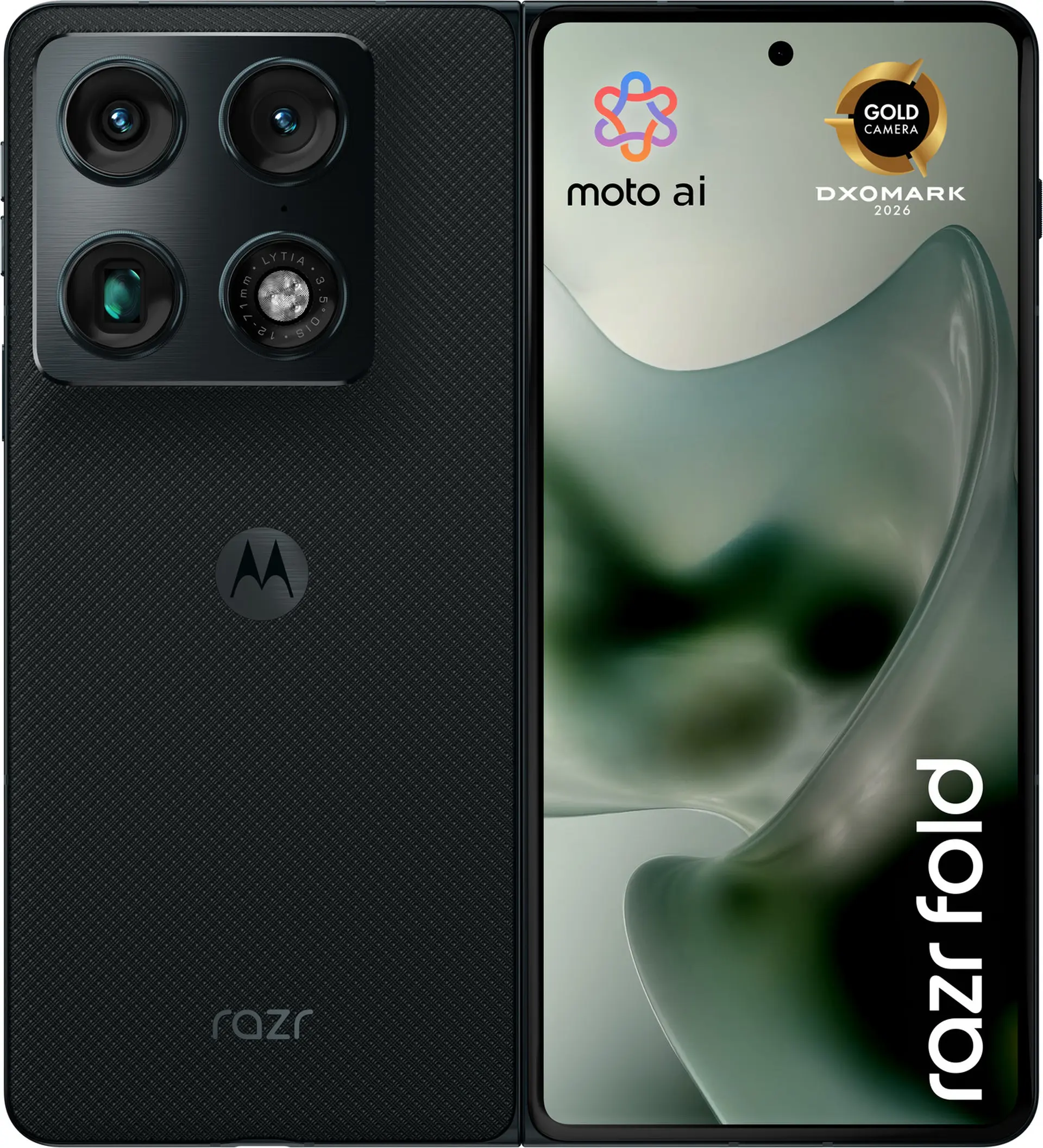
With the Razr Fold, Motorola is venturing into its first large foldable smartphone. After several editions of the compact Razr, where you can essentially fold a classic smartphone into a device half its size, the manufacturer is now also releasing a phone that, when folded, has the format of a classic, hefty smartphone. When you unfold the device, a double screen appears with the screen surface of a modest tablet.
New variant, familiar theme
The concept is no longer new, and Samsung is the biggest champion of this type of device. Place the Motorola Razr Fold next to the new Samsung Galaxy Z Fold 8 Ultra, and you see two variants on the same theme.
Motorola opts for a device that has a 6.6-inch screen diagonal when folded. The phone is just as tall as the largest devices currently on the shelves, but narrower. The resolution is 2,520 x 1,080 pixels. When you flip the phone open, you find an 8.1-inch screen inside with a resolution of 2,484 x 2,232 pixels.
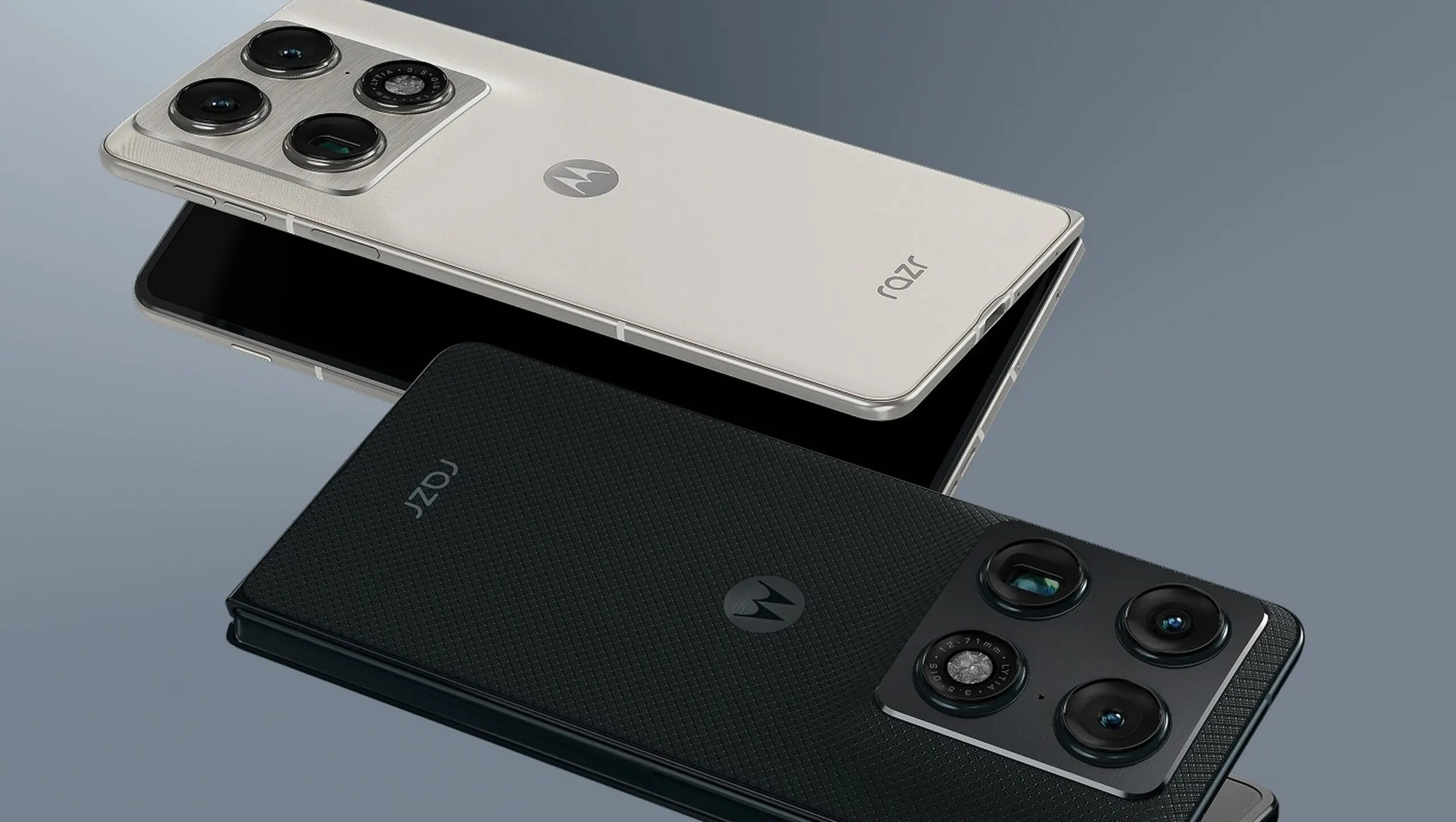
Between all those screens, Motorola finds room for a Qualcomm Snapdragon 8 Gen 5 processor, assisted by a generous 16 GB LPDDR5X RAM. That is ample, and more than the nonetheless very powerful Oppo Find X9 Ultra. Motorola further succeeds in integrating 512 GB of storage and crams a 6,000 mAh battery into the chassis. That is respectable, and more than what Samsung can offer.
Slowing fold
The performance is by no means bad. The Moto Razr Fold’s processor performs as expected, especially when you know that Samsung’s Fold 8 Ultra has the same chip on board.

It is immediately noticeable that the Oppo Find X9 Ultra and the Samsung Galaxy S26 Ultra both perform better, even though they also have the same Qualcomm processor inside. This shows that the complexity of a foldable device still leads to compromises. Although you pay much more, you get less computing power from the same chip. We add the much cheaper Samsung Galaxy 57 (429 incl. VAT) to the comparison for illustration.
Graphically, the story is a bit different. Samsung can squeeze slightly more performance out of the GPU than Motorola in the lighter of the two graphic tests.
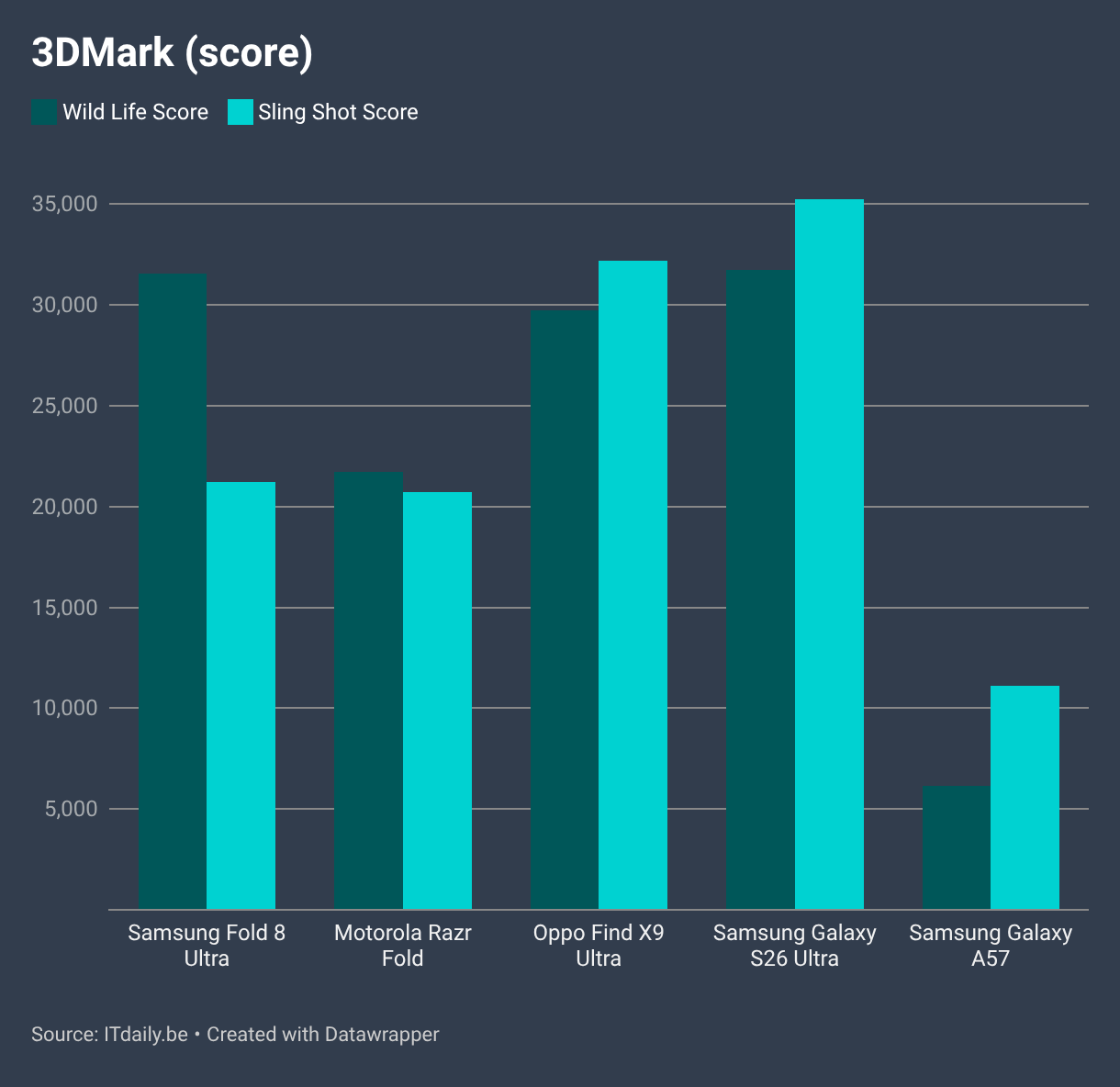
The point we want to illustrate with these figures relates again to the hidden price of a Fold device: classic smartphones, which despite their huge price tag still cost hundreds of euros less, perform much better.
Endurance
Regarding the battery, Motorola delivers a compromise-free device here. For clarity, we test in closed mode to make the comparison with classic smartphones relevant. Here we see that the Razr Fold (6,000 mAh) does let the Find X9 Ultra with its truly gigantic battery (7,000 mAh) take the lead. However, the device does compete in the top class.
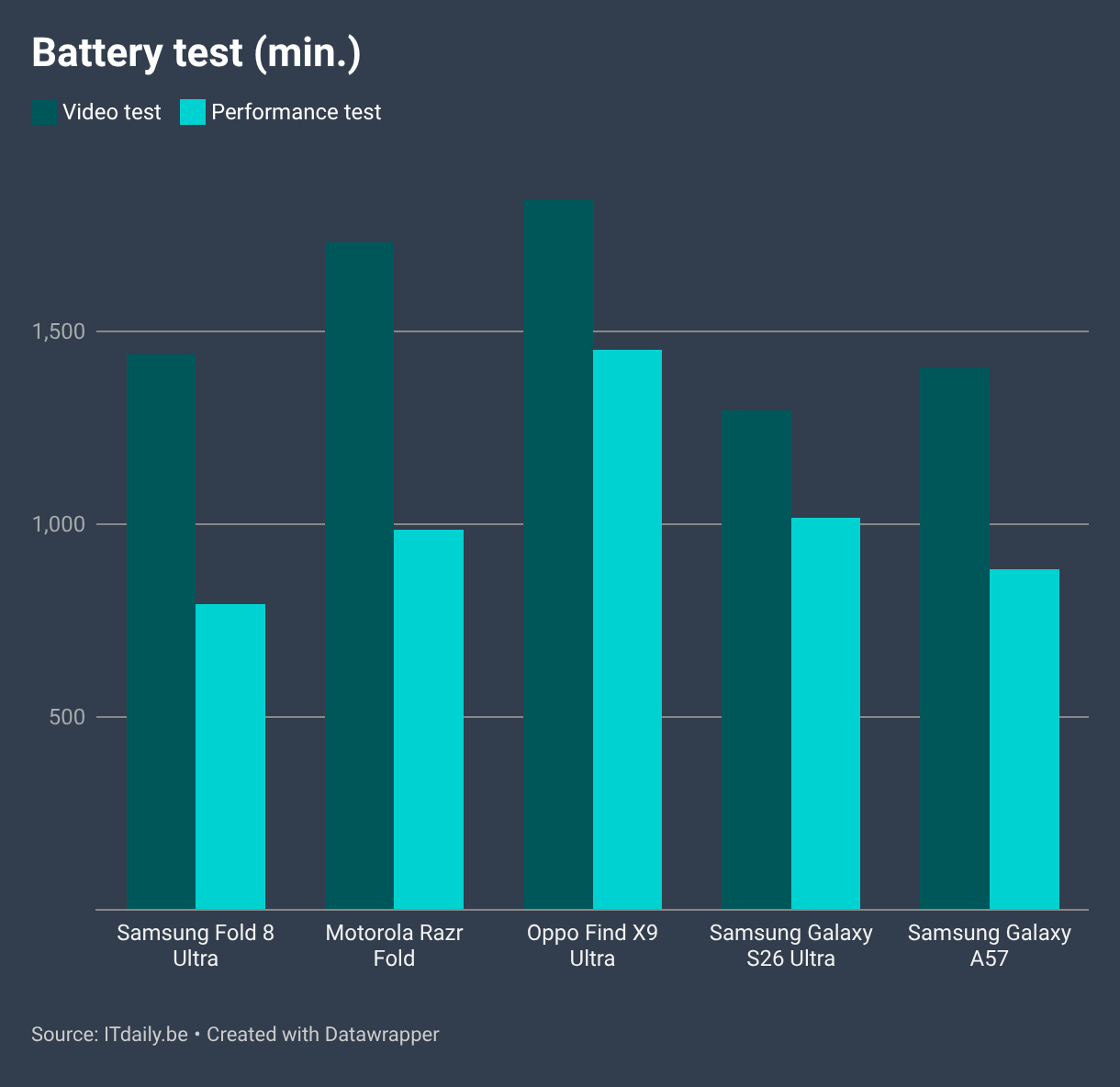
The comparison with the Fold 8 Ultra is striking here. Samsung puts a much smaller battery (5,000 mAh) in that device, making the results significantly worse, entirely in line with logic. The result becomes even more extreme when we test with the large screen open. Then the Razr Fold lasts almost twice as long as the Galaxy Z Fold 8. Points for Motorola.
Points that we immediately deduct when we look at the charging figures. It takes so long to fully charge the Motorola Razr Fold. Oppo does a lot better, despite the larger tank. Samsung does too, but that in turn is due to the battery being too small.
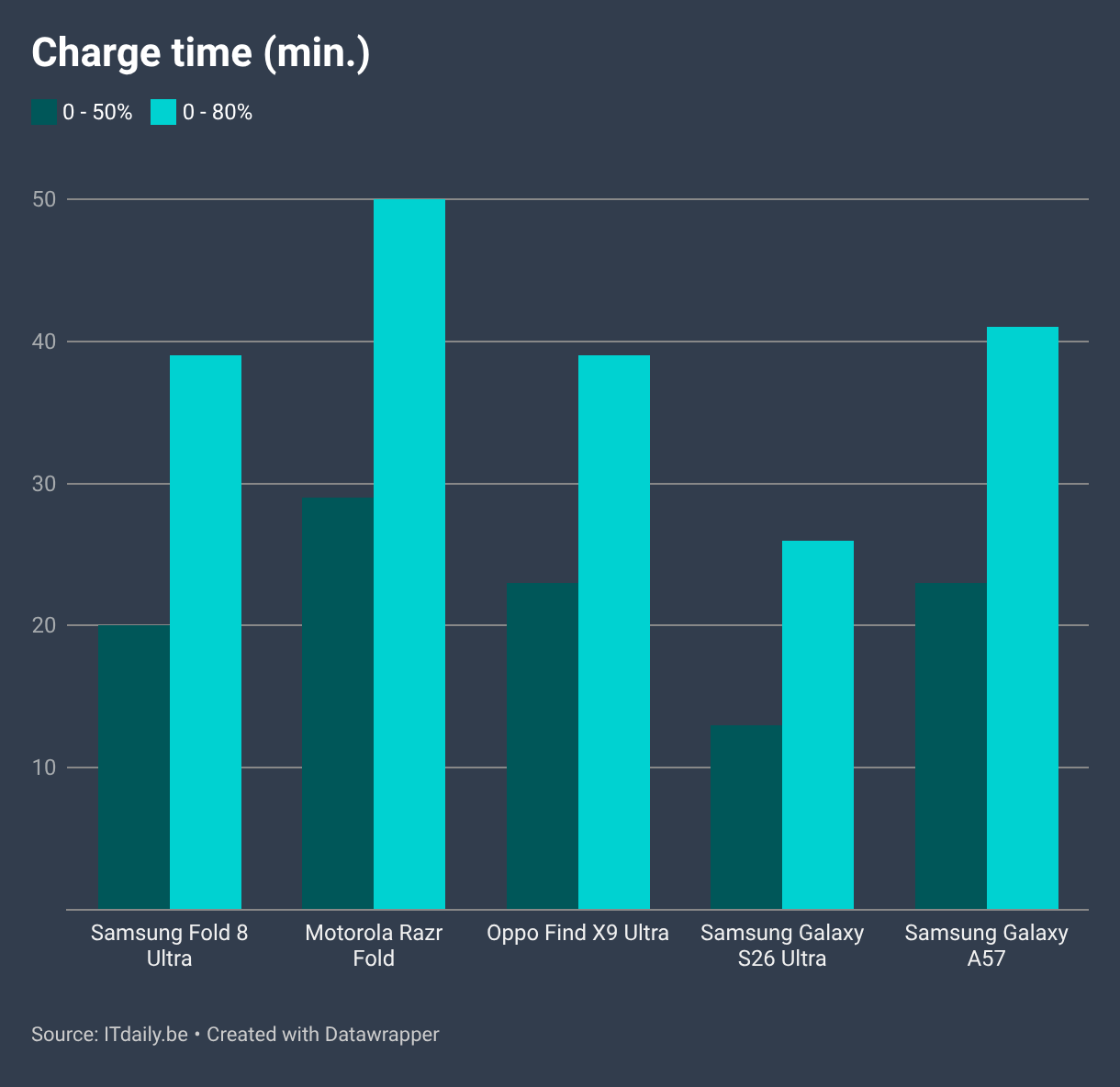
In practice, we found that it is not possible to keep the Motorola Razr Fold charged if we only plug the device into the socket while brushing teeth and showering in the morning. This is a habit that other smartphones have made possible for several years now. After a few days, you have to set aside more time for a long charging session.
Don't be fooled by Samsung's Fold: because the device runs out of power faster, you are in practice spending at least as much time charging.
Clean Android (but also AI)
Motorola delivers the device with Android 16, even though Android 17 is already available. The manufacturer promises up to seven major OS updates, which is significant. Motorola's version of Android is quite clean, without too much clutter.
Like all competitors, the manufacturer is getting caught up in the AI hype and integrates several AI functions under the name Moto AI. Those who enjoy that can get started with it. The biggest added value for us is that the unsolicited AI bloatware doesn't really get in the way.
Camera prowess
Regarding the cameras, Motorola does not hold back. There are three visible cameras on the back, all three equipped with a 50 MP sensor. One comes with a wide-angle lens, then there is a classic main camera, and finally, Motorola provides an optical zoom via a periscope lens (3X, with a digital preset of 6X). The selfie camera is also well-equipped at 32 MP.





With the specification list alone, Motorola shows Samsung that it means business. Admittedly, the Fold 8 Ultra gets a 200 MP sensor behind the main camera, but a real zoom lens is missing. The 10 MP sensor behind the zoom lens on that device is almost laughable. The 50 MP wide-angle camera is comparable to Motorola's.


In practice, that zoom lens is perhaps the most important one. It allows you to take natural portrait photos, with a ratio that approaches that of a real camera. Motorola offers the possibility to switch between three quality options, Samsung does not.


We have no complaints about the photo qualities of the Motorola Razr Fold, except for the very mediocre selfie camera. This camera system does not score at the level of the very best (the new Pixel 11, for example, easily outclasses this smartphone), but it does compete in the top category. With a suggested retail price of 1,999 euros incl. VAT, the Razr Fold is more expensive than those better devices, so competing is the least we expect.
Successful demo, poor concept
The above shows that the Motorola Razr Fold is a solid premium smartphone. For many hundreds of euros less, you can get much better mobile phones, with more powerful hardware, better battery, and stronger cameras, but okay, that's obviously not what this device is about. Central to the identity of the Razr Fold is the folding.
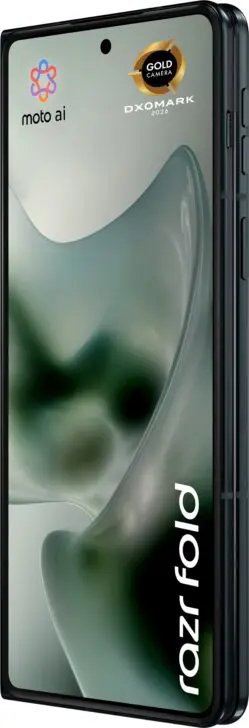
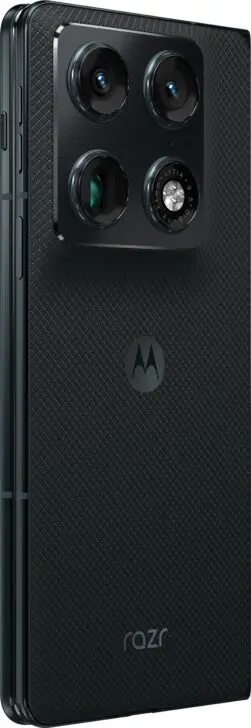
In that regard, we feel Motorola delivers a solid technical demo, but this manufacturer succeeds no better than Samsung in making it clear what the intention actually is.
Unfolding because you have to
When closed, the main screen is too long and too narrow. We find the cover display too awkward to type on extensively, especially with large hands. Those with smaller fingers will have less trouble, but will never, ever reach the top of the display with one hand. The screen is usable, but much less pleasant to work with than that of a classic phone.
That is immediately the main reason to unfold the Motorola Razr Fold: then we are rid of the too-narrow base screen. After folding, a rectangle opens with almost the dimensions of a square. The crease inside is visible and tangible, more so than with the Samsung phone. As with previous editions of foldable phones, that seems more disturbing at the beginning than it actually is: you get used to it, and we look right past it.

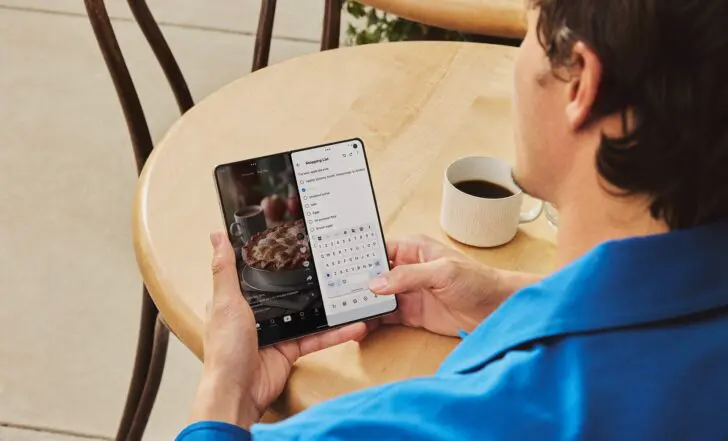
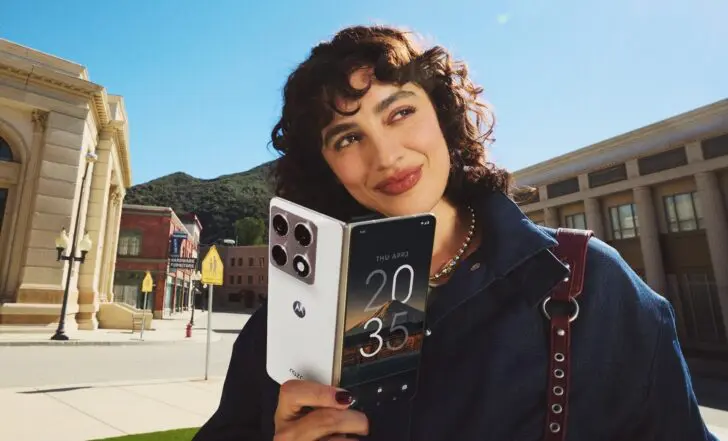
We notice that unfolding the Razr Fold is slightly stiffer than with the Z Fold Ultra. It's in the details, but the Samsung phone springs open and shut more enthusiastically, while with the Razr we sometimes get the urge to unfold the device just a little bit more. When we open both devices side by side, we have to conclude that the Samsung Galaxy Z Fold 8 Ultra feels just that little bit more premium than the Motorola Razr Fold.
Ideal for square work
So there we are, with the square screen. For multimedia, the aspect ratio is silly: everything has large black bars. For sending messages or browsing through social media, it is certainly wide enough. Chat applications such as Signal or WhatsApp use that width to show a column with conversations on the left, and a chat window on the right. That is handy, but doesn't immediately unlock a new level of functionality.
Visiting websites is not a success either. Some sites and apps do scale properly, but that is the exception rather than the rule. The excellent responsive design of the VRT application is a fine example of an application that truly comes into its own on the Razr Fold.
For those who want to email
If you want to further enjoy the screen of the Motorola Razr Fold (or the Samsung Galaxy Z Fold 8 Ultra for that matter), you'd better receive a lot of emails. Email applications also lend themselves to the wide screen, because there is again room for a column with the emails and a viewing pane on the right. Here we can definitely manage better than on a regular smartphone.
Motorola still suggests multitasking as a benefit, but we are not convinced. As soon as you put two applications side by side, one becomes awkwardly narrow again. It works, but it is not a natural experience.
Our favorite use of the large screen is in a social setting, in tandem with the cameras. In tablet mode, it is much nicer to show photos to an audience. Everyone can watch at the same time, making showing a snapshot feel like a social moment. We will miss that small advantage a bit after our testing period.
High price
It is not the case that the foldable screen only has a high price as a disadvantage. The device is thicker and more awkward than a classic smartphone, but above all, a lot more fragile. The foldable screen makes the Motorola Razr Fold sensitive to scratches, dust, and sand. That is inherent to the technology: Samsung does no better. This device is, however, water-resistant.
From the beginning, manufacturers of foldable devices have followed one basic idea: a foldable smartphone must look like a classic smartphone in one way, and then must offer added value before or after folding. The Fold becomes larger and offers more screen space, the Razr becomes smaller and is easier to tuck away.
However, we remain convinced that doubling the screen space of a smartphone with these proportions is not a relevant idea. You pay a fortune here: 1,999 euros incl. VAT, for functionality that in most cases does not transcend the gimmick.
Better is possible
Samsung finally gets it. With the new Samsung Galaxy Z Fold 8 (not the Ultra), the Korean engineers have finally reflected on the concept for a moment. The result is a device that, when closed, is less tall but wider.
It fits much better in a hand than a classic smartphone. If you need more space, you unfold it into a display with the true proportions of a tablet. Multimedia fills the screen in one orientation, websites in the other.
Mediocre idea, good execution
The Motorola Razr Fold is unfortunately little more than a good execution of a mediocre idea. This is a bandwagon Motorola should not have jumped on.
Perhaps you disagree, and you do have a clear reason to work with a foldable device with these screen proportions. In that case, we can reassure you that Motorola's version of the Fold is a fine smartphone, with several advantages compared to the more expensive Samsung.
The crease is slightly more visible, and the folding itself feels slightly more pleasant with Samsung. On the other hand, there are better cameras, a larger battery, and purer Android software. Moreover, despite the sky-high price tag, Motorola still asks for significantly less money than Samsung. That makes this Motorola the most interesting device in our eyes, in an expensive and uninteresting series.
Tested: Motorola Razr Fold XT2651-1, 16 GB RAM, Snapdragon 8 Elite Gen 5, Android 6, 7 OS updates, Energy label A 1,999 incl. VAT.
Pros
- Good cameras
- Solid and large battery
- Excellent performance
Cons
- Not dust-resistant
- Older Android version
- Clearly visible crease
- Expensive for little practical added value