


Attackers are exploiting two vulnerabilities in Gitlab. Patches have been available for quite some time, but are not being installed diligently.
On 12 October, Gitlab released a patch to fix vulnerability CVE-2026-97229. The bug allows attackers to run their own code on a Gitlab server. Anyone who updates to the latest versions of both Gitlab Community Edition (CE) and Enterprise Edition (EE), versions 19.4.2, 19.3.5 and 19.2.8, is protected against it.
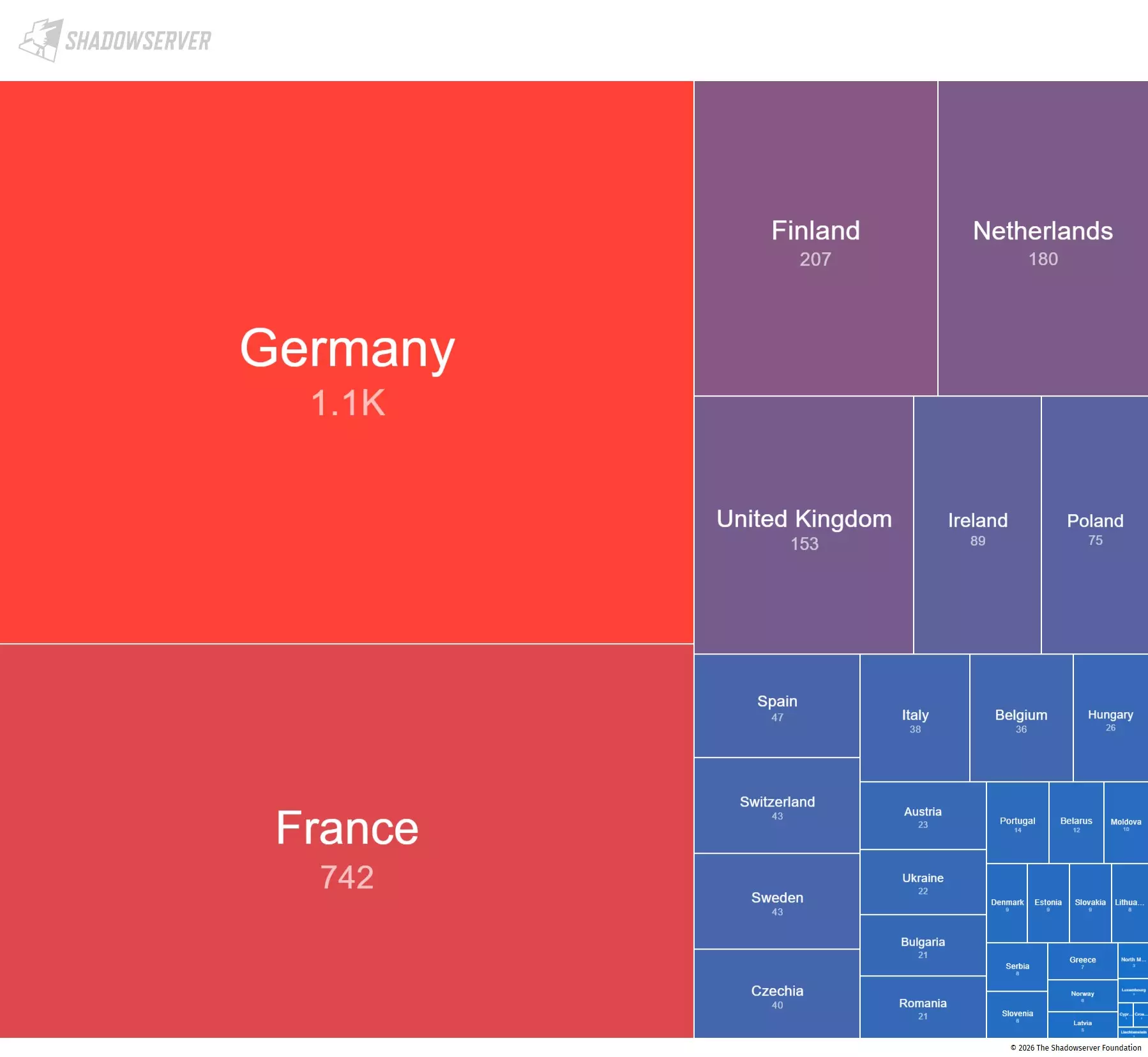
Bug CVE-2026-110264 came to light a little later. This bug is just as critical as its predecessor, and affects all versions of Gitlab from version 7 up to the most recent installations at that time. Updating to 19.2.9, 19.3.6 and 19.4.3 is necessary to protect against it.
Exploitation in action
Criminals are actively exploiting both bugs right now. Yet many systems remain unpatched. Shadowserver sees more than 2,000 Gitlab servers in Europe alone that are vulnerable to one of the two bugs. In Belgium there are 36, in the Netherlands 180. Filtered on the first critical bug only, it is still a matter of hundreds of servers, three of them in Belgium and nineteen in the Netherlands.
In the US, CISA warns that patching is now truly essential. Attackers are actively scanning for systems that still contain the vulnerability, and code to exploit the bug exists.
No time left
The wide availability of AI has thoroughly shaken up the threat landscape. It no longer takes weeks or months before attackers can exploit a known bug, but days or hours. Hackers are therefore putting it to work, usually faster than administrators patch their IT systems. That is being felt: the number of ransomware incidents and instances of stolen data has risen sharply in recent months, according to figures from Secutec.