

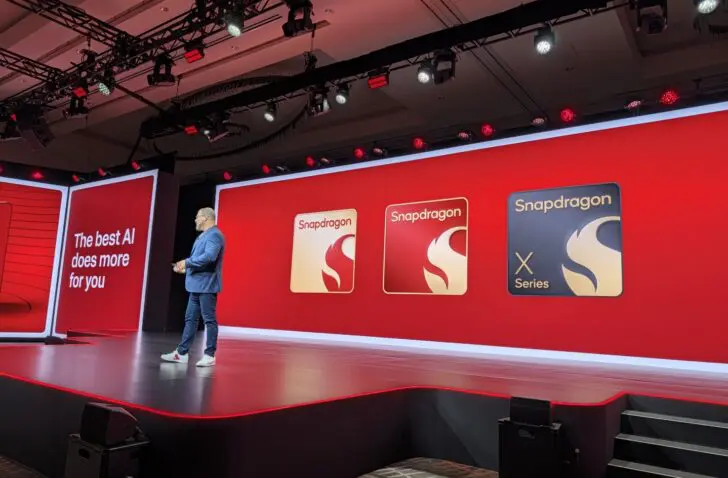
Qualcomm is going all-in on local AI with its mobile chips. The familiar arguments are that it is faster, safer, and above all more private, because your data remains on the device. There is another argument that is not being said out loud: AI is moving to the phone because the cloud is becoming too expensive for Google and manufacturers.
The word was mentioned within eight minutes at the Snapdragon Summit 2026 in Hawaii. “A good agentic experience starts with trust,” said CEO Cristiano Amon on stage. “The agent acts on your behalf, so it must be secure, private, and the user must remain in control.”
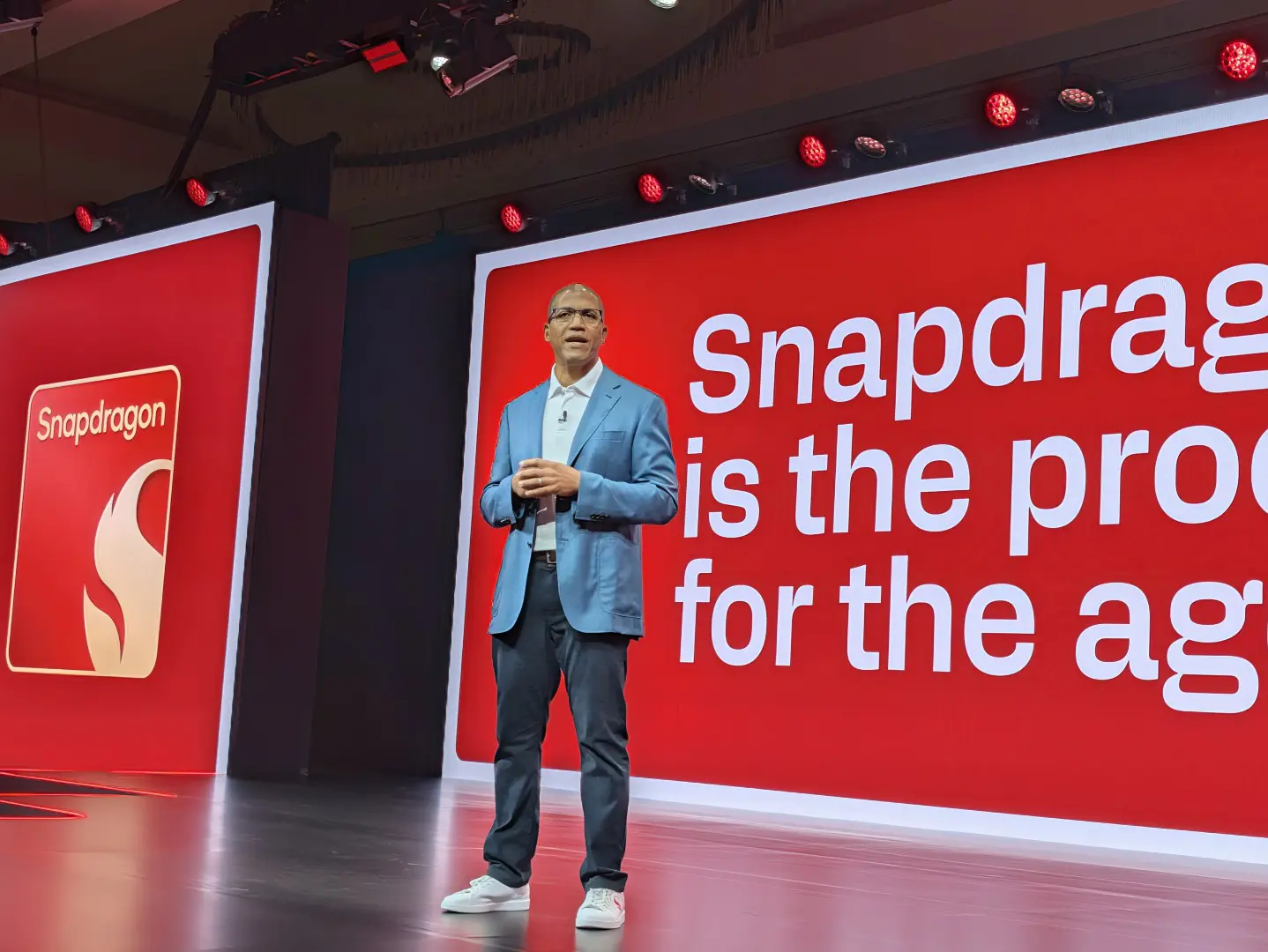
Chris Patrick, who leads the smartphone chip division at Qualcomm, speaks of “a platform that understands you, learns from you, and protects your information.” Local AI keeps your data on your device, has been the message for three generations now.
Why local?
Why that AI necessarily has to run locally was not addressed during the keynote. In a later interview, Patrick goes into more detail, and the answer had nothing to do with privacy. He formulates it as a calculation. “If you use a chatbot once a week, why would you bother running that on the device?”
“Just use the cloud. As soon as AI becomes part of continuous operation, the economics change and the investment in on-device becomes worthwhile.”
His colleagues from the AI product team are more specific. Manufacturers want fifty to sixty tasks and five to six languages locally, “because they don’t want to do translation in the cloud, as that is expensive. It is free for the consumer, but the partners pay for it.”
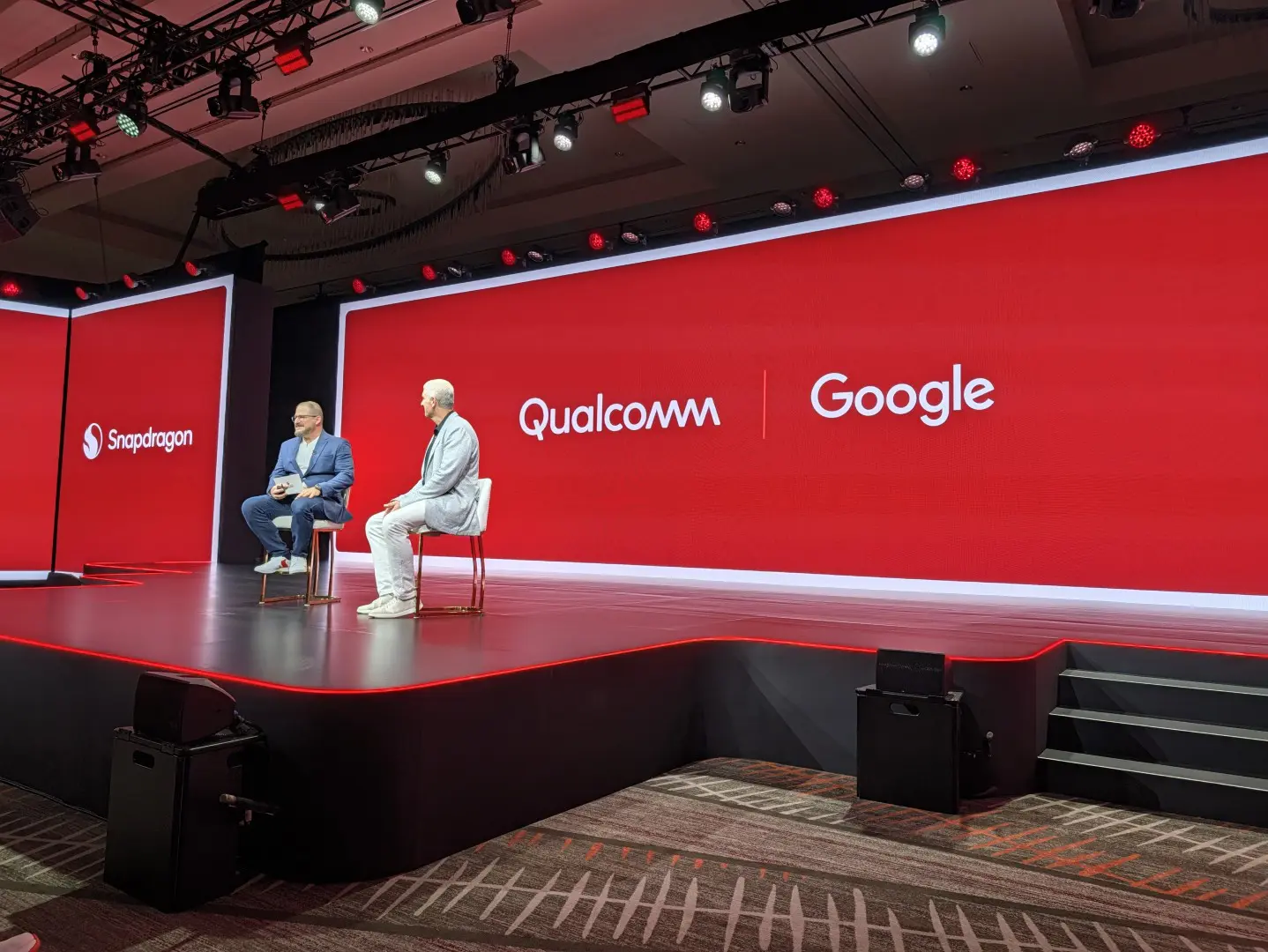
There we have it in black and white: the driver behind edge-AI is not your privacy or your latency, but the inference bill of Google and smartphone manufacturers. That bill is growing fast. Google’s Rick Osterloh said during the keynote that Gemini’s token consumption increased sevenfold in one year among one billion monthly users.
Amon predicts devices that process “up to a million tokens per day on-device.” Every token that runs on a Snapdragon is a token that Google does not have to pay for. Qualcomm calls that hybrid AI. An accountant calls it cost allocation.
Four gigabytes and not a byte more
You can tell who gets the bill by the prerequisites. A language model with seven billion parameters weighs fourteen gigabytes in 16-bit, according to the AI head in our interview. “It’s impossible to host that. You have to go to 4-bit or 2-bit to fit into three to four gigabytes. Best case five gigabytes, worst case four. We won’t go above that.” The entire architecture of the Qualcomm Snapdragon Elite Gen 6, from the new Element Accelerator to the mixture-of-experts models that Qualcomm streams from UFS 5.0 storage, is one big struggle to stay within that budget.
The much-touted “30 billion parameters locally” on the Extreme version of the Gen 6 is not evidence of abundance, but a trick to make a little RAM seem like a lot.
Your data stays on the device, until the prompt leaves
Back to privacy, because that is where the real problem lies. Amon says it himself in his keynote: “The agent is going to use the phone on your behalf, even when you are not using it.” The updated Sensing Hub listens permanently, with two micro-NPUs running models up to 200 million parameters in the background.
Personal Scribe, announced last year and as far as we know not yet found in any device, indexes conversations, recognizes who said what, and builds a knowledge graph. All of this happens locally.
In our Q&A session, we get a glimpse of how long something remains local. A ‘digital twin’ of the user is formed, “which is added to the prompt as metadata.” This way, the answer is correct in one turn: up to 32,000 tokens of context, “fifty to sixty closely typed pages of text” about you.
A ‘digital twin’ of the user is formed, which is added to the prompt as metadata.
Chris Patrick, SVP and General Manager of Handsets, Qualcomm
That prompt does not stay on the device. “We are never going to replace the cloud with the edge,” Patrick says a moment later. The device is “a supplement to the cloud.” In hybrid AI, the phone therefore collects locally what the cloud needs to know you, and sends it along. Osterloh says Google is, with their permission, “blessed with so much information about our users.” Local processing here is not a wall around your data; it is the collection point for it. Very curious to see what Europe thinks of this.
Whoever has the context, has the customer
Google saves on inference costs and in return gets a device that provides context for what it calls “personal intelligence,” from the phone to the Googlebook. The manufacturer saves on its cloud bill and binds the customer to its own AI layer. Qualcomm sells more expensive silicon on 2 nm, divided into two price classes, and positions itself as an indispensable middle layer in an agent story that MediaTek already told in 2024.

The user gets features called “free,” on a device that Patrick says will “certainly no longer be a top model in terms of AI” in three years, even though Qualcomm promises eight years of security and Android updates on its premium chips. Meanwhile, the background agent consumes part of the chip’s 37 percent efficiency gain.
The Bill
Hybrid AI is presented at Snapdragon Summit 2026 in Hawaii as a technical inevitability: some things simply belong on the device, others in the cloud.
That is a half-truth. Where a token runs is primarily a decision about who pays for it. The Snapdragon 8 Elite Gen 6 is built to push that decision in one direction. The cloud keeps the models that make money. The device gets the continuous, boring, and expensive background tasks that would otherwise be on Google’s or the manufacturer’s bill. Privacy was the argument, cost was the motive, and your context is the currency.
For those who manage smartphone fleets in a company, this gives pause for thought.
For those who manage smartphone fleets in a company, this gives pause for thought. The device you roll out next year will run third-party workloads on memory you pay for and a battery your employee has to charge. Meanwhile, a profile is being built that travels to the cloud as metadata, and ages faster than any phone before it. So don’t ask your supplier how many TOPS the NPU achieves. Ask what runs on it and for whom, what leaves in a prompt, and whether that “free” agent fits into an MDM profile.
Qualcomm has built an impressive chip to solve a problem that is not yours. The agent works for you. The phone works for them.