

Mojo is three years old, reads like Python, and is rarely encountered outside AI circles. Nevertheless, Qualcomm paid 3.9 billion dollars this summer for Modular, the company founded by LLVM creator Chris Lattner that built the language. At the Snapdragon Summit, Lattner explained why for the first time.
Mojo appeared in 2023 and solves a problem every AI developer knows: researchers write in Python, but Python runs slowly on hardware. Those who want speed must turn to C++ or CUDA. Mojo aims to be both: Python syntax with full control over the chip, built on MLIR, the compiler layer Chris Lattner previously designed at Google. It is the bottom of three layers.
Above it sits MAX, which compiles and serves models and does not require Nvidia CUDA or AMD ROCm. Above that is Modular Cloud, which distributes inference across different accelerators. Few speak the language, but what runs on it is not small: “trillions of tokens in production, every few days,” says Lattner.
Everyone on board
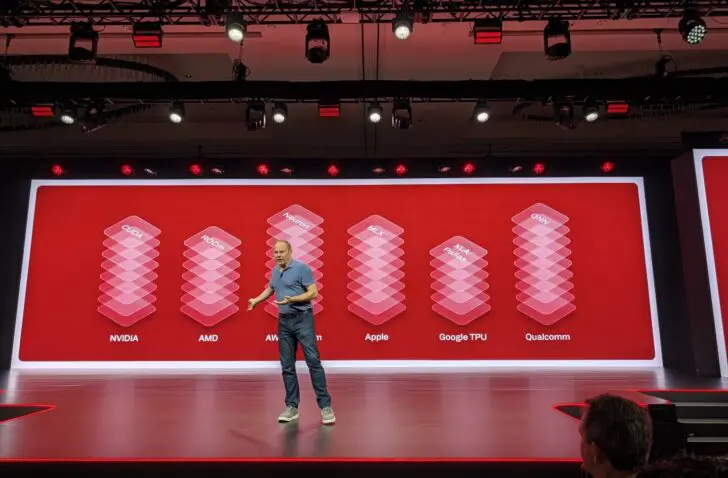
At ModCon, five weeks after the acquisition, Modular announced support for Nvidia, AMD, Apple Silicon, Amazon Trainium, Google TPU, and Qualcomm data center chips: “six architectures from six manufacturers with one stack—that has never been done before.”
That explains Qualcomm’s interest, but not the price. For that, you have to look at who Lattner is. He is the creator of LLVM, the compiler infrastructure underlying Clang, Swift, Rust, and even Nvidia’s own CUDA compiler. He drew the parallel himself at the Snapdragon Summit 2026.
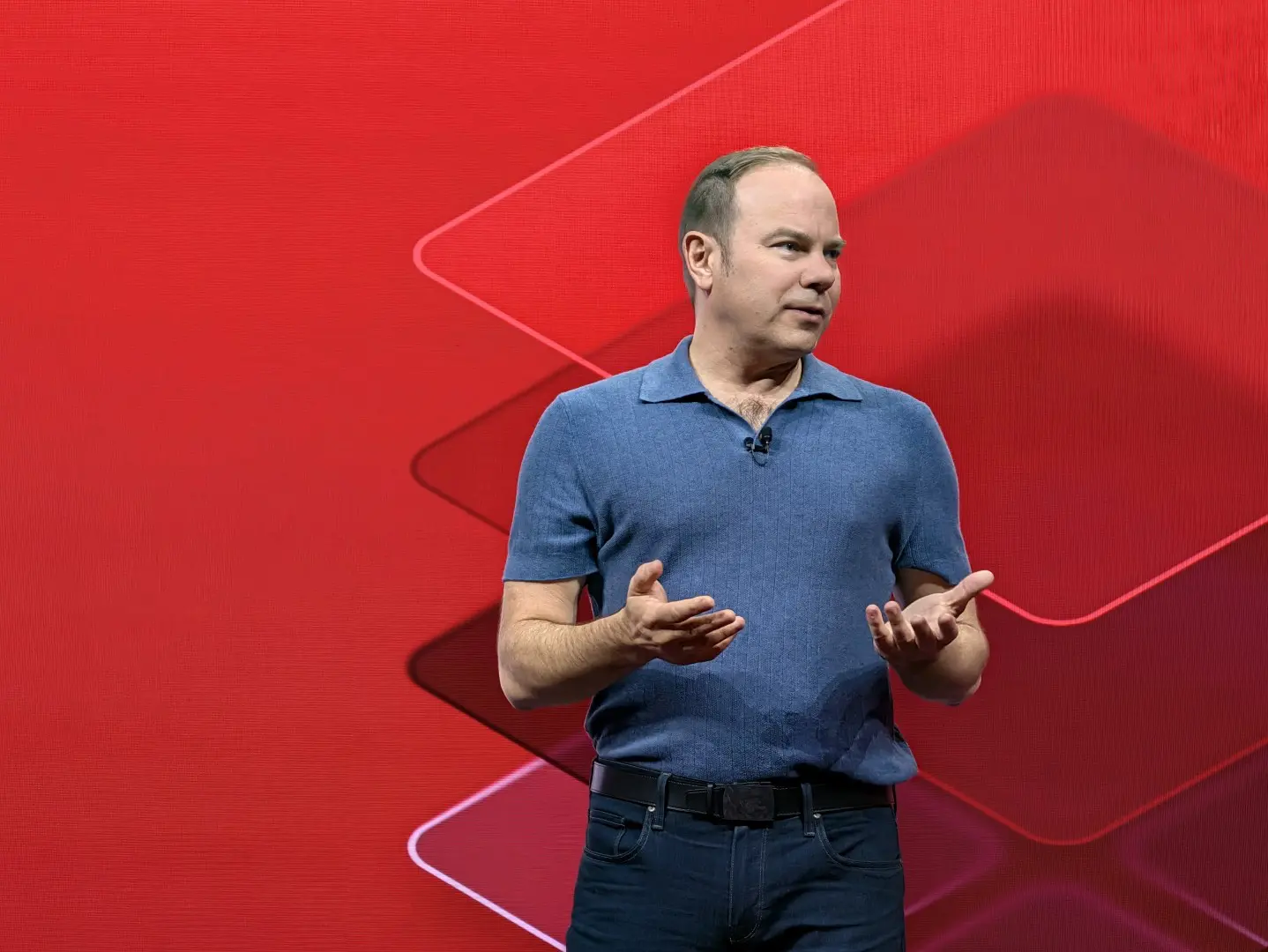
“Every hardware team has to build its own stack from scratch. Some leaders succeed, others continue to struggle. Twenty years ago, the compiler world was in the same impasse: everyone was innovating, but no one could justify a major investment to pull the sector forward.” LLVM became that leap. That is the precedent Qualcomm is buying. It is not about a product, but about the chance that Lattner will do it again.
Why so much
The price says more about Qualcomm than anything else. In September 2025, Modular raised 250 million dollars at a valuation of 1.6 billion dollars; nine months later, Qualcomm paid more than double in shares: 3.9 billion dollars at the announcement, recorded in the quarterly report as 3.1 billion due to the fallen share price.
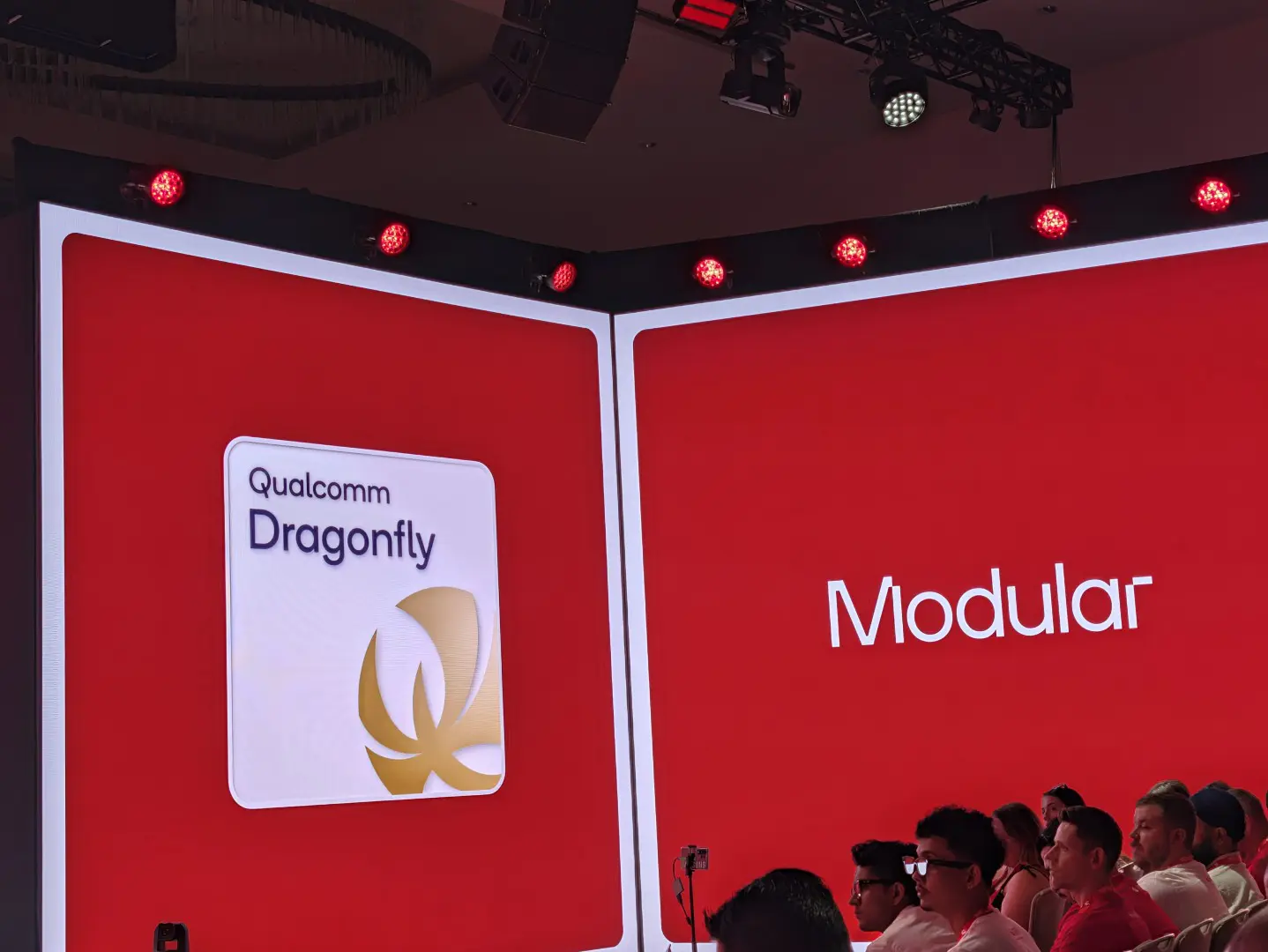
That is a lot of money for a few hundred employees and a three-year-old language. That is, unless you know Qualcomm’s problem. It launched the AI200 and AI250 for data centers, signed for 200 megawatts with the Saudi company Humain, and showed the Dragonfly family this week, while every potential customer asks the same question: where is the software? Nvidia doesn’t sell GPUs; it sells twenty years of CUDA libraries with a GPU attached to them.
Nvidia doesn’t sell GPUs; it sells twenty years of CUDA libraries with a GPU attached to them.
Qualcomm’s own answer, the Cloud AI SDK and on mobile AI Engine Direct with QNN, has a reputation for being powerful but hermetic. Developers don’t want to learn how Hexagon works; they want their PyTorch model to run on it. Modular is therefore primarily an acquisition of credibility.
Lattner, now Executive Vice President for Advanced AI Software, is one of the few to whom the sector entrusts such a stack. Cristiano Amon said it again at the Snapdragon Summit this week. “Not just for Qualcomm, but for all other semiconductor companies. That is why we bought Modular and are making it open source.” After Arduino, it is the second acquisition with which Qualcomm is buying developers instead of technology.
Open source, sort of
That ‘open source’ claim deserves a nuance that was missing on stage. Mojo, both language and compiler, has effectively carried the Apache 2.0 flag since ModCon, a promise Modular had been pushing forward since 2023 and which the acquisition apparently accelerated.
MAX, the layer that actually makes models fast, is not open source. The code is viewable under a proprietary Modular Community License with conditions regarding telemetry and branding.
Modular Cloud remains closed. Amon mentions Mojo and MAX in the same breath as open source. That is true for one and not for the other.
Away with CUDA? Not really
The headline that appeared everywhere after the acquisition, “Qualcomm attacks CUDA,” is an oversimplification. Lattner does not frame it that way during his keynote either. Nvidia’s trump card is not the language but the libraries, the thousands of hand-written kernels, and the millions of developers already working with it.
Those who want to break that are standing in a long line. AMD is trying with ROCm 7, Intel and Google formed a consortium around oneAPI with UXL, and OpenAI’s Triton allows kernels to be written without CUDA. The bulk of inference today runs on vLLM and SGLang, open frameworks that care little about who provides the compiler.
Modular does not promise to replace CUDA, but to work alongside it. MAX also runs on Nvidia and counts on customers choosing portability.
Modular does not promise to replace CUDA, but to work alongside it.
The honest question is whether a team of that size, however brilliant, can maintain six architectures simultaneously at the level of the owner. Nvidia puts thousands of engineers on just one. Lattner claims ‘leading performance’ on Qualcomm’s Dragonfly data center chips, but independent benchmarks of MAX on Qualcomm silicon do not exist.
What about Windows?
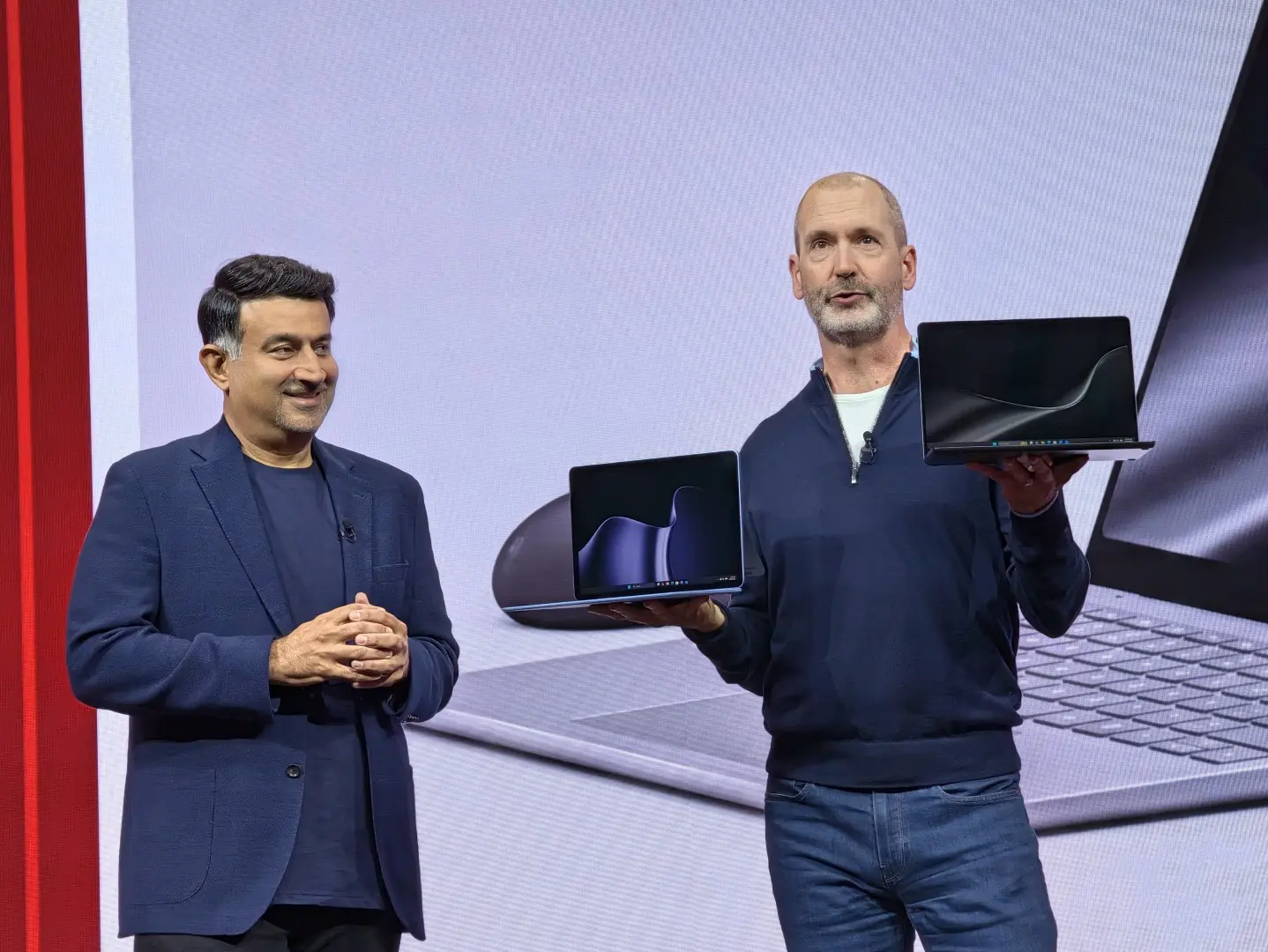
The staging on the platform was telling: Lattner gave the floor to Logan Iyer from Microsoft, who gave it to Kedar Kondap from Qualcomm. Iyer repeated what Microsoft already announced at ModCon: “native Windows support for Mojo” and “a first-class Mojo experience on Windows.” That sounds like a lead, but it is a catch-up move.
Mojo currently runs on Linux and macOS; Windows was the missing link. Apps on Windows on Snapdragon currently reach the NPU via Windows ML and ONNX Runtime with Qualcomm’s QNN plugin. That is a detour from which the Copilot+ promise has never quite broken free: Kondap says 7,300 native apps on stage, but very few that actually use the NPU.
That is where the real opportunity lies for Qualcomm. If developers can soon write kernels for Hexagon in Mojo on Windows, a barrier that has plagued Qualcomm since the first X Elite will disappear. Coincidentally, Qualcomm announced on the same day that Linux is officially coming to the X2, and Linux is where Mojo is at home.
What happens to Qualcomm’s own stack?
The question no one asked on stage: will Modular replace the AI Hub with its three hundred pre-optimized models, and AI Engine Direct with QNN, on which the software layer of the Snapdragon 8 Elite Gen 6 rests? Lattner’s answer is indirect, but clear.
The demo on the Dragonfly was “seamless because we built on Qualcomm’s mature software for the NPU.” MAX therefore sits on top of QNN, not in place of it. Regarding Snapdragon: “We’ve only just started with this.” No date, no roadmap, no decommissioning of an existing tool. Those developing for the Hexagon NPU today will stay with QNN and ONNX. It does not seem practical to us for Qualcomm to maintain two stacks side by side, with the risk that developers will wait and see.
The paradox
LLVM became the world standard because Apple, which hired Lattner in 2005, never branded it as Apple software. Nvidia, AMD, Intel, and Google all built on it. Qualcomm says it wants the same. It therefore bought a stack for 3.9 billion dollars whose value increases the better it runs on Nvidia, AMD, and Google.
With Modular, Qualcomm has a stack whose value increases the better it runs on Nvidia, AMD, and Google.
For Qualcomm customers, it only counts if the software runs at least as well on Qualcomm as what is already available. If that succeeds, Qualcomm will own the neutral layer beneath the entire AI industry, which is potentially worth more than any chip.
If it fails, then with Modular it holds an expensive compiler for its own hardware from someone who promised never to become that. These three steps will be crucial: a Mojo release on Windows with a date, MAX benchmarks on Dragonfly run by someone other than Qualcomm, and an answer to what happens to QNN. Until then, Qualcomm is primarily selling a dream.