


Google’s search engine is the gateway to the internet for many people. ITdaily went looking for European alternatives that actually care about your privacy.
It is almost impossible to imagine the internet without Google. With both the most popular browser (Chrome) and search engine (Google Search) under its wing, the American tech giant has shaped the digital world to its will. According to estimates, Google’s search engine handles more than 16 billion (!) search queries per day. It is not for nothing that the verb ‘to google’ is synonymous with looking up information.
Given those figures, you might think that Google is unavoidable on the internet, but that is not the case. There are many browsers that can perfectly replace Google Chrome, such as the Norwegian Vivaldi. Finding a European search engine is easier than finding a needle in a haystack. ITdaily takes a closer look at six Google alternatives.
The dark side of Google
There is a dark side to Google’s digital dominance. Behind the company’s services lies a perverse advertising machine. The fact that the search engine is free is actually just an illusion: every search query and link you click tells Google more about who you are. Through your device’s IP address, it can even determine your physical location. With all that data, it creates a ‘persona’ of you that advertisers are willing to pay a lot for.
You are no better off with ‘big’ competitor Bing. Microsoft’s search engine is equally full of trackers, and the company does not hesitate to misuse Windows as a billboard for Edge and Bing. The forced integration of AI functions into popular search engines will certainly not benefit user privacy.
Completely Google-free?
In protest against Google’s practices, many search engines have emerged in recent years that consciously want to do things differently. Alternative search engines often run into a limitation: indexing the entire internet is a Herculean task. Therefore, many search engines use the Google or Bing index. The difference is that they do not pass your search data to Google or other third parties.
The European Search Perspective initiative aims to cut those ties. European search engine providers are working together on a European index, led by Qwant and Ecosia. The first result is Staan, a search API that can be integrated into chatbots.
European search engines tested
Which European search engine is the best alternative to Google? ITdaily takes a closer look at six Europe-based search engines.
Privacy as a selling point
What all the search engines in this list have in common is that they highly value the privacy of their users. Search history is not kept to be sold to advertisers. Even when sponsored results are shown, they are the same for all users.
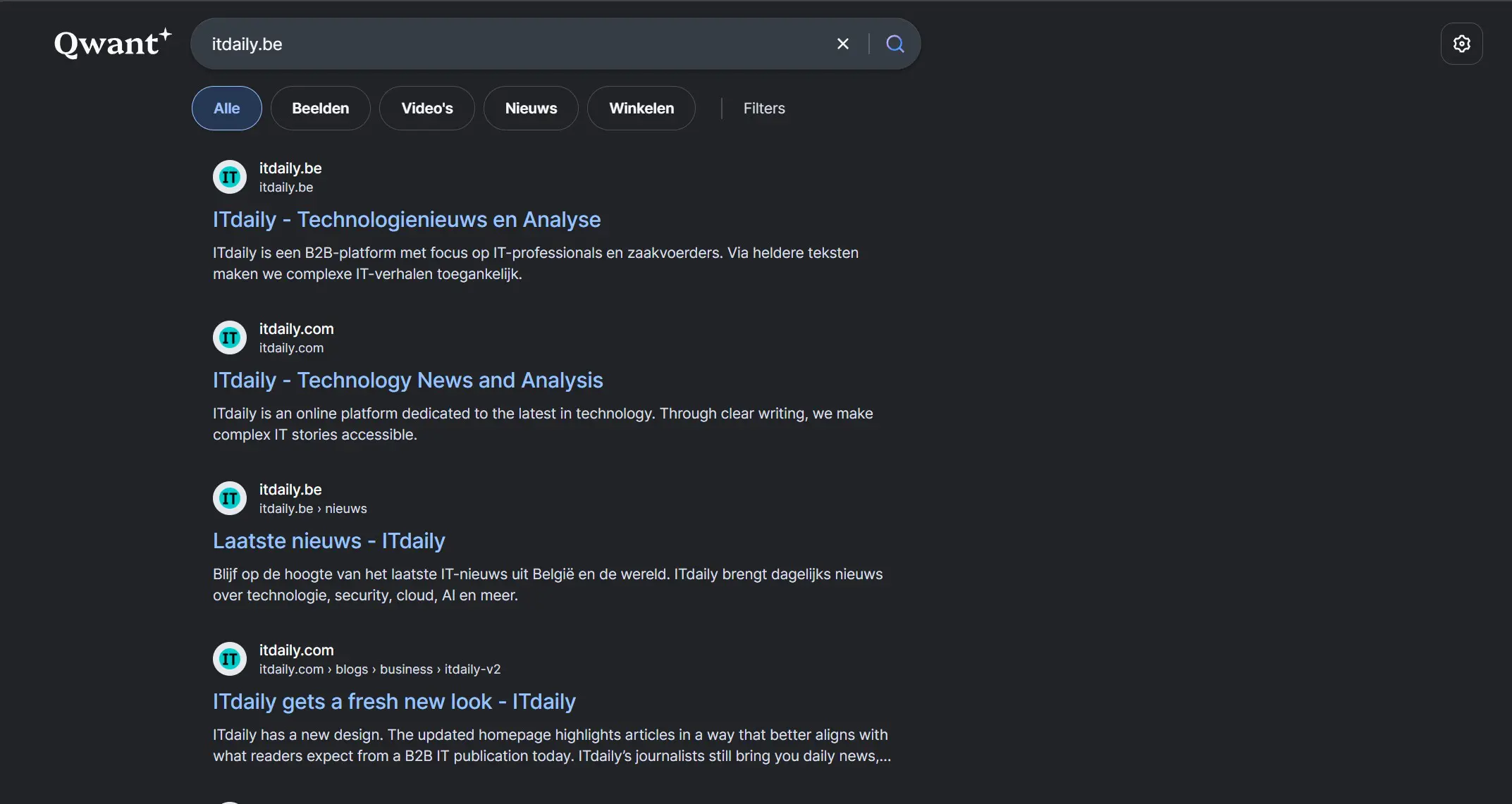
This includes Qwant. This originally French search engine initially used the Bing index but is gradually switching to its own index. In addition to clear promises regarding privacy—Qwant calls itself ‘the search engine that knows nothing about you’—Qwant has a sleek interface. With Flash Answer, it has launched a Google-like AI search function, although it is not nearly as dominantly present.
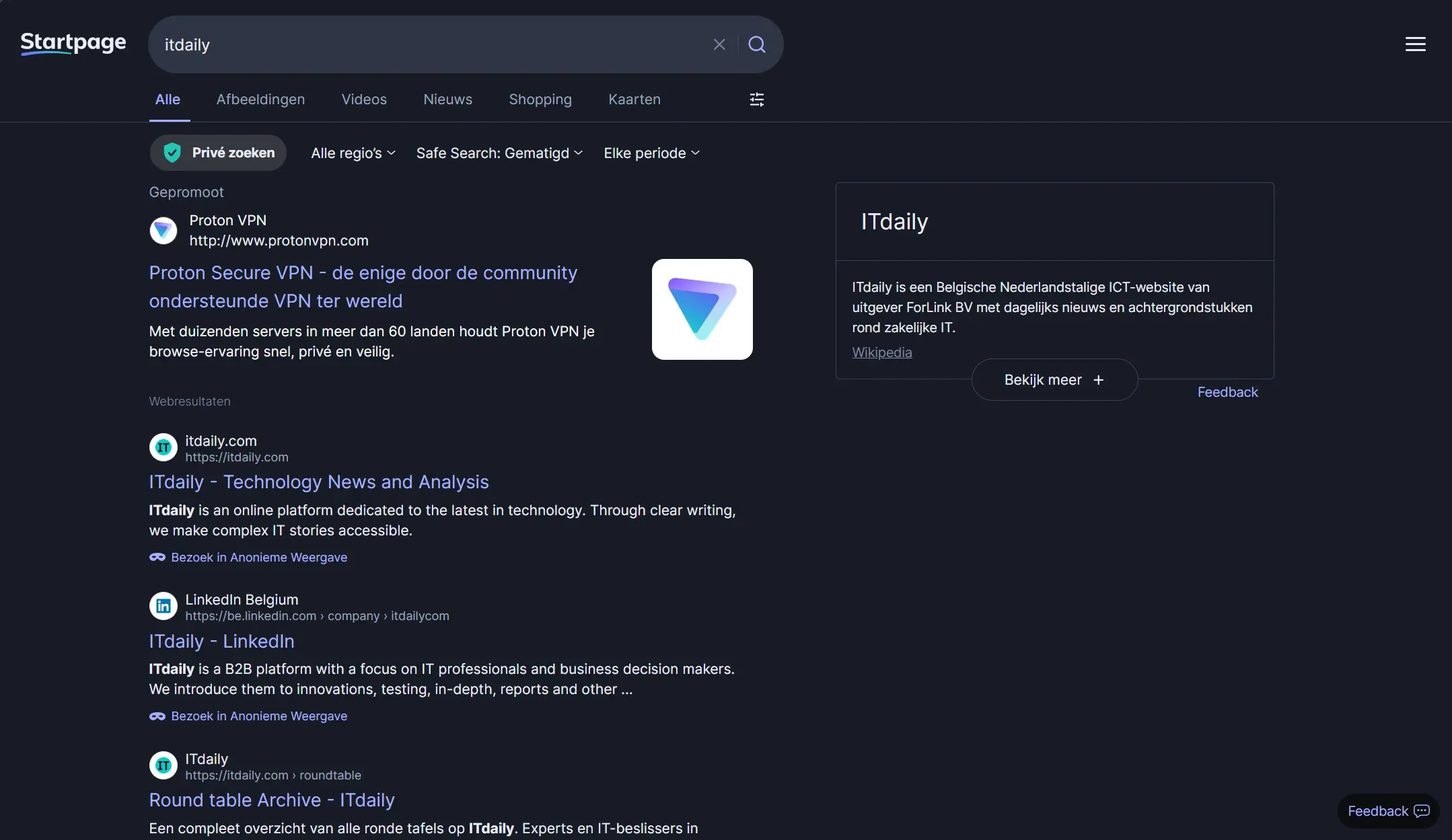
We got to know the Dutch Startpage as the default search engine in the Vivaldi browser. Startpage uses the Google index but shields your data and IP address. Through Startpage, you can also visit websites anonymously. For that extensive privacy protection, you do have to accept sponsored search results. In the future, Startpage also wants to launch an ad-free, possibly paid version of its search engine.
Search engine for the whole family
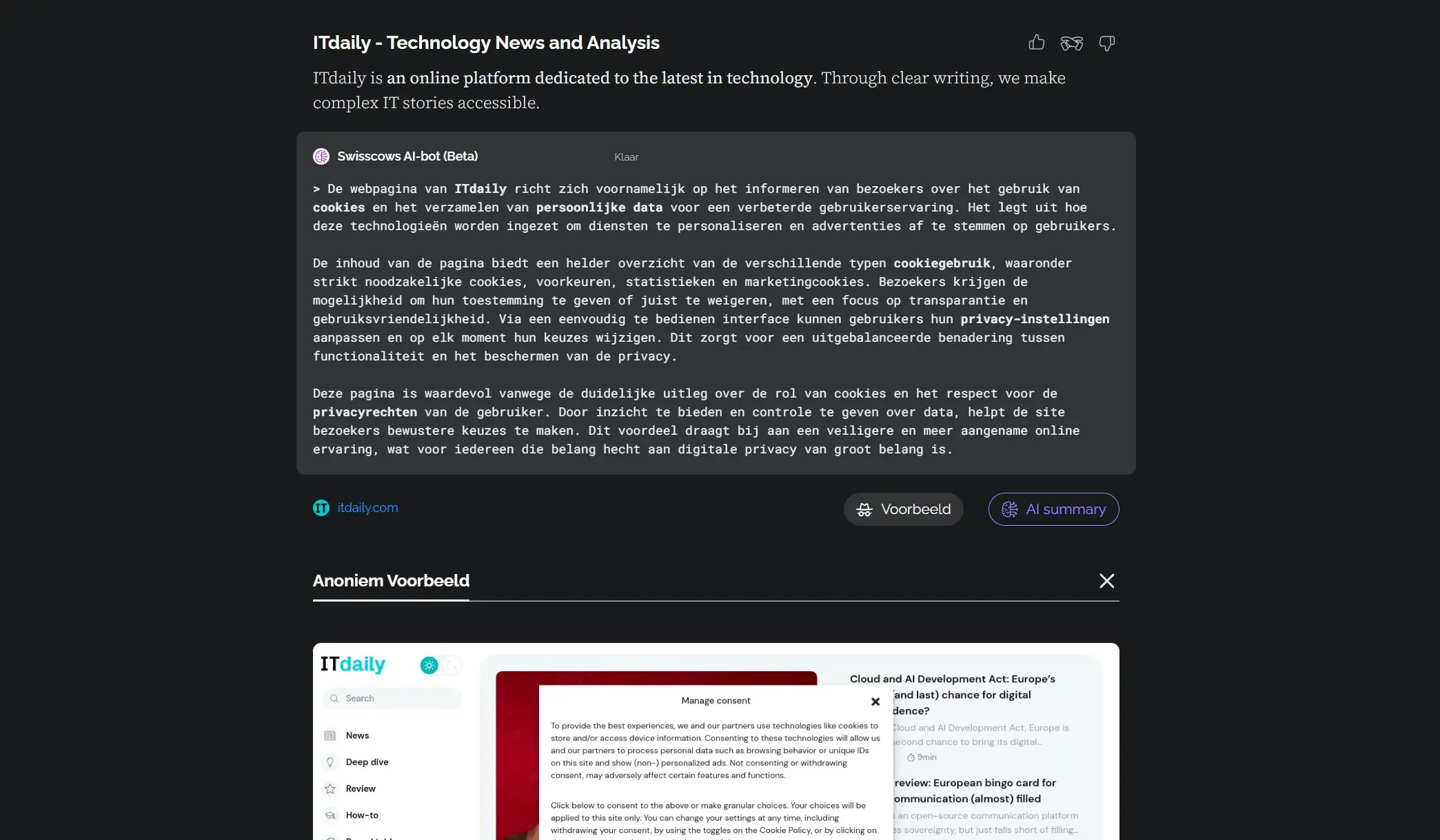
We already know from Proton that the Swiss value privacy. It should come as no surprise that a Swiss, privacy-friendly search engine exists: Swisscows. This search engine goes a step further by also being family-friendly. Pornographic and violent content are filtered out of the search results.
With every search, you can anonymously see a preview of the webpage or have an AI summary created. You can adjust search results to your own taste, for example, if you prefer to see scientific papers rather than Instagram or TikTok links. In addition to a search engine, Swisscows also offers an email client, VPN, cloud storage, and messaging service.
Ecological search engine
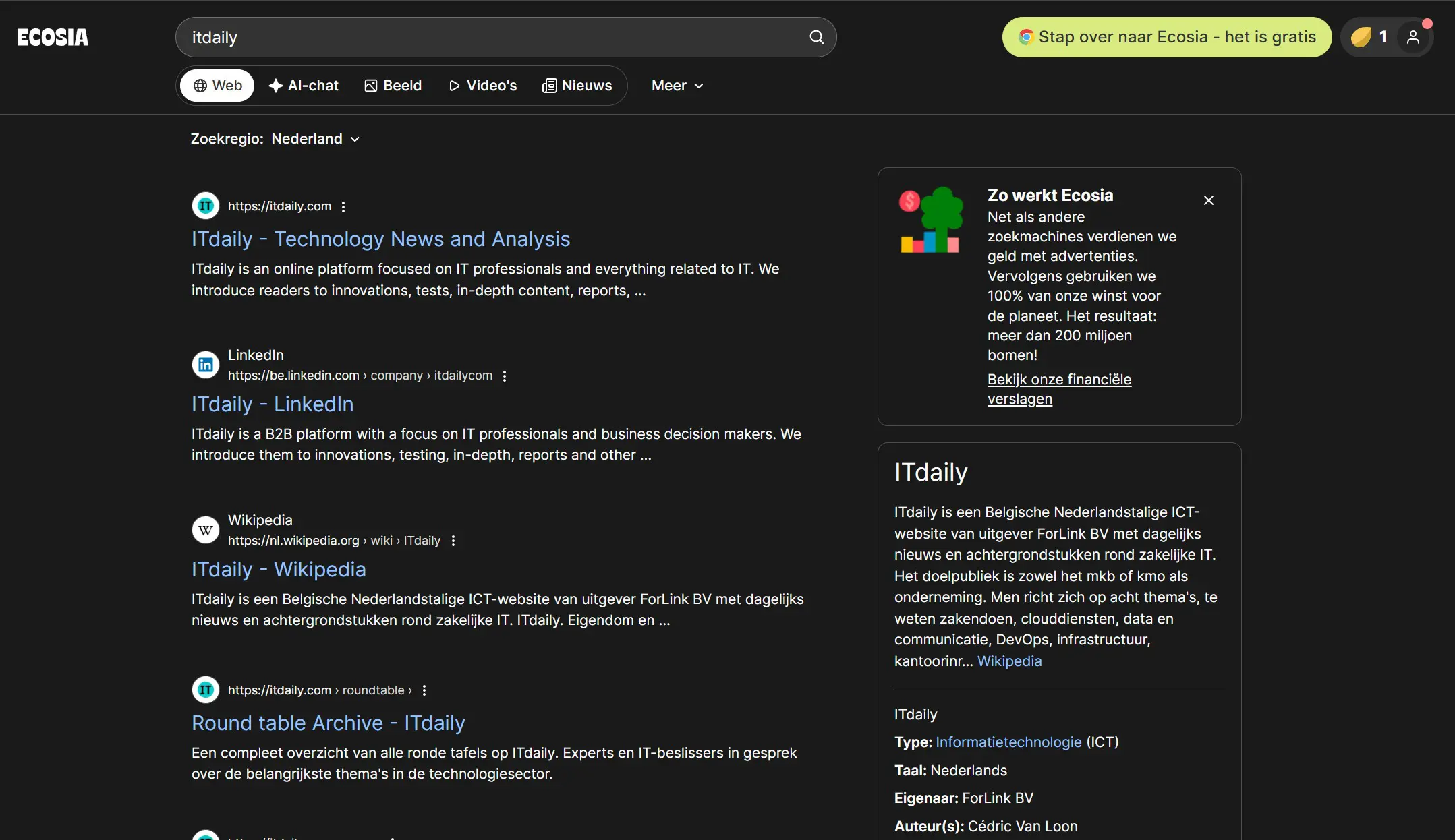
Some search engines want to serve a higher purpose. The German Ecosia, the most popular European search engine with about 20 million users, has a sustainable mission. The search engine runs entirely on green energy and invests all its advertising revenue in climate projects. The non-profit is also completely honest about how much it earns from advertisements: about 3.5 million euros per month. With that money, it has already planted more than 250 million trees.
The search engine is largely dependent on Bing and Google but wants to develop its own index together with Qwant. In addition to the classic search engine, Ecosia has also jumped on the AI chat train, which runs on green energy. Those who create a profile can see their ‘climate impact level’ increase. With a touch of gamification, Ecosia wants to retain users for longer.
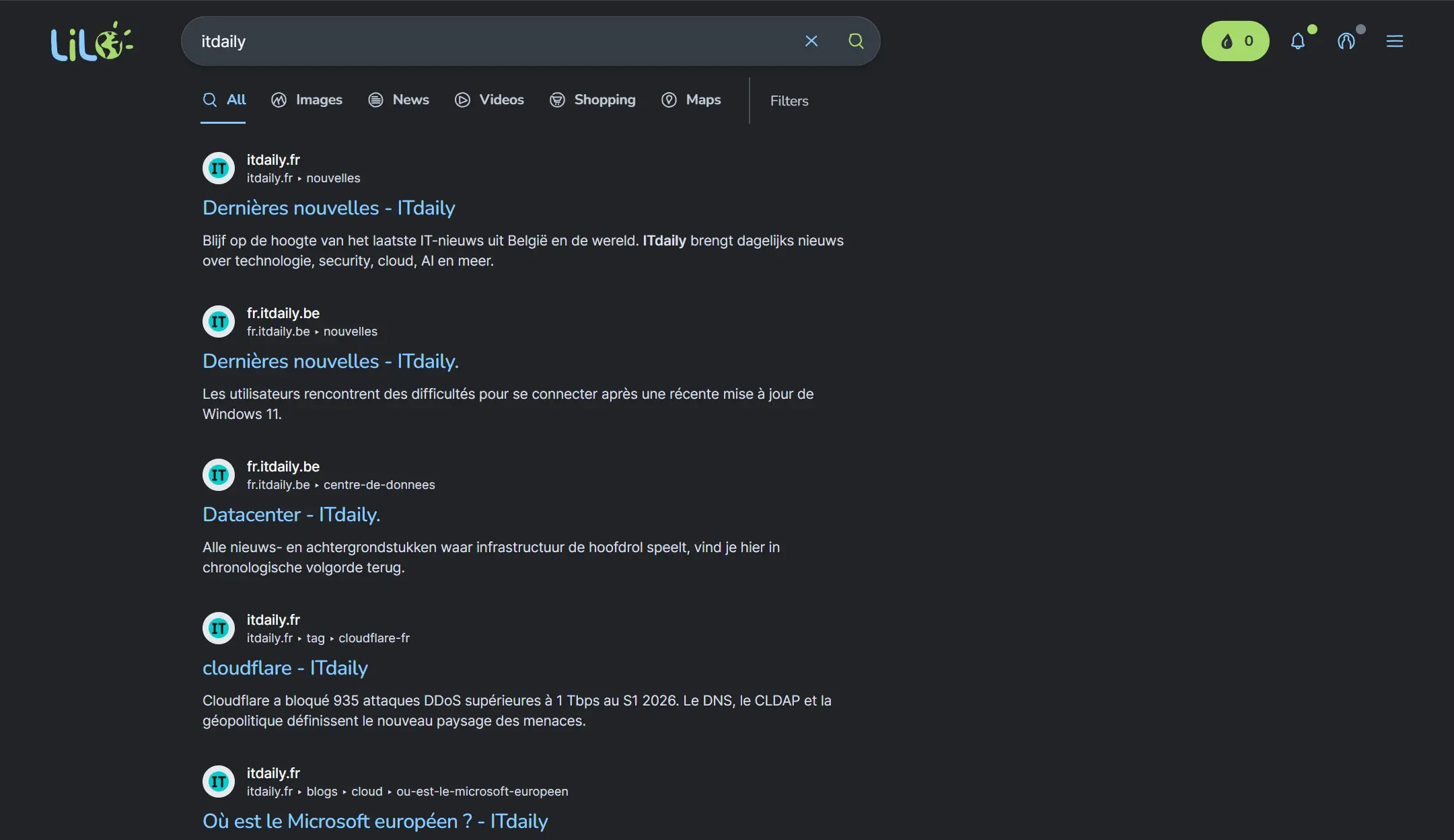
The French search engine Lilo was also created out of activist motives. With search queries, you can convert virtual ‘water drops’ into a donation for a good cause. Lilo has already invested more than five million in social development and climate projects.
The search engine uses the indexes of Bing, Google, and Yahoo. Lilo does not participate in AI-driven search. Since last year, Lilo has been acquired by Qwant, but it continues to exist as an independent search engine.
On your own two feet
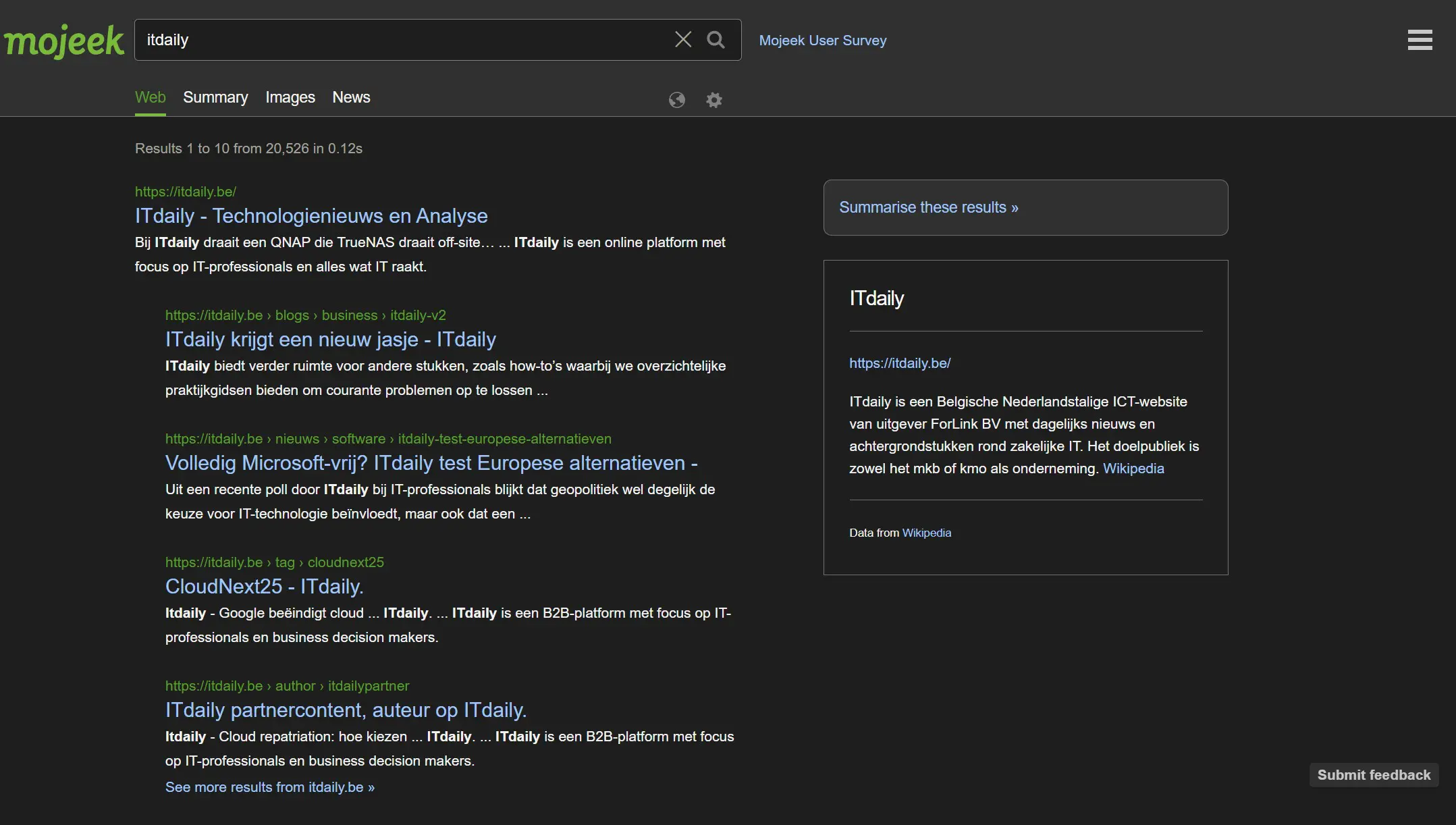
Only one search engine can claim complete independence from Google: Mojeek. The UK-based search engine uses its own search index. Mojeek is hosted entirely from Europe and is therefore also GDPR-compliant, promising not to pass data to advertisers and third parties.
In functionality and interface, Mojeek looks a bit more old-fashioned than the other search engines in this list. Mojeek does not need new AI-powered search functions. It uses its independence from Big Tech as its main argument.
Unequal struggle
The reality is unfortunately that European search engines, despite their privacy promises, cannot compete with Google. The historical head start and the lucrative business model have given Google a lead that can no longer be caught. While European search companies may be happy with millions of euros annually, Google earns billions every quarter from its internet dominance.
Google’s lead therefore seems to be set in stone, but that does not have to be the case. You can choose your privacy and use a European search engine. Every tool we have discussed has its unique character and strengths.
Qwant and Ecosia are the most modern and comprehensive, while Startpage and Swisscows promise you extensive privacy and anonymity. If you really want to be completely free of Google, even on the backend, then Mojeek is the best option. In times where the AI models of Big Tech are putting the climate under serious pressure, Ecosia charms a little extra with its sustainable mission.
ITdaily tests European and open-source alternatives to popular American software tools that we use daily. Want to discover more European software? You can find all reviews here.