

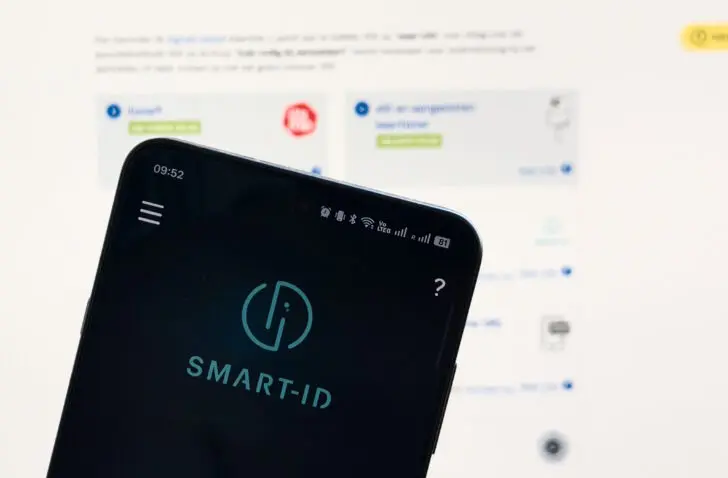
Smart-ID wants to compete with Itsme in Belgium and gain market share in a segment where its competitor is playing a home game and is all-powerful. Why is the Estonian company setting its sights on the country?
Today, 80 percent of Belgians over the age of sixteen have an account on the authentication app Itsme. Anyone wanting to log in to government services does so almost without thinking using the service from the Belgian company of the same name, and businesses including banks have also embraced Itsme as an identity provider. The concept of a digital identity is well-established among Belgians, and for the end user, Itsme is almost synonymous with it.
At first glance, the arrival of the Estonian Smart-ID from SK ID Solutions in Belgium seems ambitious. Smart-ID has been trying to break through in our country for several years, but it took until the beginning of this year for the company to obtain the Level of Assurance (LoA) High from the Belgian Federal government. That stamp of approval was necessary to gain access to the CSAM portal, which allows users to authenticate with the federal government. Meanwhile, Smart-ID has also been integrated into the login systems of the Flemish government.
Newcomer with experience
“We are a worthy competitor for Itsme,” says Kalev Pihl, CEO of Smart-ID, regarding the competitive struggle. “We have the necessary credentials, as well as the knowledge and experience,” he states. While the company is a newcomer to the Belgian digital identification market, it has existed for 25 years and has been providing eID services in the Baltic states for ten years.
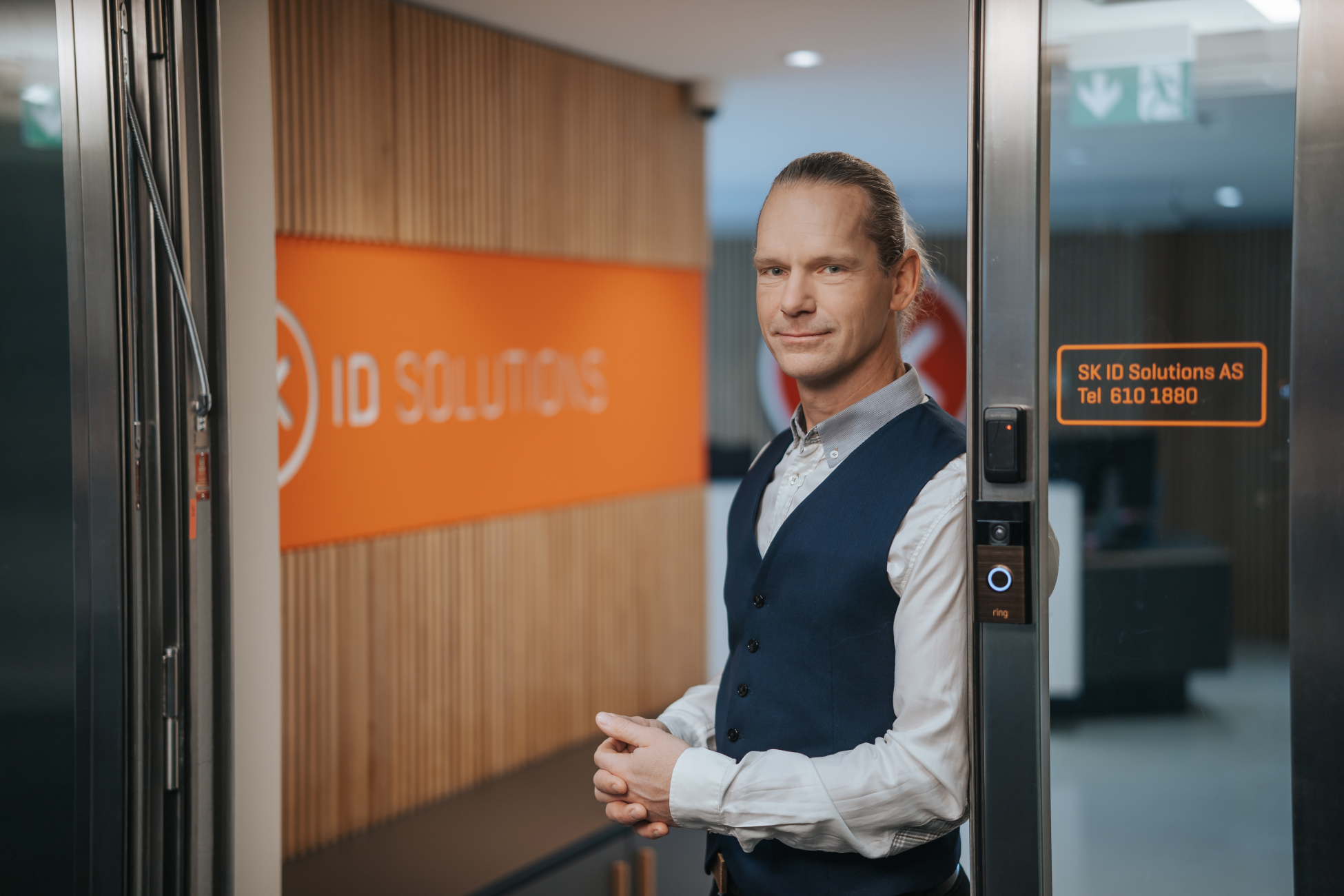
In addition to classic eID services, SK ID Solutions also provides digital signatures, time stamping, and other digital forms of certification. Smart-ID has thus built up the necessary expertise. “Before 2014, it was not possible to provide services across member states,” Pihl explains. It was only with eIDAS that a European framework for electronic identification was established, after which SK ID Solutions began serving the entire Baltic region from Estonia.
Mature market
The leap to Belgium has several reasons, Pihl says. And the presence of Itsme is an asset in a certain way. “The concept of eID is not new in the country. Belgian citizens already take digital identification for granted. The fact that you can confirm your identity via an app with an external vendor is the norm here.”
Belgian citizens already take digital identification for granted.
Kalev Pihl, CEO, Smart-ID
Pihl points out that this is the exception in the EU. “In most countries, digital services still all have their own identity system with onboarding and user management. People have dozens or hundreds of different identities. For the expansion of Smart-ID, we were looking for a market where we no longer had to educate people about eID ourselves.”
The presence of Brussels is another asset. “The European capital is a central place where everyone travels. There is no better place to exert influence.”
Competition from an unexpected quarter
Itsme has therefore prepared the eID market, but has meanwhile acquired a quasi-monopoly position. The government also criticizes this, although Pihl is not exactly enthusiastic about the solution that has emerged. “When we chose the Belgian market, we didn’t yet know that we would face competition from the Belgian government itself,” he notes pointedly, referring to the MyGov app.
“If the government wants more competition, it should bring players to the market,” Pihl believes. “And not use taxpayers’ money to build something itself.”
First choice as a second option
The strong position of Itsme is indeed a problem for both the government and businesses. Smart-ID naturally wants as many citizens as possible to install the app, but the customers are not the end users. Pihl and his team want to convince local organizations, including the government, but also banks, hospitals, and educational institutions, to embrace Smart-ID. They are the paying customers, and according to the CEO, there is market demand for an alternative.
“No organization wants to partner with only one ID service provider,” Pihl explains. “Those who trust one external party today usually still build their own authentication system. If Itsme happens to be down, they don’t want their service to be unavailable.”
Smart-ID wants to capitalize on that. “We want to become the secondary solution,” says Pihl . He is confident that companies can scale back or stop the development of their own ID systems when they partner with two eID providers and redundancy exists.
“It is not our ambition to take over the market,” he clarifies. “But we do want to compete in a competitive market, preferably with not two, but even four or five service providers trusted by citizens.”
A trump card for price negotiations
Redundancy is not the only selling point Smart-ID brings to discussions with potential customers. Pihl : “A second service provider gives customers a trump card in price negotiations with the first. At the moment, there is little to negotiate because there is no real alternative in the market. With only one tool in the market, the user of the eID solution must pay whatever the supplier asks. With two parties, it becomes possible to enforce better prices and conditions.”
A second service provider gives customers a trump card in price negotiations with the first.
Kalev Pihl , CEO, Smart-ID
In other words, Pihl wants to position Smart-ID as both a solution for redundancy and a trump card in negotiations with Itsme. He expects Smart-ID to shake up the market so that customers are ultimately better off. In that scenario, Smart-ID builds a customer base and also emerges as a winner, even if Itsme remains the largest.
Creating a habit
Pihl naturally hopes that end users will also embrace Smart-ID over time. Citizens must be convinced to make the effort. After all, anyone wanting to use Smart-ID must pull out an identity card and card reader. For very understandable reasons, logging in to Smart-ID with Itsme is not possible. The connection with other systems, such as a bank to complete the login, does not yet exist either.
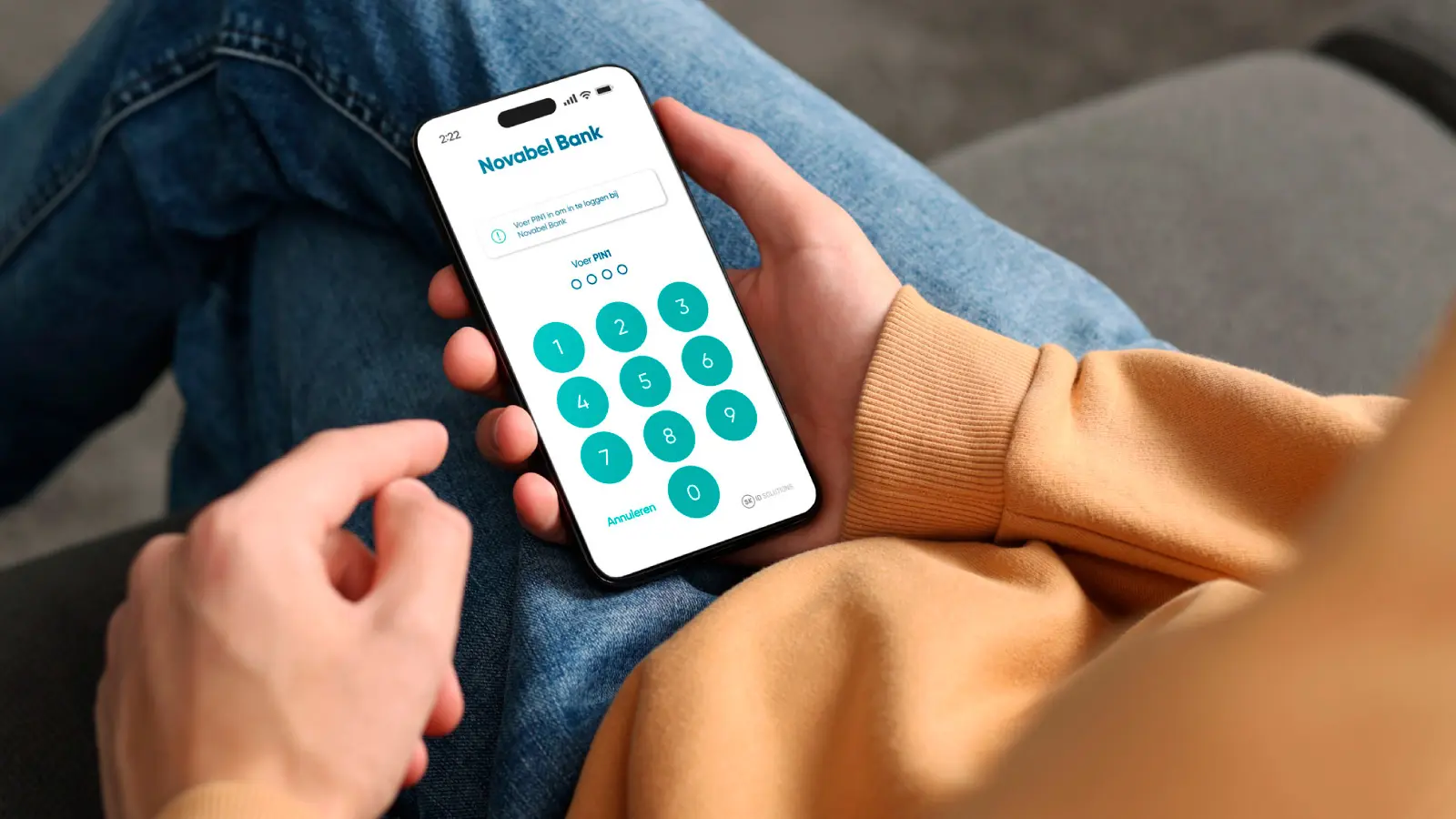
Now that the connection with the government is a reality, he hopes that authentication via Smart-ID will find a place in other services that people use frequently. “Think of the financial sector,” he explains. “People log in there more than once a week.”
The medical sector is also relevant: those who need services there often have to log in to portals frequently, at least for a limited period.” The CEO also hopes to establish Smart-ID in the market through the education sector.
Biggest hurdle cleared
The whole process is not moving quickly, and Pihl admits as much. “Things are not moving as fast as we hoped, and the ambition was greater. On the other hand, you won’t meet a businessman who says he wished things had gone slower,” he laughs.
“The biggest obstacles have now been removed. With the LoA High certification and compatibility with CSAM, Smart-ID has cleared a major hurdle. Now it’s a matter of expanding: on the one hand, with organizations from relevant sectors so they integrate Smart-ID as an eID solution, and on the other hand, with end users so they don’t reach for Itsme as the default in all cases.”