

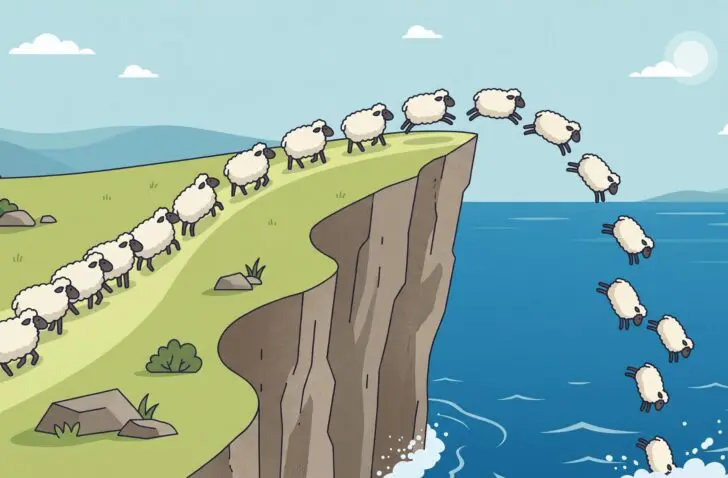
Nearly 1,300 employees from AI companies such as Anthropic and OpenAI are asking the US government to help slow down AI research worldwide. Despite their own sense of unease, they are not hitting the brakes themselves.
1,293 employees of AI companies, including OpenAI, Anthropic, and Google DeepMind, fear that AI development is moving too fast. In a joint statement, they explicitly ask the US government for help.
“We request the US government to support an international effort to develop the technical and governance tools needed to deliberately pace automated AI development,” it reads.
No guarantee of a better future
The employees believe in AI’s potential to enable a better future, but state that this outcome is not guaranteed. The motivation to sound the alarm now is the fact that AI companies are gradually reaching the point where they can automate AI research. In that case, AI will direct the development of AI.
The extent to which progress in AI research will accelerate is difficult to predict. However, employees see a real risk where the pace of development becomes so high that it becomes impossible to control or even understand new systems.
Time to work out controls
To realize the potential of AI, the industry, government, and society must take time to assess risks, develop security mechanisms, and create oversight. However, the signatories note that every company and country is under intense pressure to innovate faster than the competition. That pressure ensures that no one dares to unilaterally scale back. Currently, there is no global framework that can pace AI research.
Among the signatories of the call are several big names, including Dario Amodei, CEO of Anthropic, along with several co-founders, the chief scientists of OpenAI and Meta, and the head of AI safety and alignment at Google DeepMind. Anthropic, incidentally, already cried out for help for the first time in early June to initiate a pause.
No long-term vision
The appeal to the US government comes at a time when it is led by an administration that lacks consistency and highly values competition. US President Trump has so far shown no evidence of insights relating to the long-term well-being or safety of the planet. A fixation on his own definition of winning, for example against China, is higher on the agenda.
Trump, for instance, has indicated several times that he wants the US to win in the field of AI. What winning means in his mind is not very clear, but it presumably does not rhyme with slowing down, pacing, or reflecting.
The only form of delay the government has tolerated so far is a mandatory risk analysis of new AI systems, whereby the US government already receives exclusive access to new models while other parties do not. That the US under President Trump is capable of setting up a global initiative to slow down therefore seems doubtful.
Ploughing ahead against better judgment
The letter does demonstrate where AI development stands at this moment. The pace is so high that even the CEO of one of the world’s leading companies is becoming uncomfortable, but the development climate is so distorted by capitalist and geopolitical motivations that those involved do not see slowing down as a possibility for themselves.
AI companies, including OpenAI, have made promises to hit the brakes in time. However, these are not formal, and there are no external control mechanisms to check whether the risk of AI development has crossed a certain red line.
The fact that OpenAI’s AI models escaped their test environment and carried out a cyberattack on Hugging Face, for example, crosses a clear threshold. Yet little seems to change in practice. A concern now seems to be quite widespread among the people responsible for AI development, but that is not why they are slowing down in their race toward what they themselves say could be an abyss.