


The Dutch company Switch Datacenters wants to expand to Belgium and has its eye on a site in Limburg. Meanwhile, grid operator Elia warns of an eightfold increase in power consumption for data centers.
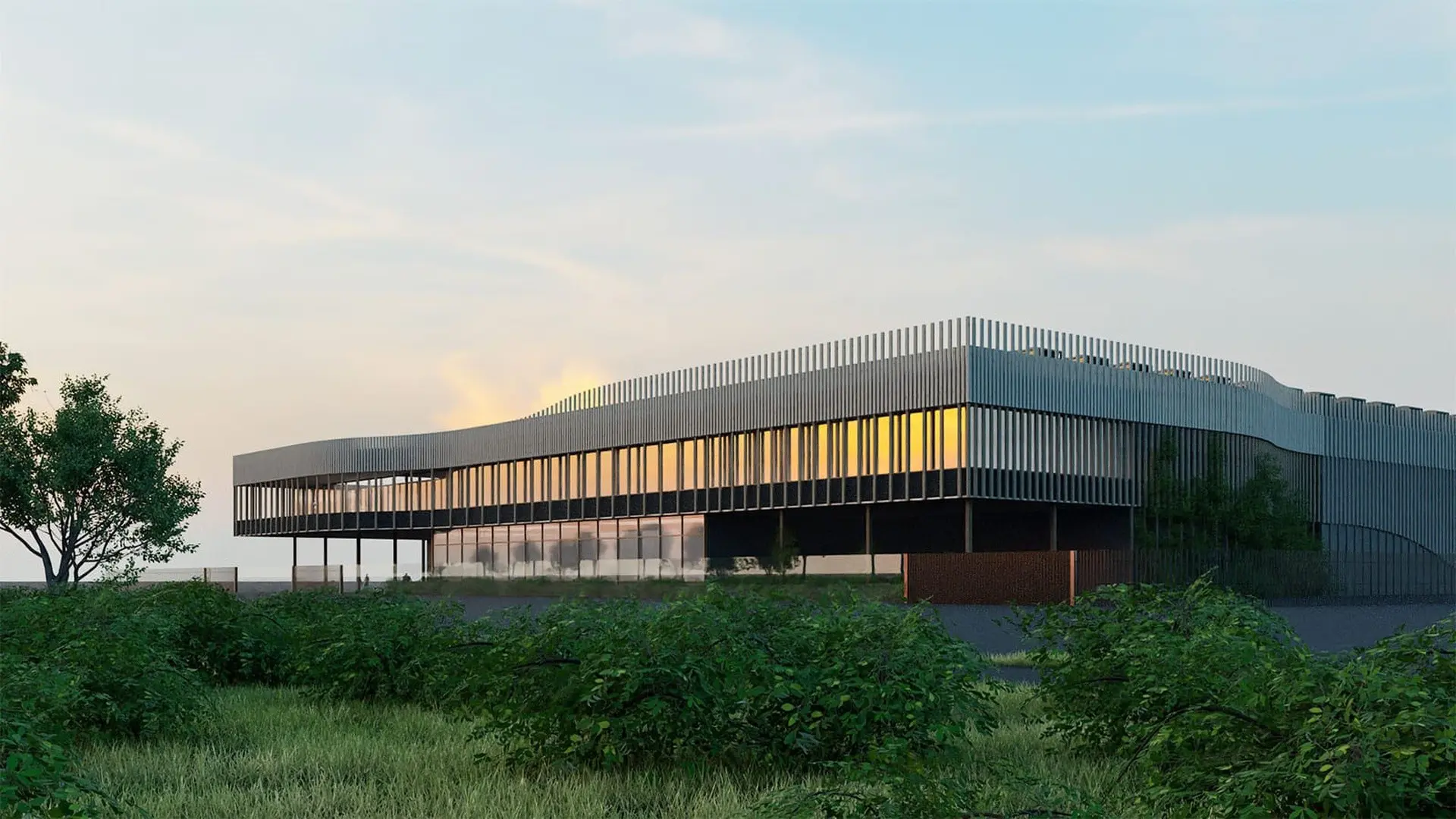
To continue accommodating the growth of digital services and their use in Belgium, data center capacity must expand. With the Dutch Switch Datacenters, a new player is ready to enter the Belgian market. The company confirmed plans for the construction of a new data center in Lanaken to Het Belang van Limburg.
Switch Datacenters has its eye on the former Sappi site, which spans 27 hectares. The South African paper producer closed its doors in Lanaken in 2023. The Dutch company Switch leases data center space where companies can house their own IT infrastructure. The financial, public, and media sectors are among its primary clients.
Switch currently has eight data center locations to provide those services. Seven of these are in the Netherlands, and one is an international data center in Poland near the capital, Warsaw. The data center in Lanaken would mark the company’s first expansion into Belgium.
Putting Limburg on the data center map
The arrival of Switch is economically interesting for Limburg. With an investment that, according to Switch spokesperson Cara Mascini, ‘could range from several hundred million to one billion euros,’ it represents one of the largest foreign investments ever in the province.
Limburg is not a hotspot for data centers in Belgium. Barely one percent of data center capacity is located in Limburg, according to the most recent figures from the industry association BDIA. This is the lowest percentage in Flanders, and in Belgium, only the provinces of Walloon Brabant and Luxembourg are even less well-served. The focus lies in the periphery around Brussels and in Hainaut, thanks to the Google site.
Mayor Marino Keulen (Anders) is therefore keen to see Swift come to his municipality. The Dutch company can already count on support from the local government, but that is only the beginning. It must first obtain the necessary permits and a connection to the power grid.
Eight times more power
The latter might prove more difficult than Swift Datacenters expects. As in many European countries, power distribution threatens to become a stumbling block in Belgium in the long term. Due to rising AI adoption, power consumption in data centers has also increased significantly. Electricity grid operator Elia reported this today to De Standaard.
Elia estimates the potential power consumption by data centers at 24.1 terawatt-hours. To be clear, this estimate already takes planned data center capacity into account. Nevertheless, this is eight times more than what data centers already actively consumed in 2023 and a significant upward revision of earlier estimates that projected the potential at 15.8 terawatt-hours. According to Elia’s estimate, Belgian data centers could consume roughly as much power as all Flemish households combined.
Who gets priority?
The allocation of the power grid is therefore a difficult puzzle for the government. In June, the Flemish government decided to prioritize connections for households and put data centers at the back of the line, much to the industry’s incomprehension. “We are not asking for data centers to automatically get priority, but for a transparent framework for the allocation of grid capacity,” Carole Santens, Managing Director of BDIA, told ITdaily.
The data center sector also feels unfairly targeted as ‘energy guzzlers.’ During a roundtable organized by ITdaily, industry experts called for looking beyond consumption figures. The sector supports investments in green energy. One of the industry’s arguments is that digital services would actually consume more power if every company managed its own infrastructure.
Swift Datacenters is not worried about securing a spot on the power grid. “If we can connect directly to the high-voltage grid, we avoid putting extra load on the regular electricity grid,” Mascini told De Tijd.
We are not asking for data centers to automatically get priority, but for a transparent allocation of grid capacity.
Carole Santens, Managing Director BDIA