
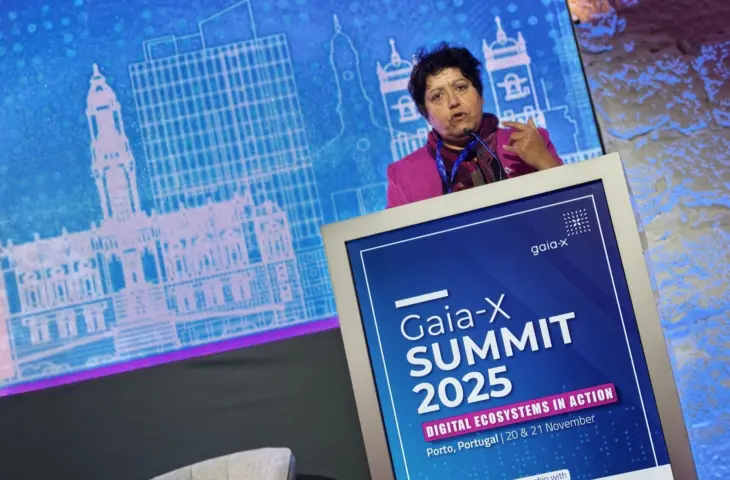
Gaia-X gives itself a new start during its Summit in Portugal: after a first season focused on development and experiments, it’s now time for a new era where sovereign data sharing becomes a reality. Is the target audience ready for it?
Over the past few years, Gaia-X has developed components, standards, and technology that allow companies to share data with each other in so-called data spaces. These are ecosystems where businesses can exchange data in a decentralized and, above all, sovereign manner, in compliance with EU and other regulations. “The technology is available,” emphasizes Gaia-X CEO Ulrich Ahle during the Gaia-X Summit in Porto, Portugal.
Between dream and reality…
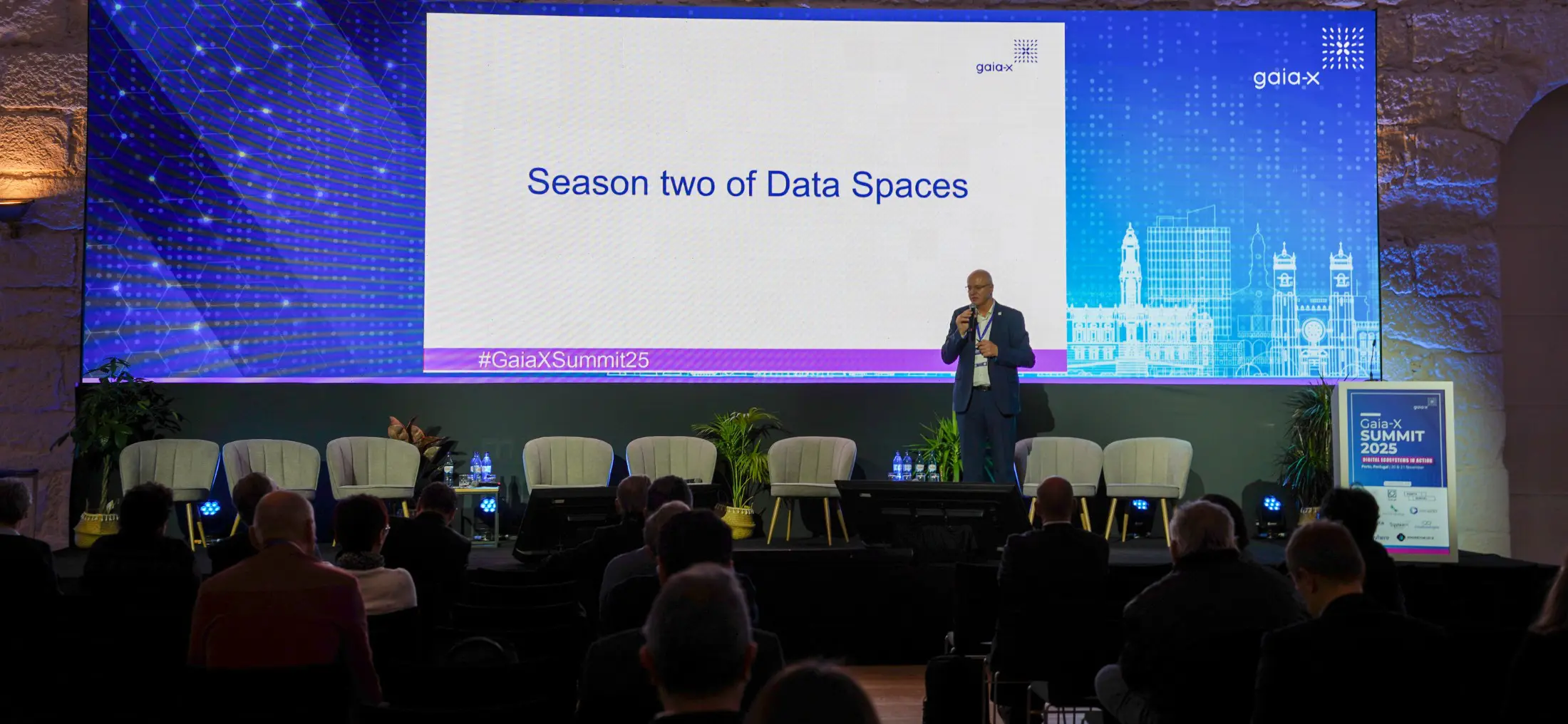
That’s not great, Catherine Jestin realizes. She is not only the chairwoman of the Gaia-X board of directors but also Vice President of IT at Airbus. Jestin sets a good example: Airbus is currently working on a data space for all its suppliers, and this project is more than just an experiment. Jestin is not alone: in France, EDF is actively adding members to its own data space for the ecosystem of thousands of companies that are helping to build the new French nuclear power plants.
In search of an economic model
However, the mature technology does not lead to a multitude of data spaces in production. On the contrary: over the past years, more than 170 projects were set up in Europe for data spaces to support data exchange in a variety of ecosystems, but the majority have still not left the experimental phase. Barely ten percent, accounting for about fifteen data spaces, are currently operational in production.
Airbus and EDF are exceptions, however. “We need to get the data spaces in
This is where the shoe pinches. Even in existing experimental data spaces, the balance between parties offering data and organizations wanting to use that data is not always optimal. Ideally, a model should be established where organizations in a data space are willing to pay a fee to other participants to use their data. This way, a marketplace should be created that is economically viable.
European AI as a goal?
During the summit, Professor Stefan Wrobel, director of the German Fraunhofer IAIS, explains what is possible when sectors unite in data spaces according to Gaia-X’s vision. “84 percent of European companies would prefer to use European AI,” he knows based on a Bitkom survey in Germany. “AI today is built on data from the public internet. At the current rate, we will have gone through almost all publicly available human-generated information by next year. Building AI based on the internet is thus coming to an end.”
Building AI based on the internet is coming to an end.
Stefan Wrobel, director of Fraunhofer IAIS,
This is where the opportunity lies for the EU and for Gaia-X. Data spaces offer a decentralized environment in which industry peers and competitors can offer data in an equal, secure, and sovereign manner. “Using this data, we can train and fine-tune LLMs,” says Wrobel. “This way, we as Europeans can offer vertically integrated AI models to the world.” There’s also a revenue model there, completely independent of American technology giants.
Season 2 with real data spaces
Before it gets that far, however, the data spaces need to get off the ground. Jestin enthusiastically heralds Season two of Gaia-X and data spaces. In this second season, the story must really gain traction, with hundreds of companies, large and small, joining data spaces in Europe (and even beyond), graduating from the Proof of Concept phase and getting to work in production.
read also
What is Gaia-X, who is it for, and how do you use it?
The launch of the second season is a common thread throughout the conference, which also meets with healthy skepticism on stage. “Usually, a second season only comes when the first season has been successful,” Mauro Brambilla, COO of Dynamo, reflects during a panel discussion led by Gaia-X CTO Christoph Strnadl. “That’s the case here in terms of technology, but not in terms of its use.”
Are companies waiting?
At a roundtable discussion on data and data strategy, organized by ITdaily, the gap between the state of technology and the readiness to use it becomes even clearer. Fen Lasseel, Managing Director of Belgian data & AI specialist Datashift, is aware of the potential of data spaces but indicates that they don’t have any projects running around this with clients. We hear the same from Brecht Vanhee, Principal Analyst Architect & Delivery Lead, element61: “We haven’t received a single request from a client about participating in a Gaia-X data space.”
Seeing how difficult it still is today to share data within companies or between local institutions, large-scale exchange of sensitive data between organizations at the EU level doesn’t seem evident in the short term.
Yannic De Bleeckere, Head of Pre-Sales, SAS
“Yannic De Bleeckere, Head of Pre-Sales at SAS, is curious about the current maturity of organizations to adopt such initiatives in the short term: “Seeing how difficult it still is today to share data within companies or between local institutions, large-scale exchange of sensitive data between organizations at the EU level doesn’t seem evident in the short term, so it’s more of a long-term challenge.”
Ready for use by large and small
At the Summit, Ahle, Jestin, Strnadl, and many other speakers try to convince the world that the data spaces according to Gaia-X standards are indeed ready for use. “There is a great demand for sovereignty,” Ahle shares. “Not only from large companies but also from SMEs and startups. The entire industry knows that data is important for their business.”
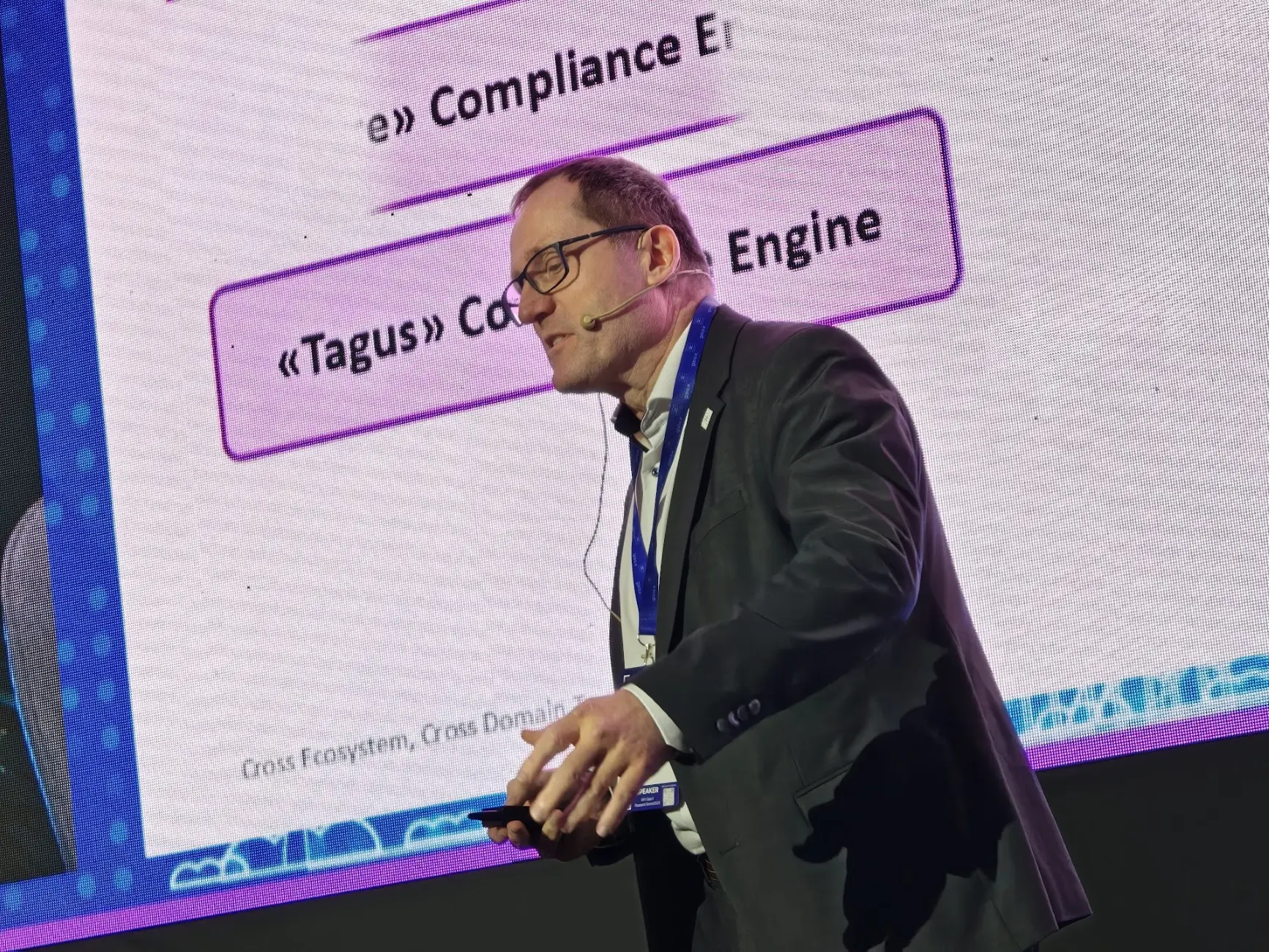
SMEs are not forgotten either. “Data spaces always need suitable tools,” Strnadl clarifies. “And SMEs use such tools in a totally different way.” Roland Fadrany, COO of Gaia-X, adds: “The adoption of high standards must trickle down to SMEs as cheaply as possible, and Gaia-X ensures this through automation.”
read also
A Label for Sovereignty: First Gaia-X Level 3 Cloud Companies Listed in Catalog
Then there are the certifications. At the Summit, Gaia-X hands out the first so-called Level 3 certificates for organizations that achieve the highest standard of sovereignty. With this label, Gaia-X hopes to create a market for European digital services tailored to the most demanding data spaces, such as those of Airbus and EDF.
Point made, but is it enough?
After a day and a half in the Alfandega conference center on the banks of the Douro, probably not coincidentally with a view of Vila Nova de Gaia through the large windows, experts from Gaia-X and guests have made their case. From a technical point of view, the data spaces are more than ready. Practically, it’s time to start. The fact that both EDF and Airbus are jumping in with conviction is a clear signal. The focus on SMEs is also strong: the fact that they too can (and must) easily connect to a Gaia-X data space is repeatedly emphasized.
Will season two of Gaia-X attract more viewers then? Or will the sovereign data spaces remain a project for enthusiasts and connoisseurs in the coming year, unable to reach the masses? The interest in the project from Canada, Japan, and South Korea at least shows that an international success story is possible. Decentralized and sovereign data sharing appeals, even in jurisdictions other than the EU.
Ahle can hardly emphasize enough that Gaia-X is ready for it. Another, equally pressing question remains unanswered: are European companies also ready for Gaia-X?