

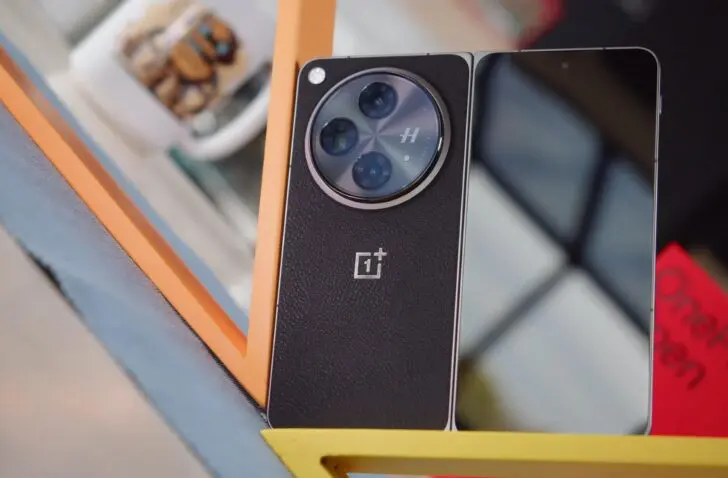
With OnePlus leaving Europe, the local market loses a strong brand, but the practical impact is very small. After all, Oppo is taking over the torch.
This week, OnePlus and Oppo announced what analysts and speculators had seen coming for a year: OnePlus is leaving the European market. The brand is also withdrawing from the US. In other words, there will be no more OnePlus launches in the West.
The withdrawal also has consequences for existing devices. Support will no longer be provided by OnePlus itself. Oppo will take on that responsibility. This means that OnePlus smartphones will soon be running ColorOS.
End of a strong brand
The announcement sounds significant. OnePlus is a strong brand that managed to gain a large following, especially in the Benelux. The manufacturer sold devices here for twelve years. OnePlus smartphones could consistently count on good to very good reviews. The price-performance ratio was the great asset of the first generations of smartphones. Later editions were less competitively priced but could compete with the toughest smartphones from the competition.
Anyone looking at the withdrawal from that perspective might be surprised. In reality, however, it is striking that OnePlus remained active in Europe for so long. After all, OnePlus is not so much a company, but rather a brand of parent company Oppo. From the very beginning, Oppo was the major investor in OnePlus, and OnePlus phones rolled off Oppo production lines. That wasn’t so clear at the time: the brand was positioned as an underdog and a price fighter in the European market.
Far-reaching synergy
As the years progressed, OnePlus and parent company Oppo grew even closer together. As early as 2021, the hardware development teams were combined. In that same year, OxygenOS was merged with ColorOS. OxygenOS is the name for OnePlus’s Android skin, ColorOS for Oppo’s variant. Under the hood, the two operating systems became identical. That is why Oppo can now effortlessly take over the software support of existing OnePlus devices.
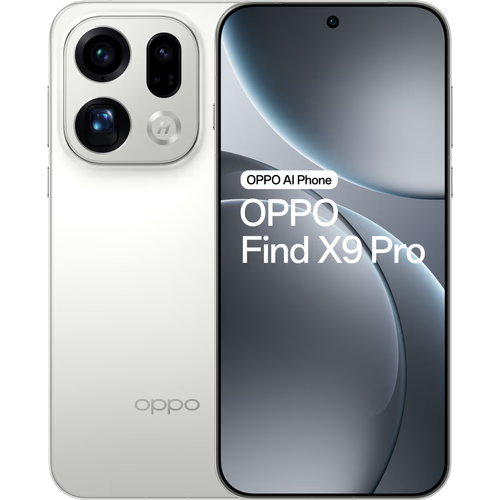
In recent years, flagship phones from OnePlus and Oppo began to look more and more alike. Devices shared a design language and many specifications. Both brands did ensure differences at the margins, such as a slightly different battery size, or a MediaTek processor versus a Qualcomm chip in the latest devices, but the overlap was clear.

For a long time, that wasn’t a problem: Oppo is one of the largest technology companies in the world, but until recently it was not active in Europe. The company always played a major role in the Chinese market. In that context, OnePlus was Oppo’s representative in the EU.
Oppo in Europe
That changed six years ago. In May 2020, Oppo decided to come to Europe and Belgium. Despite great ambition, that start was a bit messy, thanks to a patent dispute with Nokia. That was resolved in 2024, after which Oppo plunged into the European market with renewed enthusiasm.
At that point, the death warrant for OnePlus had actually already been signed. Although the high-end smartphones from Oppo and subsidiary brand OnePlus are, as mentioned, not exactly identical, they do target the same audience. OnePlus devices have historically been more competitively priced, making Oppo its own biggest competitor. Every Oppo smartphone was consistently undermined by a more competitively priced alternative from OnePlus.
The smartphone market is already exceptionally competitive. Samsung and Apple dominate the market, while other brands fight each other for percentages. In that context, it is particularly inefficient to invest in a subsidiary brand like OnePlus, including all branding and marketing, only to then undermine your own main brand. The market is not large enough for two Oppo brands. Oppo itself also refers to synergy and consolidation as the driving force behind the decision.
China and emerging markets such as India are less consolidated. OnePlus as a brand will continue to exist there.
In the premium segment, the loss is actually not that great. Oppo’s Find X series has the same DNA as the main series of OnePlus phones. The phones had already been twins for several years, albeit not identical ones.
A shame about Nord
The biggest loss is found in the mid-range and budget segments. The OnePlus Nord series was consistently unique, with a significantly better price-performance ratio than Oppo’s own Reno devices. From a business standpoint, Nord undermined the Reno series even harder: Reno becomes more relevant with the disappearance of Nord, but the consumer does not benefit from that.
The withdrawal of OnePlus from Europe (and the US) is thus the chronicle of a departure foretold. From a business standpoint, it is striking that subsidiary brand OnePlus was allowed to undermine parent company Oppo’s devices for so long in a difficult market.
In the high-end segment, consumers are not actually losing anything. Oppo effortlessly takes over the torch with devices that were already difficult to distinguish from OnePlus models in recent years. In the mid-range, the departure does leave a gap: the OnePlus Nord and Nord CE will be missed. Oppo’s Reno smartphones are true replacements.